Custom Printed Soft Flask Sample Testing: Printing, Material and Leak Inspection
Before approving a custom soft flask for production, a hydration brand needs to check more than the product's appearance. Printed graphics must remain intact, the flexible bottle and its connected areas should be free from visible damage, and the sample should hold water during an agreed inspection.
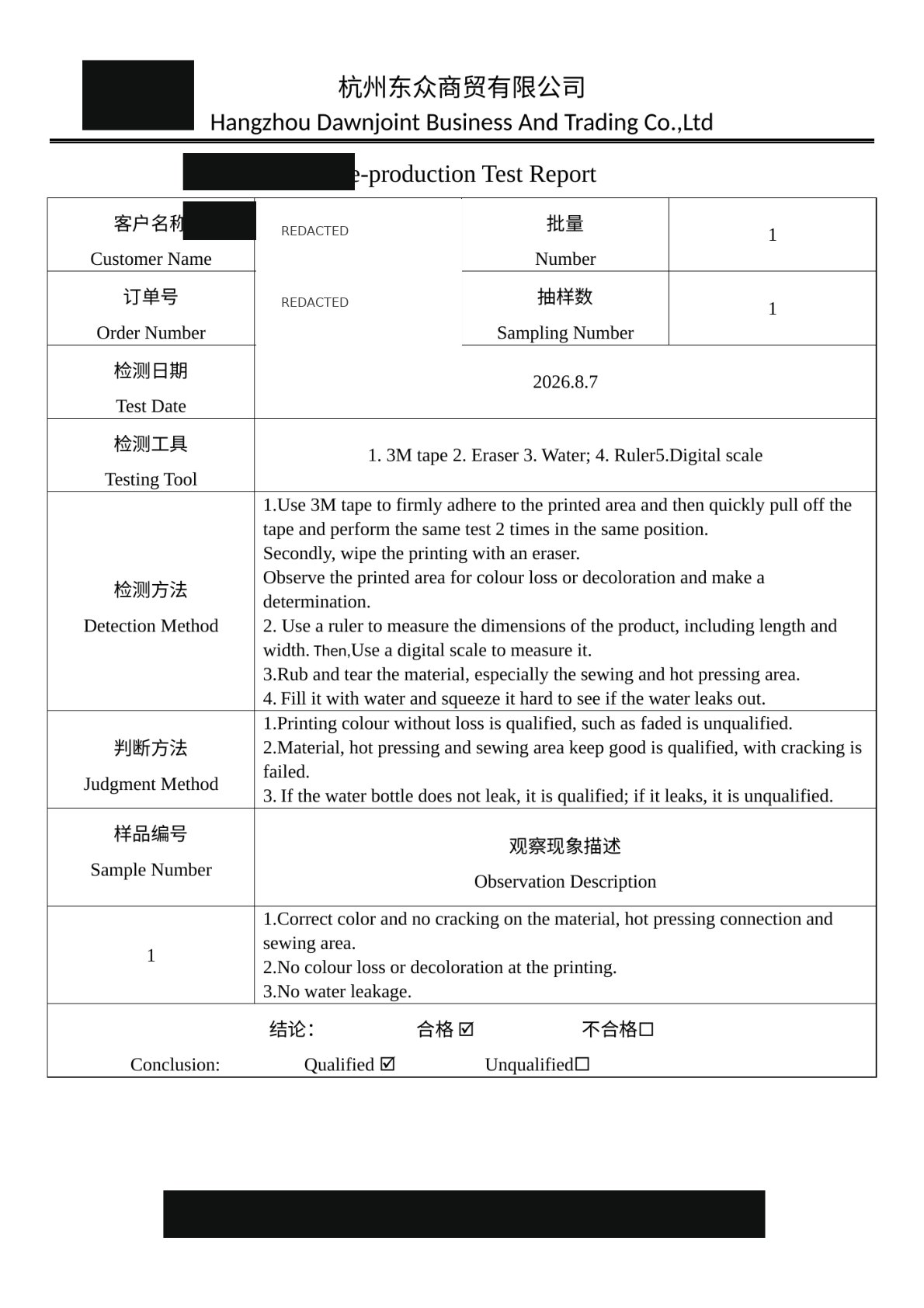
This case study is based on a pre-production test report from August 7, 2026, prepared by Hangzhou Dawnjoint Business And Trading Co., Ltd. The report documents the inspection of one custom-printed soft flask sample, including checks of printing, material condition, dimensions, weight and water leakage.
The findings below describe that individual sample and the methods recorded in the report. They are not third-party certification results or evidence that an entire production batch passed inspection.

Why Pre-Production Sample Inspection Matters
OEM and ODM soft flask projects may involve different capacities, bottle shapes, valve designs and printed branding. Before proceeding with an order, the buyer and supplier should agree on the sample configuration and the checks used to evaluate it.
For a printed soft flask, several questions are especially relevant: Does the artwork remain intact after handling? Are the flexible material and connected areas in good condition? Does the bottle retain water during the agreed check? Are the dimensions and weight consistent with the approved sample requirements?
The documented inspection addressed these areas using simple, recorded procedures.
1. Reviewing the Custom-Printed Sample
The report lists one sample inspected and identifies the following tools: 3M tape, an eraser, water, a ruler and a digital scale. The accompanying photographs show the black soft flask from different angles and document measurement-related checks.

The published report image has been redacted to protect the customer's identity and branding.
2. Checking Printing Adhesion and Color Stability
Custom branding is a visible part of a soft flask project, so the printed area needs attention during sample approval.
According to the report, the inspection method involved firmly applying 3M tape to the printed area, pulling it off quickly and repeating the process twice at the same location. The printed area was also rubbed with an eraser and checked for color loss or discoloration.
Recorded result: No color loss or discoloration was observed on the inspected sample.
This is the observation recorded for the stated tape-and-eraser procedure. The document does not assign a standardized abrasion grade or establish long-term print durability under every use condition.
3. Inspecting Flexible Material and Connection Areas
The inspection procedure also involved rubbing and pulling the material, with attention to the areas described in the report as sewn and heat-pressed connections.
Recorded result: The report states that the material and connection areas showed no cracking.
For an OEM buyer, checking these areas during sampling can help identify obvious damage before moving to a larger order. The report does not specify a repeated-flex cycle count or a quantified tensile-strength test.

4. Checking Dimensions and Weight
The documented procedure called for measuring length and width with a ruler and weighing the sample on a digital scale. Photographs of these checks appear in the report.
However, the written observations do not state a verified final weight or a complete set of numeric dimensions. For that reason, this case study does not present unverified measurements as product specifications.
For future custom orders, brands can specify target dimensions, weight tolerances and measurement methods as part of their sample approval requirements.
5. Performing a Manual Water-Leak Check
The report describes filling the soft flask with water and squeezing it firmly to observe whether water escapes.
Recorded result: No water leakage was observed on the inspected sample.
This is a documented manual water-retention check. The report does not identify a calibrated test pressure, a fixed test duration or a standardized number of squeeze cycles. Those details would need to be agreed separately if required by a buyer.

What the Recorded Result Means for Buyers
The report marked the inspected sample as qualified, with observations indicating no print color loss, no cracking in the inspected material or connection areas, and no water leakage during the described check.
This is useful evidence of one pre-production sample review, but it should not be confused with a production-lot inspection or independent laboratory certification. Buyers placing bulk OEM or ODM orders should separately confirm their sampling plan, acceptance criteria and any additional testing requirements.
Discuss Your Custom Soft Flask Project
At Farhview, part of Honey Dry Bag, we focus on TPU soft flask solutions for brands sourcing running and outdoor hydration products. If you are developing a custom soft flask, share your target capacity, shape, valve configuration, artwork and sample inspection requirements with our team.
Request a Custom Soft Flask Quote — Use the inquiry form on our website to share your requirements.