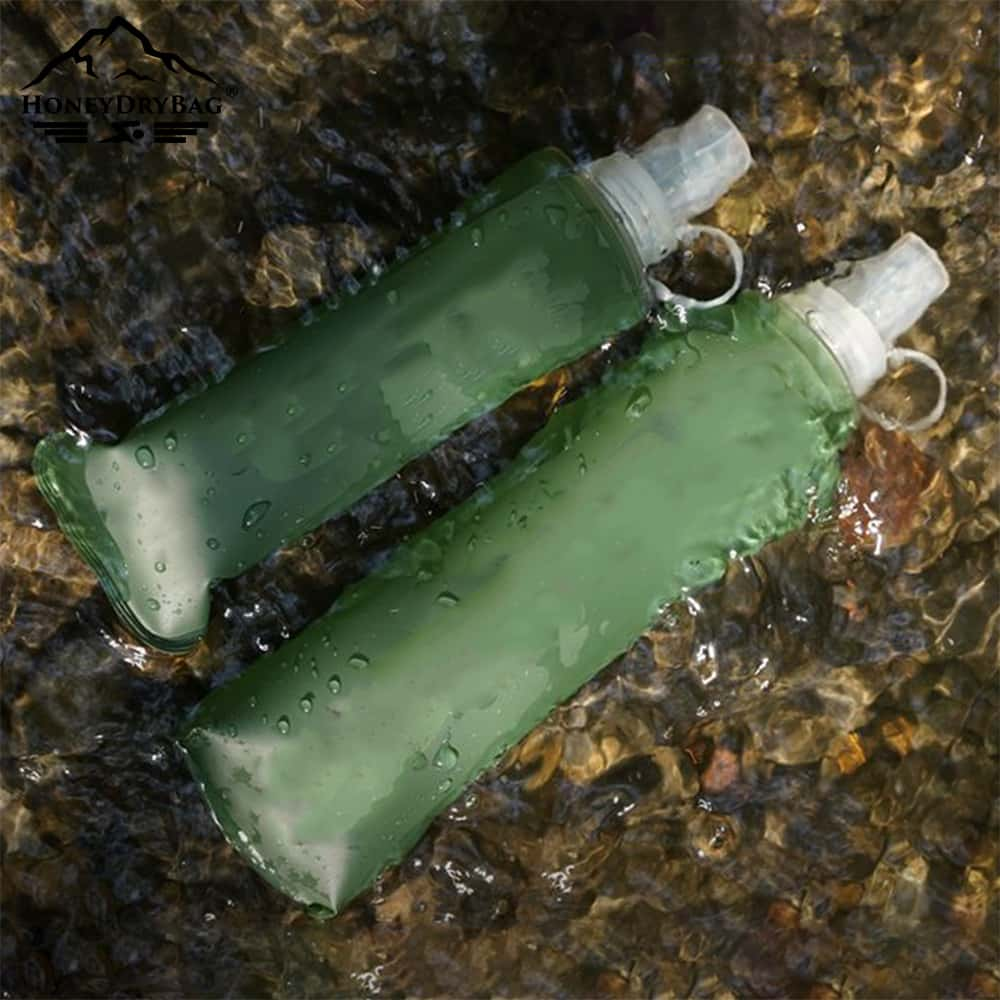
Triathlon hydration is not only about how much water an athlete carries. The bottle must also fit the way the athlete moves between swimming, cycling and running, and it should be easy to handle when fatigue increases.
For sports brands developing an endurance hydration range, a soft flask for triathlon can be one useful component. Its suitability depends on capacity, valve design, carrying position and the intended stage of the event. This guide explains what buyers should evaluate before approving an OEM soft flask sample.
Why Triathlon Brands Should Think in Hydration Systems
A triathlon includes three very different activities. During the swim, athletes generally do not drink from a flask. On the bike, hydration access depends on the bicycle setup and race rules. During the run, athletes may use aid stations or carry their own fluids in a handheld bottle, waist belt or compatible running vest.
This means that a soft flask should not be marketed as a universal solution for every stage. Brands need to define the actual use case first: run training, long-distance race preparation, a hydration belt, a running vest, or an event-specific kit.
An October 2026 triathlon industry briefing identified soft flasks combined with nutrition storage as a product development area worth monitoring. That is a useful design prompt, but not proof that every triathlete wants the same system or that demand has increased by a particular percentage.
1. Choose Capacity Around the Carrying Method
Capacity is one of the first decisions in a custom soft flask project. Instead of selecting a size because it is popular, consider where the athlete will carry it and how often refilling is practical.
| Capacity range | Potential application | Questions for product development |
|---|---|---|
| Around 200–250 ml | Compact handheld or small-pocket use | Is the bottle easy to grip and remove? |
| Around 350–400 ml | Lightweight run hydration | Does it fit the intended pocket or belt? |
| Around 500–550 ml | Running vest or compatible hydration carry | Does the filled bottle remain stable and accessible? |
| Around 1,000 ml | Higher-volume carrying where supported | Is the weight and shape suitable for the intended system? |
These are product-planning examples, not recommendations for how much fluid an athlete should drink. Actual hydration needs depend on the person, event duration, conditions and individual strategy.
2. Evaluate the Bite Valve and Cap Assembly
The bottle body is only part of the experience. For a triathlon-related soft flask, the valve and cap affect access, cleaning and the likelihood of accidental leakage.
During OEM sample review, ask whether the valve can be opened and used comfortably while moving, whether the cap closes securely, and whether the assembled bottle remains leak-free during the agreed handling test.
A straw configuration may be useful for certain vest pockets, but it is not automatically better for every belt or handheld design. The final choice should be tested in the actual carrying product.
3. Test the Soft Flask Together With the Carrying Product
A flask can perform well on its own and still be inconvenient when paired with a vest or belt. Pocket depth, elastic tension, bottle diameter, cap height and ease of removal all matter.
For a hydration system aimed at triathlon training or endurance running, the brand should test the filled soft flask in the intended carrying position. Useful observations include bottle movement, access to the drinking valve, ease of reinsertion and comfort during repeated running motion.
If the project also includes nutrition storage, consider how the athlete reaches fluids and nutrition without unnecessary interference between pockets or closures. This is a design consideration, not a claim that any particular configuration has been validated.
4. Define OEM Customization Before Sampling
For custom soft flask sourcing, a clear brief helps avoid revisions after the first sample. The brief should identify the target capacity, bottle dimensions, body material requirements, cap and valve configuration, printing artwork, color requirements and intended carrying compatibility.
Brands should also define how samples will be assessed. A practical review can include visual printing checks, dimensional and weight measurements, inspection of material and joined areas, and an agreed water-leak check. More demanding performance claims require corresponding test methods and evidence.
At Farhview, the focus is on TPU soft flask options for brands seeking different capacities and custom configurations. Buyers can use an initial sample to confirm the details of a proposed design before discussing a larger production order.
5. Do Not Confuse Market Signals With Product Validation
Triathlon events and brand partnerships can show where companies are investing attention, but they do not replace customer feedback. A recent industry briefing highlighted technical carrying systems and hydration-related accessories as areas to study. That observation is best used to form product hypotheses.
Before committing to a new flask or a combined flask-and-nutrition concept, ask target buyers and users about carrying position, preferred capacity, refill access, cleaning expectations and compatibility with existing equipment.
A small, well-defined sample program often answers more practical questions than another broad trend presentation.
OEM Soft Flask Sourcing Checklist
Before requesting a quotation or approving a sample, confirm:
- The intended use: training, race preparation, running vest, belt or handheld carry.
- Target capacity and the filled bottle's approximate dimensions.
- Valve, cap and optional straw configuration.
- Compatibility with the intended pocket or carry system.
- Printing artwork, branding position and color expectations.
- Agreed sample inspection and leakage criteria.
- Packaging and commercial requirements for the proposed order.
Conclusion
The right soft flask for triathlon is not defined by one capacity or one valve design. It is the configuration that fits a clearly identified use case and performs acceptably in the intended carrying system.
For hydration brands, the most effective OEM process starts with a specific product brief, moves through physical sample evaluation and uses actual feedback to refine the design.
Developing a custom TPU soft flask for a triathlon or endurance hydration range? Contact Farhview with your target capacity, valve style, artwork and carrying requirements to discuss suitable product options and sample development.