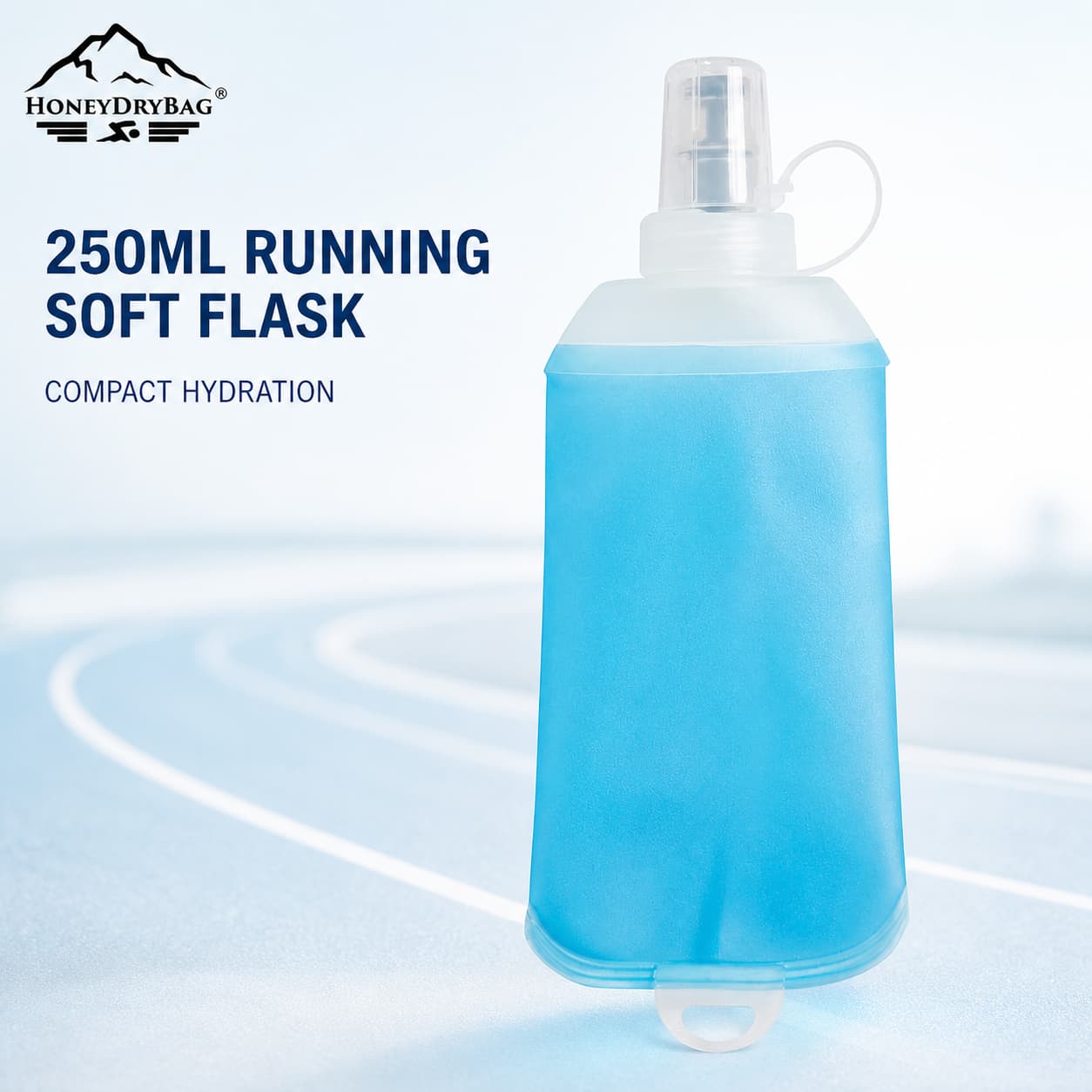
Quick answer: When sourcing TPU soft flasks wholesale, buyers should compare more than unit price. The most important factors include the TPU material, capacity and filled dimensions, cap and bite-valve design, seam construction, leakage performance, food-contact documentation, customization options, MOQ, sample testing, packaging, and production quality control.
For running, trail-running, triathlon, and outdoor brands, the best wholesale soft flask is not necessarily the cheapest model. It is the product that fits the intended carrying system, performs reliably during use, meets the buyer's market requirements, and can be produced consistently at scale.
What Is a TPU Soft Flask?
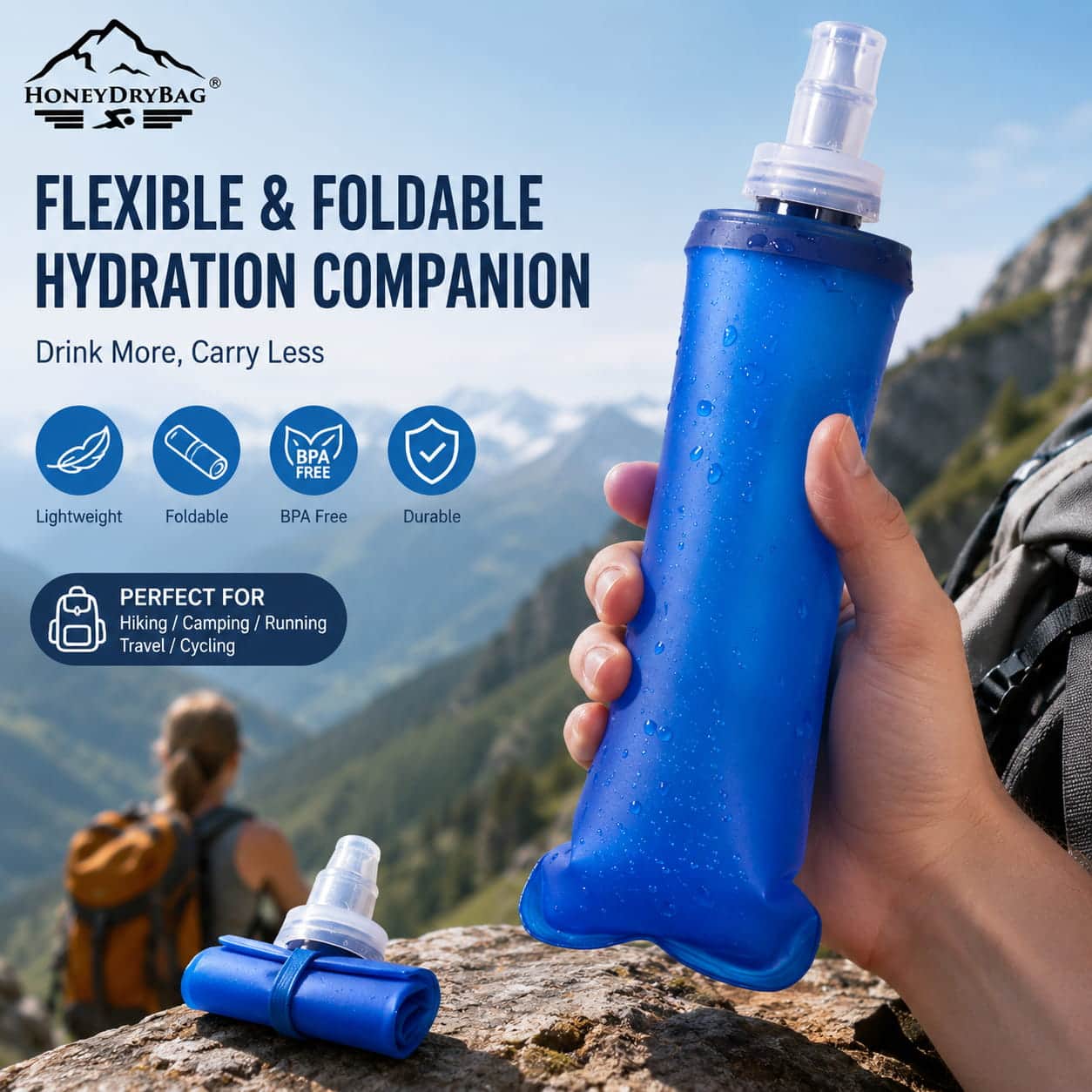
A TPU soft flask is a flexible hydration container commonly used for running, trail running, triathlon, hiking, cycling, and other endurance or outdoor activities.
TPU stands for thermoplastic polyurethane.
In a typical running soft flask, flexible TPU film forms the main bottle body. The material allows the flask to compress as liquid is consumed instead of maintaining the fixed shape of a rigid water bottle.
This makes TPU soft flasks useful for applications such as:
- Running vest front pockets
- Hydration belts
- Handheld running systems
- Trail-running packs
- Triathlon training
- Lightweight outdoor hydration
Depending on the product design, the complete soft flask can also include a separate neck, cap, bite valve, seal, and printed branding.
For wholesale buyers, this means the word "TPU" alone does not describe the complete product specification.
Why Do Brands Source TPU Soft Flasks Wholesale?
Soft flasks are often purchased wholesale by brands that want to add hydration products to an existing sports or outdoor product range.
Typical buyers can include:
- Running brands
- Trail-running brands
- Hydration vest brands
- Triathlon brands
- Outdoor equipment brands
- Sports accessory distributors
- Private-label hydration brands
- Promotional product companies
- Retailers developing private-label products
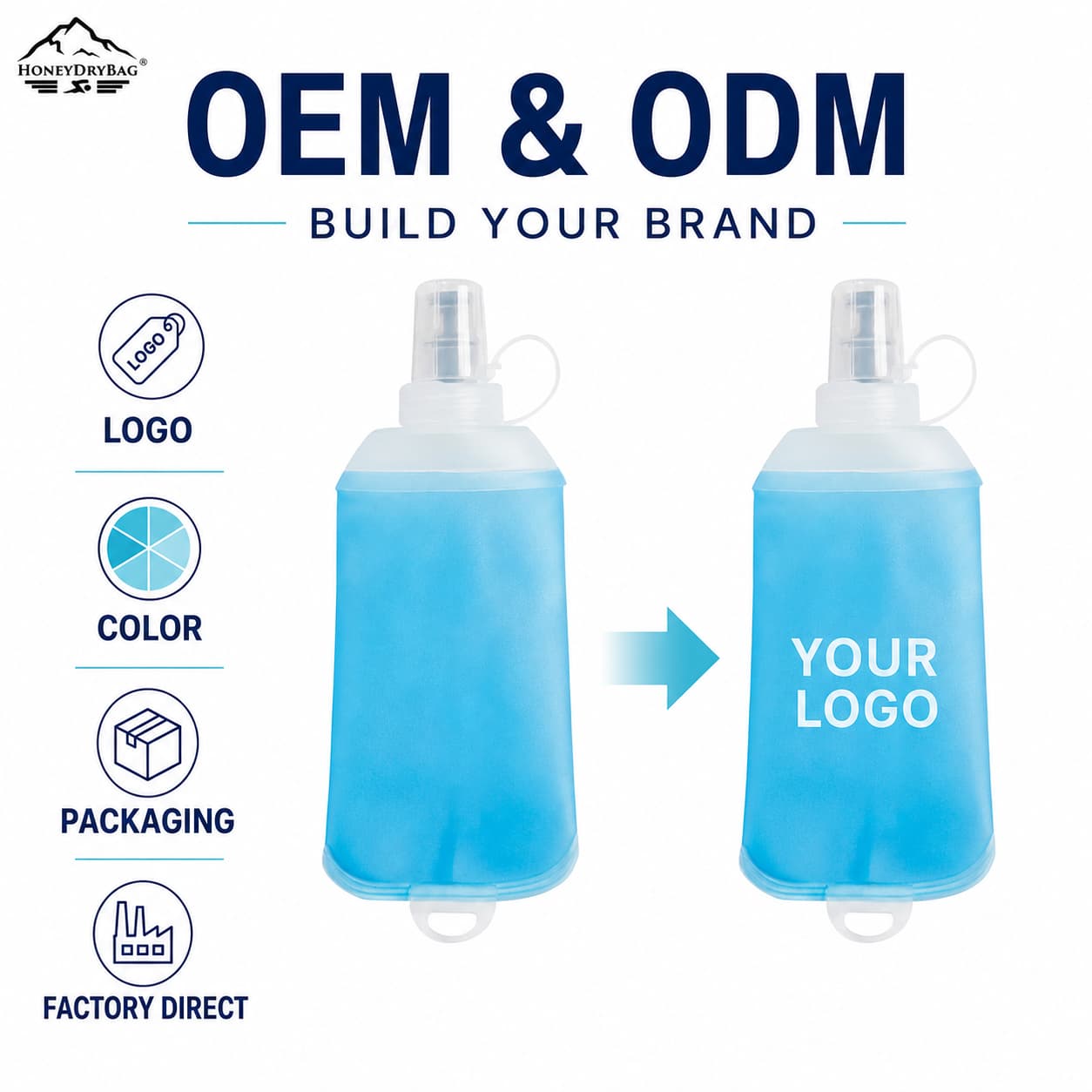
Some buyers need a standard soft flask with their logo.
Others need a bottle developed around a specific running vest, belt, capacity, valve, or packaging system.
These are different sourcing projects and should not be evaluated in exactly the same way.
TPU Soft Flask Wholesale vs OEM vs ODM
The terms wholesale, OEM, and ODM are sometimes used interchangeably, but they can represent different levels of customization.
Wholesale Soft Flask
A wholesale project usually starts with an existing product.
The buyer may select:
- Existing capacity
- Existing flask shape
- Standard cap
- Standard bite valve
- Available colors
- Packaging options
This is often the simplest approach when a buyer wants to add a proven hydration product to an existing catalog.
OEM Soft Flask
An OEM soft flask project generally keeps much of the existing product structure while adding buyer-specific branding or specifications.
Depending on the model, OEM customization may include:
- Logo printing
- Body color
- Cap color
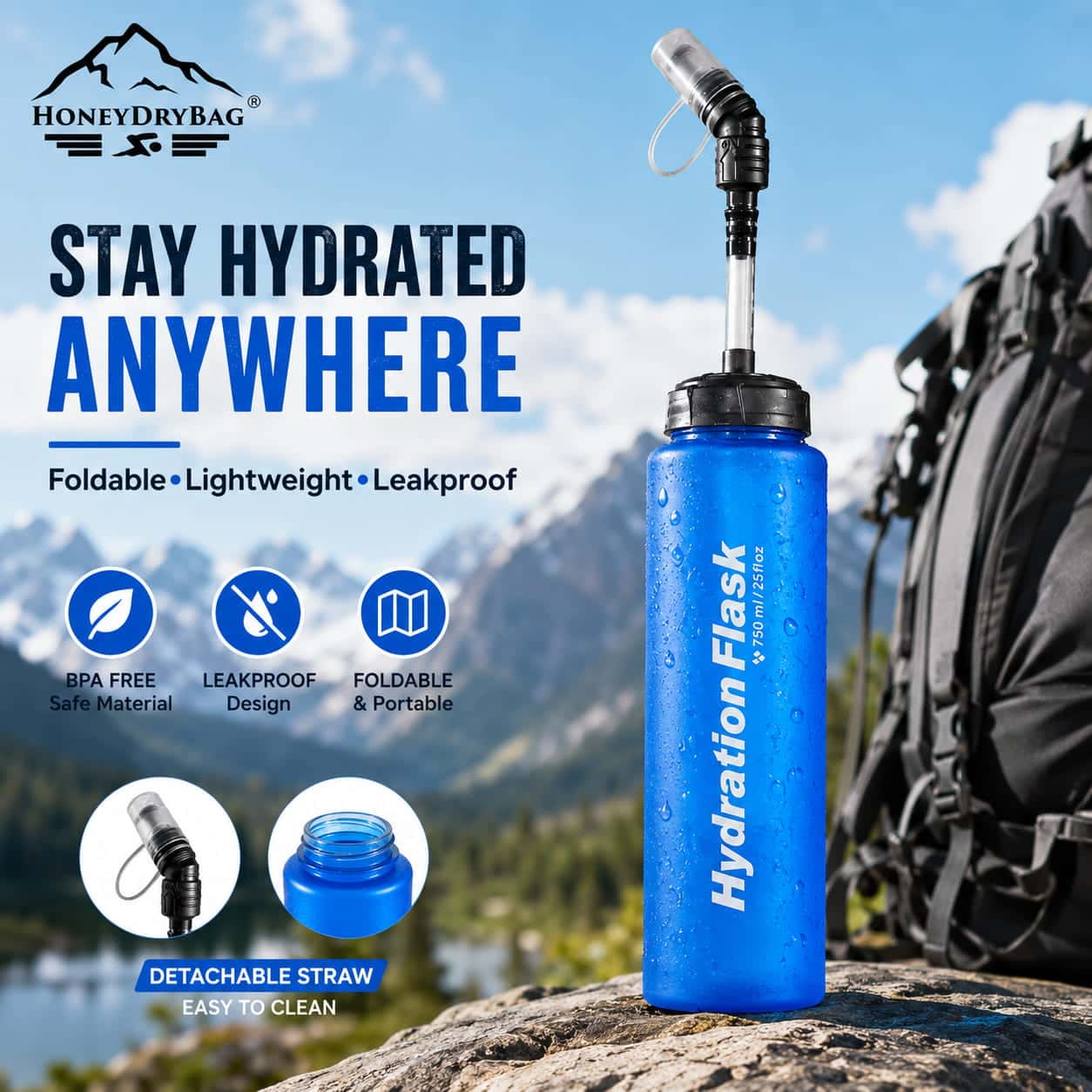
- Bite-valve configuration
- Packaging
- Capacity selection
- Product sets
This approach is suitable for brands that want a differentiated private-label product without developing an entirely new flask structure.
ODM Soft Flask
ODM development can involve more substantial product changes.
Examples may include:
- Custom bottle dimensions
- Custom capacity
- Different body geometry
- Neck modifications
- Cap development
- Valve changes
- Integration with a specific running vest
- Integration with a running belt
- Custom packaging systems
ODM projects require more technical evaluation because changing one component can affect other aspects of the product.
For example, changing flask width can affect pocket compatibility, while changing the neck or cap can affect weight, sealing, and drinking performance.
What Should Buyers Check When Sourcing TPU Soft Flasks?
A wholesale comparison should begin with a clear product specification.
The following factors are particularly important.
1. TPU Material
Not every product described as "TPU" is necessarily identical.
TPU is a family of thermoplastic polyurethane materials, and different formulations can have different:
- Flexibility
- Hardness
- Transparency
- Odor characteristics
- Abrasion resistance
- Low-temperature performance
- Processing characteristics
For hydration applications, buyers should ask what material is being used and what supporting documentation is available for the intended market and application.
Do not evaluate a supplier only by asking:
"Is this TPU?"
A better question is:
"What TPU material is used for this flask, and what documentation is available for the finished product or relevant food-contact components?"
2. Capacity
Capacity is one of the first specifications buyers usually compare.
Common soft flask capacities can include:
- 150ml
- 250ml
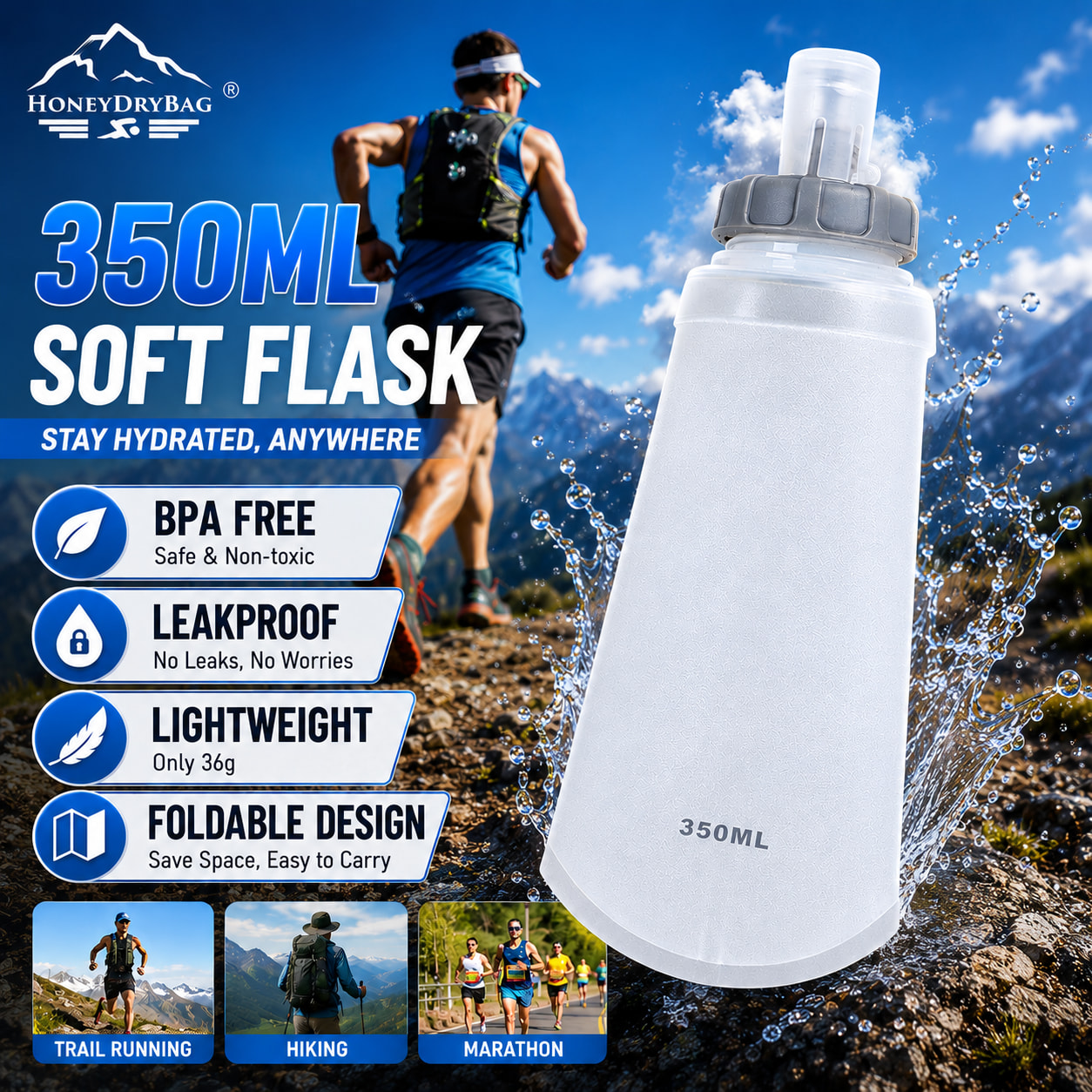
- 350ml
- 500ml
- 600ml
- Other model-specific or custom capacities
Different capacities serve different purposes.
250ml
A smaller flask can work well for:
- Short runs
- Compact running belts
- Race fuel
- Electrolyte concentrate
- Backup hydration
- Small pockets
350ml
A mid-size flask can provide a balance between compact carry and hydration volume.
It may be useful for:
- Running belts
- Smaller vest pockets
- Mid-distance training
- Brands looking for a differentiated capacity
500ml
A 500ml soft flask is commonly used as a primary running hydration bottle.
Typical applications include:
- Running vests
- Trail running
- Longer training sessions
- Triathlon training
- Outdoor hydration systems
However, buyers should not select a flask based only on nominal volume.
3. Filled Dimensions
This is one of the most important specifications for running products.
Two 500ml soft flasks can have completely different dimensions.
One may be:
- Tall and narrow
while another may be:
- Shorter and wider
Both hold approximately the same volume, but they may fit completely different running vest pockets.
Buyers should request or measure:
- Filled length
- Maximum filled width
- Filled thickness
- Cap diameter
- Shoulder dimensions
- Base geometry
If the flask will be sold with a running vest or belt, test the actual combination before bulk production.
4. Cap Diameter
Cap diameter affects both product usability and compatibility.
A larger opening can make it easier to:
- Fill the flask
- Add drink mix
- Add ice where appropriate
- Clean the inside
However, the cap also affects:
- Weight
- Pocket fit
- Flask geometry
- User handling
There is no single cap size that is best for every product.
The appropriate design depends on the target application.
5. Bite Valve and Flow Rate
The bite valve is one of the components users interact with most frequently.
Buyers should evaluate:
- Flow rate
- Opening force
- Closure after drinking
- Leakage
- Comfort
- Durability
- Cleaning
- Replacement options
A bottle can have a good TPU body and still provide a poor user experience if the drinking valve performs badly.
For running products, valve testing should be performed while the user is moving rather than only while standing still.
6. Seam Construction
Flexible TPU flask bodies commonly rely on welded seams.
The seam should remain reliable when the flask is:
- Filled
- Compressed
- Bent
- Carried in a tight pocket
- Repeatedly used
Poor seam construction can lead to slow leaks that may not appear during a quick visual inspection.
For wholesale orders, buyers should ask how seam quality and leakage are checked during production.
7. Leakage Performance
Leakage can occur at several points:
- Welded seams
- Neck connection
- Cap threads
- Seals
- Bite valve
Sample testing should therefore evaluate the complete product.
A practical leakage test can include:
- Fill the flask.
- Close the cap correctly.
- Hold it upright.
- Place it horizontally.
- Invert it.
- Apply hand pressure.
- Carry it in the intended running vest or belt.
- Repeat the test after multiple drinking cycles.
This provides more useful information than simply filling the bottle and leaving it on a table.
8. Food-Contact Documentation
B2B buyers should avoid assuming that every TPU formulation or every component described as "food grade" automatically meets the requirements of every market.
Depending on the destination market and project, buyers may need to discuss documentation or testing related to:
- Relevant food-contact requirements
- Material composition
- BPA
- Phthalates
- REACH restricted substances
- EU requirements
- LFGB testing where applicable or requested
- Relevant US food-contact requirements
- Third-party laboratory testing
Requirements depend on the destination market, product construction, intended use, and buyer compliance program.
Buyers should also verify that documents correspond to the material or product actually being purchased.
9. MOQ
MOQ means minimum order quantity.
The MOQ for a TPU soft flask project can depend on:
- Existing or custom model
- Capacity
- Color
- Printing
- Packaging
- Cap or valve selection
- Custom components
- Tooling requirements
- Production process
For this reason, buyers should be careful with generic claims such as:
"The MOQ for every soft flask is X pieces."
A standard existing model with simple logo customization may have different requirements from a completely customized ODM product.
When requesting a quotation, provide the supplier with the intended specifications so that the MOQ can be confirmed for the actual project.
10. Logo and Branding
Private-label soft flask projects often require logo customization.
Before approving production, buyers should evaluate:
- Logo size
- Logo position
- Print method
- Print clarity
- Color accuracy
- Durability
- Appearance when the flask is filled
- Visibility inside the intended running vest
The last point is easy to overlook.
A large logo may look attractive on a product photo but disappear almost completely when the flask is inserted into a vest pocket.
Brands should evaluate the product in its actual use environment.
11. Custom Colors
Custom body, cap, or valve colors can help a brand create a more consistent product line.
However, buyers should confirm:
- Available standard colors
- Custom color requirements
- Color matching method
- Whether custom colors affect MOQ
- Whether color changes affect testing or documentation
- Production color tolerance
For branded products, sample approval should occur before bulk production.
12. Packaging
Packaging should be defined during sourcing rather than after the product is finished.
Possible options can include:
- Individual bags
- Retail boxes
- Branded packaging
- Multi-product sets
- Bulk packaging
- Packaging designed for e-commerce fulfillment
The best option depends on how the buyer will sell the product.
A wholesale distributor and a direct-to-consumer running brand may require very different packaging.
How to Evaluate a TPU Soft Flask Sample
A sample should not be treated as a visual reference only.
It should be tested.
Step 1: Inspect the flask
Check:
- TPU body
- Welded seams
- Neck
- Cap
- Bite valve
- Printing
- Surface finish
Look for inconsistent welding, deformation, contamination, printing defects, or other visible issues.
Step 2: Fill the flask completely
Measure or confirm:
- Usable capacity
- Filled dimensions
- Weight
- Bottle geometry
A flexible flask can look very different when filled.
Step 3: Test leakage
Test the bottle:
- Upright
- Horizontal
- Inverted
- Under compression
Pay attention to the seam, neck, cap, and valve.
Step 4: Drink from the flask
Evaluate:
- Valve flow
- Bite force
- Ease of drinking
- Closure after drinking
- Air intake behavior
- Handling while moving
Step 5: Test it partially empty
This is particularly important.
A soft flask changes shape as the user drinks.
Test the product when:
- Full
- Approximately half full
- Nearly empty
A bottle that works perfectly when full may become difficult to handle or reinsert when partially collapsed.
Step 6: Test pocket fit
Use the actual:
- Running vest
- Running belt
- Handheld system
- Pack pocket
Evaluate:
- Insertion
- Removal
- Bounce
- Pressure
- Accessibility
- Reinsertion after drinking
Step 7: Test cleaning
If the product is intended for electrolyte or sports drinks, test those liquids as well as plain water.
Evaluate:
- Residue
- Taste
- Odor
- Valve cleaning
- Drying
Quality Control for Wholesale Soft Flask Orders
A good sample does not automatically guarantee a good bulk order.
The next question is whether the supplier can reproduce the approved product consistently.
Quality-control points can include:
- Incoming material checks
- Film inspection
- Welding consistency
- Cap and neck assembly
- Valve assembly
- Leakage testing
- Printing inspection
- Color inspection
- Packaging inspection
- Final product checks
The exact QC process depends on the product and order requirements.
B2B buyers should define critical specifications before production instead of waiting until final inspection to decide what matters.
Common Wholesale Sourcing Mistakes
Several mistakes repeatedly create problems in soft flask sourcing.
Choosing by price alone
A lower quotation may reflect differences in:
- Material
- Valve
- Printing
- Packaging
- Testing
- Quality-control requirements
Compare specifications before comparing price.
Choosing capacity without checking dimensions
"500ml" does not tell you whether the bottle fits your vest.
Always check filled dimensions.
Approving an empty sample only
A soft flask is a flexible product.
Its shape changes dramatically when filled and partially emptied.
Test it in every relevant state.
Ignoring the bite valve
The valve directly affects drinking performance and leakage.
Do not treat it as a minor accessory.
Assuming every TPU is identical
Different TPU formulations can have different properties and intended applications.
Verify the actual material used.
Asking for customization before defining the use case
A supplier cannot recommend the best structure if the intended application is unclear.
Start with:
- Who will use it?
- Where will they carry it?
- How much water do they need?
- Which sport is it designed for?
- Which market will it be sold in?
Then define the product.
How to Compare TPU Soft Flask Suppliers
When comparing suppliers, send each supplier approximately the same project brief.
For example:
Product: TPU running soft flask
Capacity: 500ml
Application: Trail-running vest
Target market: Specify destination market
Branding: Logo printing
Color: Specify required color
Valve: Specify preferred configuration
Packaging: Retail or bulk
Quantity: Estimated order quantity
Testing: Specify required documentation or testing
Then compare:
| Area | What to Compare |
|---|---|
| Material | TPU specification and supporting information |
| Capacity | Actual usable capacity |
| Dimensions | Filled dimensions and pocket compatibility |
| Valve | Flow, leakage and user experience |
| Seam | Welding quality and consistency |
| Customization | Logo, color, packaging and component options |
| MOQ | MOQ for the actual requested configuration |
| Samples | Sample availability and approval process |
| QC | Production inspection and leakage control |
| Documentation | Relevance to product and target market |
| Communication | Ability to answer technical questions clearly |
This makes supplier comparison more meaningful than comparing unit prices from different product specifications.
Standard Product or Custom Soft Flask?
A standard product is usually appropriate when:
- An existing capacity fits the application
- Existing dimensions fit the carrying system
- Standard valve performance is acceptable
- Logo or color customization is sufficient
- Faster product development is preferred
A custom product becomes more relevant when:
- Existing bottles do not fit the intended vest
- A unique capacity is required
- The brand needs different geometry
- A special valve system is needed
- Product differentiation is strategically important
- The flask is part of a proprietary hydration system
Custom development should solve a real product problem.
Creating a new mold or structure simply to make the product "different" does not automatically make it better.
Which Capacity Should Wholesale Buyers Start With?
There is no universal answer, but the product's intended use provides a useful starting point.
250ml
Consider 250ml when the product is intended for:
- Short runs
- Race fuel
- Small pockets
- Running belts
- Lightweight backup hydration
350ml
Consider 350ml for:
- Intermediate capacity
- Compact hydration
- Smaller vest or belt systems
- Product differentiation between 250ml and 500ml
500ml
Consider 500ml when the product is intended as:
- Main running hydration
- Trail-running hydration
- Running vest hydration
- Longer-distance training
- Standard hydration SKU
For a detailed capacity comparison, read our guide to 250ml vs 500ml soft flasks.
How TPU Material Fits Into the Sourcing Decision
Material selection should support the final application.
TPU is widely used for running soft flasks because a suitable TPU formulation and construction can provide:
- Flexibility
- Compressibility
- Low weight
- Abrasion resistance
- Repeated bending performance
But buyers should avoid reducing an entire sourcing decision to:
TPU = good
or:
TPU = food safe
The correct questions are more specific.
What TPU is being used?
What is the finished product construction?
Which components contact the liquid?
What documentation is available?
How does the flask perform in actual use?
For more detail on TPU material and foldable hydration products, read our guide to foldable TPU running water bottles.
From Wholesale Soft Flask to Complete Hydration System
For some brands, the soft flask is only one part of the product.
It may need to work with:
- Running vest
- Hydration backpack
- Running belt
- Handheld holder
- Race kit
- Outdoor hydration system
In these projects, bottle development should not happen independently from the carrying system.
For example, a 500ml flask and vest pocket should be evaluated together for:
- Pocket depth
- Opening width
- Elastic tension
- Flask retention
- Drinking access
- Bounce
- Reinsertion
This system-level approach can reduce compatibility problems after production.
Questions to Ask Before Requesting a Wholesale Quote
Before contacting a TPU soft flask supplier, prepare the following information:
- What capacity do you need?
- What is the intended application?
- Will the flask be used with a vest or belt?
- Do you have target filled dimensions?
- What cap or valve configuration do you prefer?
- Do you need a custom body color?
- What logo or printing is required?
- What packaging do you need?
- Which market will the product be sold in?
- What documentation or testing does your project require?
- What is your estimated order quantity?
- Do you need an existing model or custom development?
A clear RFQ allows the supplier to provide a more relevant recommendation and quotation.
Final Takeaway
When sourcing TPU soft flasks wholesale, do not evaluate suppliers by unit price alone.
The most important sourcing factors include:
- TPU material
- Capacity
- Filled dimensions
- Cap and bite valve
- Seam construction
- Leakage performance
- Food-contact documentation
- MOQ
- Logo and color customization
- Packaging
- Sample testing
- Production quality control
For running and trail-running brands, pocket compatibility should receive particular attention.
A 500ml soft flask is not automatically compatible with every 500ml hydration vest pocket, and a bottle that performs well when full may behave differently after the user drinks half of the liquid.
The safest B2B sourcing process is therefore:
Define the application → select the specification → test samples → confirm customization → verify required documentation → approve the product → control bulk production.
Honey Dry Bag supplies TPU soft flasks for running, trail-running, triathlon, and outdoor hydration applications, with OEM and ODM options depending on the selected product and project requirements.
If you are sourcing TPU soft flasks wholesale, contact us with your target capacity, application, estimated quantity, destination market, logo requirements, packaging requirements, and any required product documentation. We can use this information to discuss suitable existing models or customization options.