Challenge Barcelona 2026: race results and key moments
Challenge Barcelona took place in Spain on October 25, 2026. New Zealand’s Kyle Smith won the professional men’s race in 3:30:39, while Denmark’s Anastacia Damm Nielsen won the professional women’s race in 4:00:59. The women’s finish was exceptionally close: Italy’s Marta Bernardi crossed the line five seconds later in 4:01:04.
Smith established his advantage during the cycling leg. Nielsen, meanwhile, recovered from a late mechanical issue on the bike and held off Bernardi during the run. These results are verified by professional race statistics and specialist race reporting.
Professional podiums
| Category | 1st | 2nd | 3rd |
|---|---|---|---|
| Men | Kyle Smith — 3:30:39 | Sven Oliver Thalmann — 3:35:01 | Jannik Schaufler — 3:35:40 |
| Women | Anastacia Damm Nielsen — 4:00:59 | Marta Bernardi — 4:01:04 | Katharina Krüger — 4:07:28 |
Beyond the finish line: Barcelona’s triathlon community
The event’s TriExpo was scheduled for October 23–24 at CEM La Mar Bella. According to the organizer, athletes collected race numbers and event materials through the expo, which brought together endurance-sport brands and participants. This demonstrates the importance of the wider race experience, but it does not establish that any particular brand supplied race equipment or that organizers are seeking an OEM manufacturer.
What endurance athletes can learn about hydration equipment
Race results cannot tell us which bottles, flasks or hydration systems individual competitors used. However, the demands of swimming, cycling, transitions and running offer useful questions for any triathlete preparing a personal equipment checklist.
1. Match the container to the discipline
Bike hydration setups, aid-station drinks and carried running bottles serve different purposes. Check race rules and available aid stations before choosing what to carry. A soft flask may be practical during some training sessions or running situations, but it is not automatically the best or permitted choice for every race segment.
2. Test accessibility under movement
For running training, consider whether a flask can be reached without disrupting pace, whether the cap or bite valve is easy to use, and whether it fits securely in a compatible vest or belt. Test it filled, partially filled and empty.
3. Prioritize comfort and cleaning
Capacity alone is not enough. Evaluate carrying stability, leak resistance, mouthpiece hygiene, material compatibility with your drinks and cleaning access. Follow the manufacturer’s care instructions.
What brands should consider when developing soft flasks
For running and endurance brands, product development starts with specific use cases: target capacity, carrying-system compatibility, valve design, filling and cleaning experience, branding, and appropriate material and product testing. These specifications should be validated through samples and user testing rather than inferred from race participation figures.
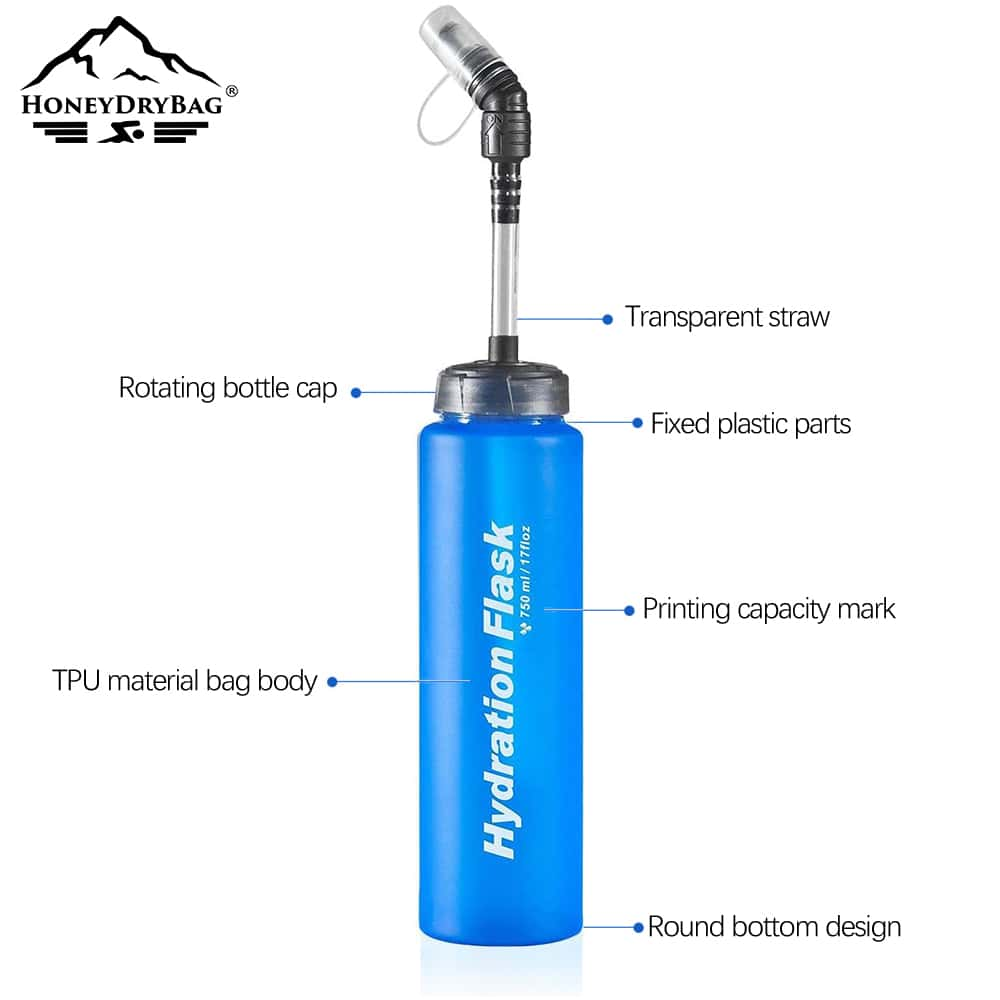
Honey Dry Bag works on OEM/ODM TPU soft flask projects for hydration and endurance-sport brands. If you are evaluating a custom flask concept, share the intended capacity, use case, branding needs and target order volume to discuss feasible options.
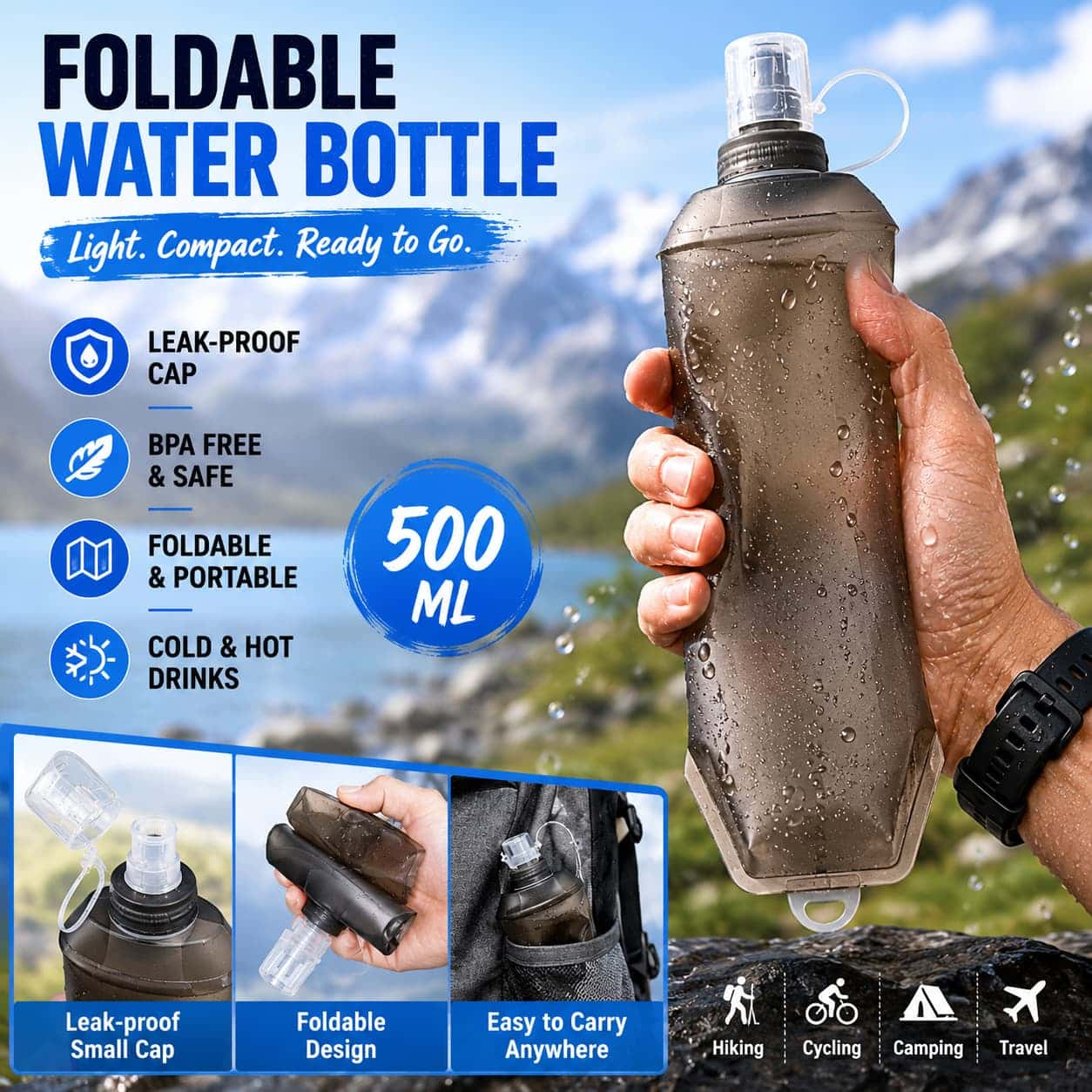
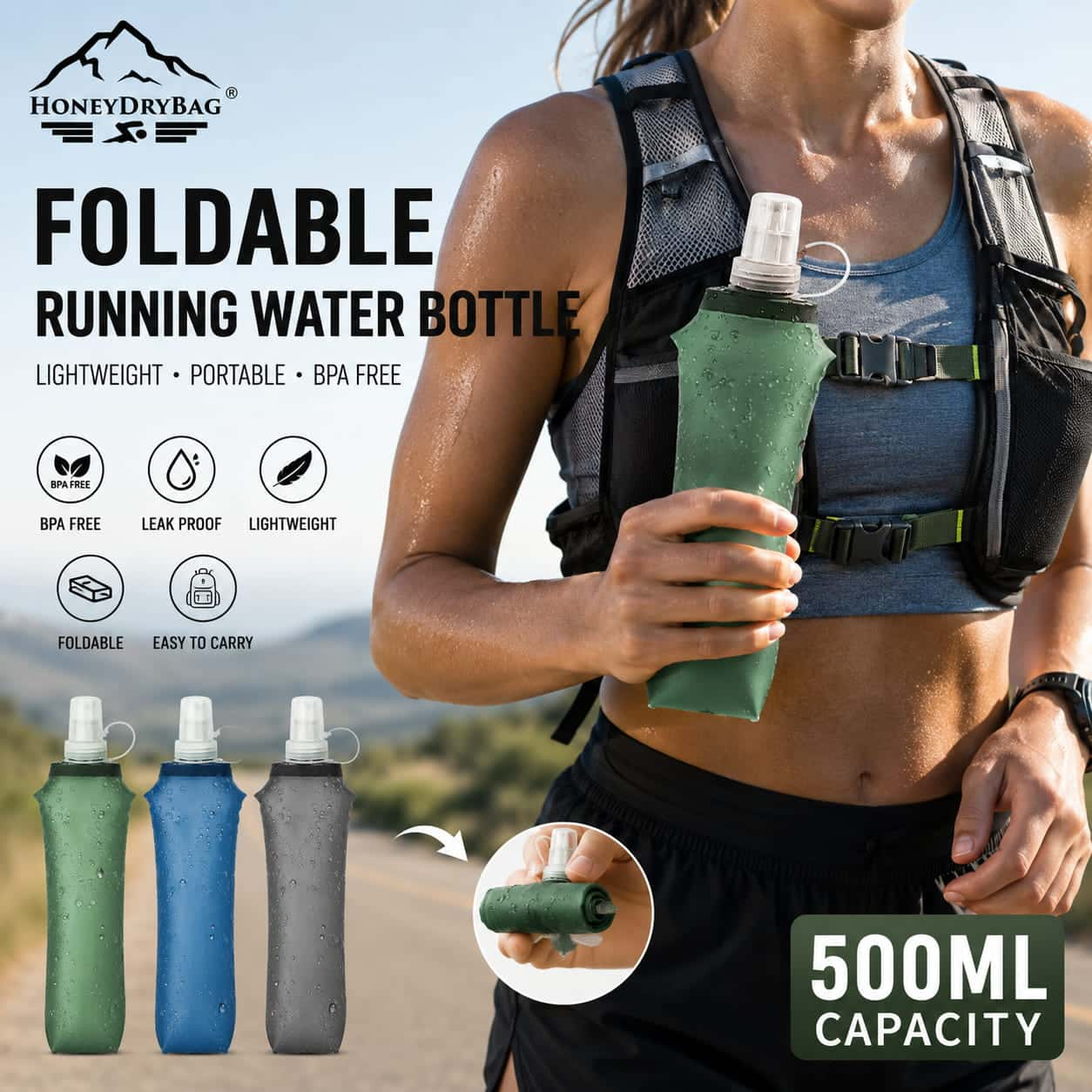
For training and running hydration, brands can compare the R50020 500ml TPU running soft flask with the more compact R50023 250ml TPU soft flask. These are Honey Dry Bag product examples, not equipment attributed to Barcelona race participants or organizers.
Sources
- Professional Triathletes Organisation — Challenge Barcelona 2026 results
- TRI247 — Challenge Barcelona 2026 race report
- Challenge Barcelona — TriExpo announcement
Editorial note: Hydration recommendations are general equipment guidance, not claims about products used or endorsed by race winners or organizers.