Quick answer: To choose a soft flask manufacturer, verify TPU material suitability, manufacturing responsibilities, customization capabilities, seam and leak testing, sampling procedures, MOQ, and production consistency. For OEM and ODM buyers, a clear specification and approved sample matter more than an unsupported claim of being the “best” supplier.
Choosing a soft flask manufacturer is an important sourcing decision for running brands, outdoor equipment distributors, and private-label hydration companies. A flexible bottle may look simple, but its performance depends on TPU material selection, welded seams, caps, valves, dimensions, and consistent production.
This guide explains ten practical questions for evaluating a TPU soft flask manufacturer, especially for custom OEM and ODM orders.
1. Does the Supplier Actually Manufacture TPU Soft Flasks?
Not every water bottle seller operates a production facility. Ask which steps are completed in-house and which are outsourced. Request examples of existing TPU soft flask models, available capacities, and a clear explanation of how the bottle body and seams are produced. A trading company may still be a suitable partner, but its role should be transparent.
2. What TPU Material and Documentation Are Available?
TPU (thermoplastic polyurethane) is a family of materials, not one universal food-contact grade. Buyers should ask about the exact material formulation, traceability, applicable food-contact requirements for their target market, and whether relevant documentation or testing is available for the finished configuration. Avoid relying on a generic “food-grade TPU” claim without supporting evidence.
For a deeper explanation, see what TPU is in a water bottle.
3. Which OEM and ODM Options Can Be Customized?
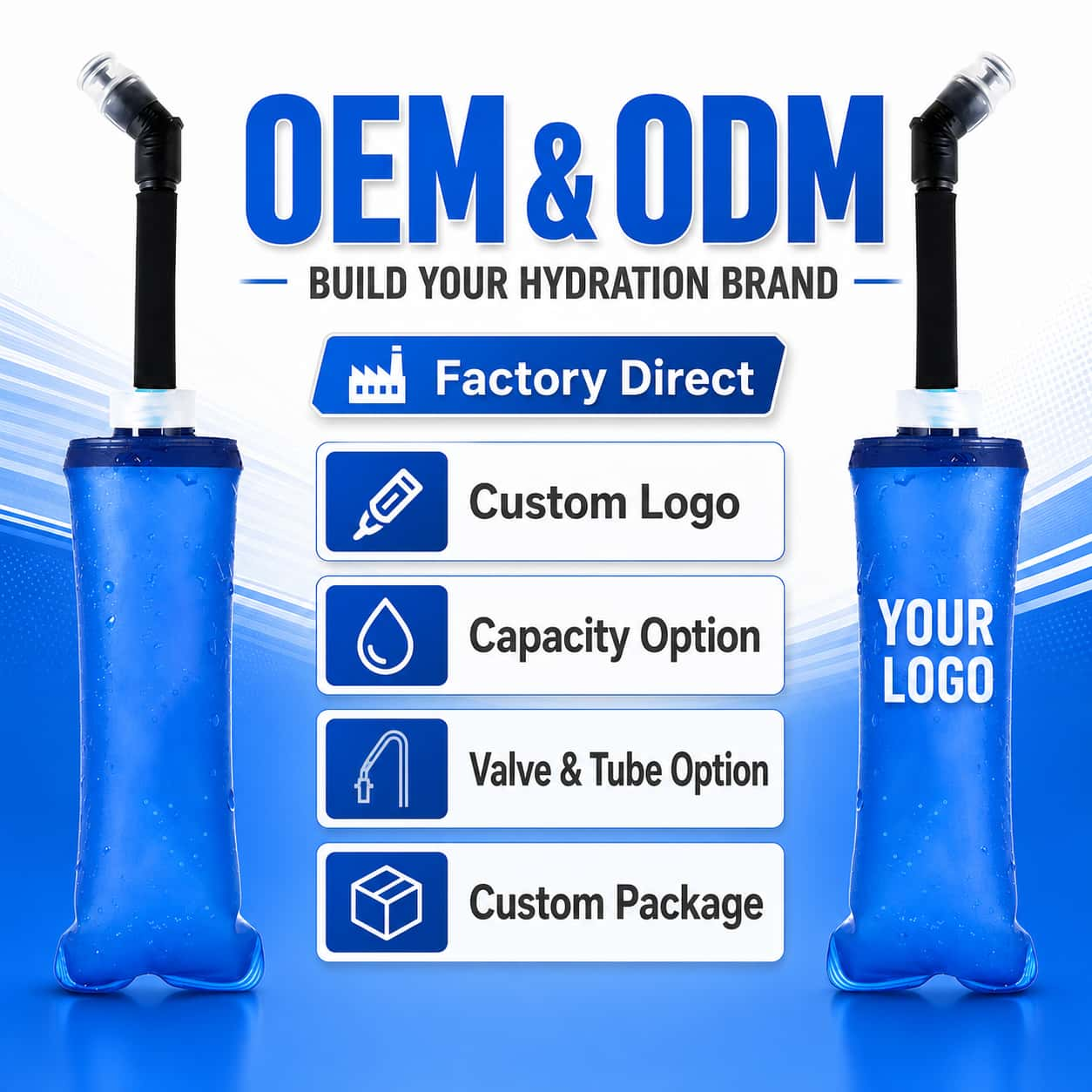
An OEM soft flask project may use an existing bottle model with a custom logo, color, cap, valve, straw, or packaging. ODM development may involve changes to dimensions, shape, or components. Confirm which options are available for the specific model, whether new tooling is necessary, and how changes affect minimum order quantity and lead time.
4. How Are Welded Seams and Valves Tested?
Flexible flask construction makes seam quality and component fit especially important. Ask how the supplier checks seam appearance, leakage, cap fit, valve operation, and performance after repeated squeezing. Agree on test conditions and acceptance criteria before placing an order. Internal factory checks and independent laboratory reports serve different purposes; clarify which evidence is available.
5. Which Capacity Fits Your Product Line?
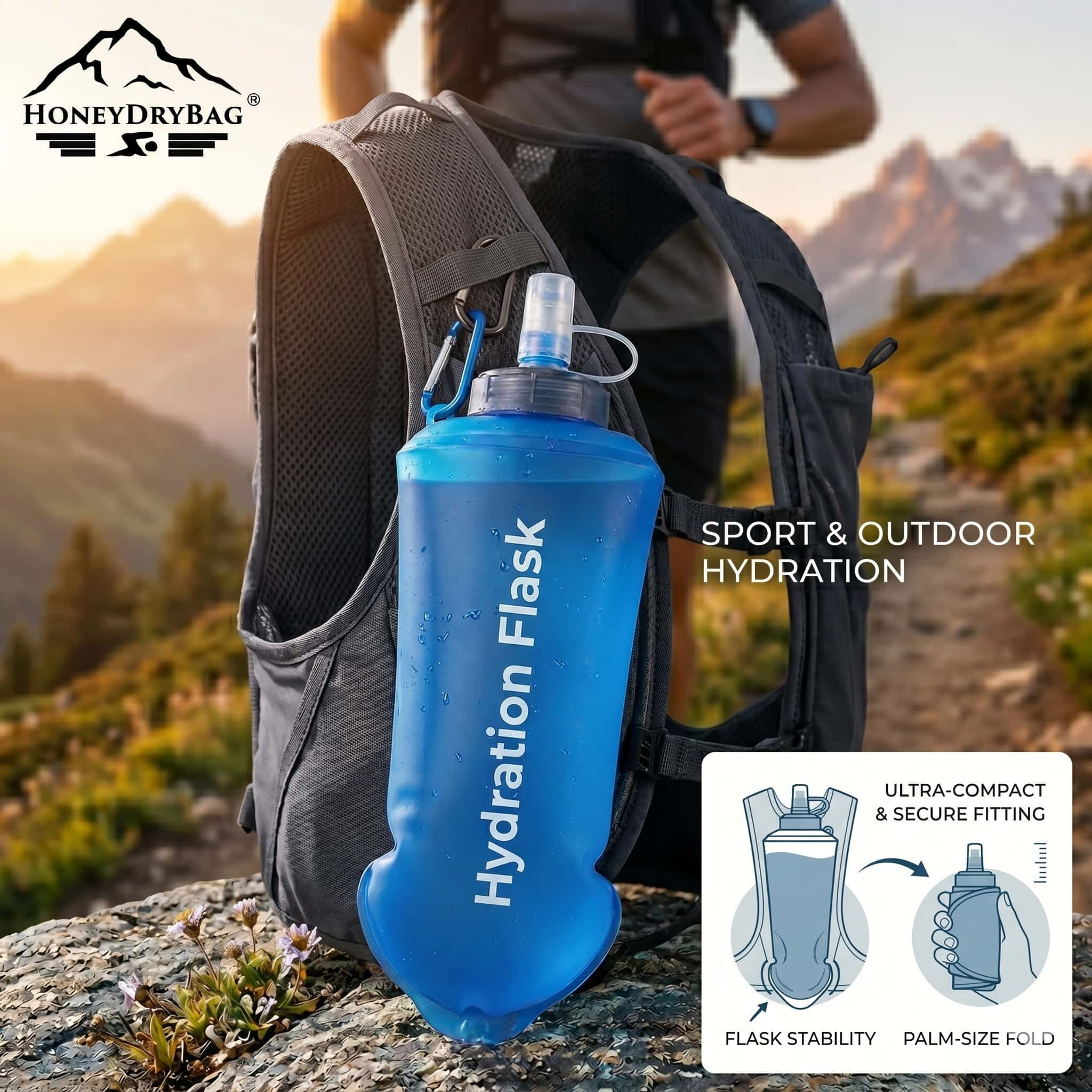
A 250ml soft flask may suit compact running or nutrition applications; 350ml can be useful where pocket space is limited; 500ml is common in running vest hydration; and larger formats require separate compatibility checks. The best capacity depends on dimensions, carrying equipment, intended use, and user expectations—not volume alone.
Read the 250ml vs 350ml vs 500ml soft flask comparison before selecting a size.
6. What Determines MOQ?
Ask for separate minimum order quantities for existing models, custom colors, logo printing, packaging, and new tooling. The MOQ for a standard bottle is not necessarily the same as the MOQ for a fully customized design. Request a written quotation tied to the exact product configuration.
7. How Does Sample Approval Work?
A useful sample review checks actual capacity, dimensions, material feel, cap and valve function, leak performance under agreed conditions, logo placement, and fit inside the intended running vest or pocket. Agree on a reference sample or documented specification before mass production.
8. What Quality-Control Records Can Buyers Review?
Ask which inspections are performed, how frequently they are performed, and what happens when a unit fails. Relevant checks may cover appearance, dimensions, seams, leakage, valve function, and packaging. If selling into regulated markets, discuss the documentation and tests applicable to the final product and intended use.
9. How Is a Custom Soft Flask Quotation Calculated?
Wholesale quotations depend on more than bottle volume. Relevant factors include order quantity, material requirements, shape, cap and valve configuration, printing, packaging, tooling, testing, and shipping terms. Share a detailed specification so that quotations from different suppliers can be compared fairly. Custom B2B manufacturing does not always have a meaningful single public unit price.
10. Can the Manufacturer Support Repeat Orders and Product Updates?
Discuss how the supplier controls changes to materials and components, manages approved samples, handles packaging revisions, and supports future sizes or colors. Consistency between the approved sample and repeat production matters to brand owners.
Soft Flask Manufacturer in China: What Overseas Buyers Should Verify
When sourcing from a soft flask manufacturer in China, verify the supplier's actual production role, available models, customization scope, sample approval process, inspection procedures, and documentation for your target market. Geographic location alone does not prove quality or manufacturing capability. Clear specifications, written order terms, and realistic production planning reduce avoidable sourcing risks.
OEM vs ODM Soft Flask Manufacturing
OEM typically starts with an existing or buyer-defined specification and focuses on producing to agreed requirements. ODM may involve more product development, including new shapes or functional configurations. Neither is automatically better. Choose based on how much differentiation, tooling, and engineering your project requires.
Working With Honey Dry Bag
Honey Dry Bag focuses on TPU soft flasks and collapsible water bottles for running and outdoor hydration applications. Explore the soft flask product collection to compare available models and discuss the customization options relevant to your project.
For an OEM or ODM inquiry, send your preferred capacity, expected order quantity, logo artwork, target market, cap or straw requirements, and packaging needs. Contact Honey Dry Bag to discuss your soft flask manufacturing requirements.
Conclusion
The right soft flask manufacturer should be evaluated through verifiable material information, practical customization capabilities, sampling, quality-control procedures, and clear order terms. Use these ten questions to compare suppliers on evidence rather than marketing claims.