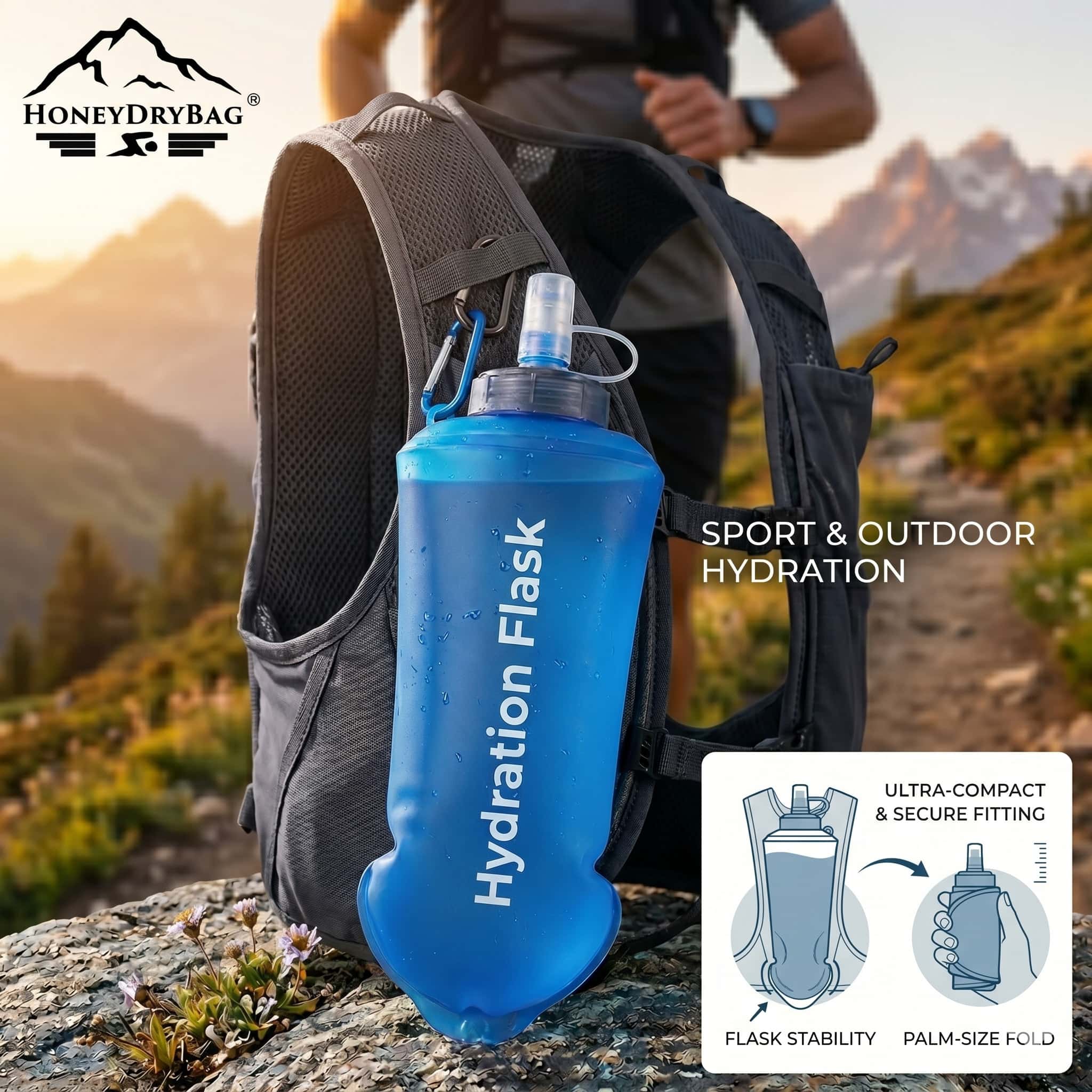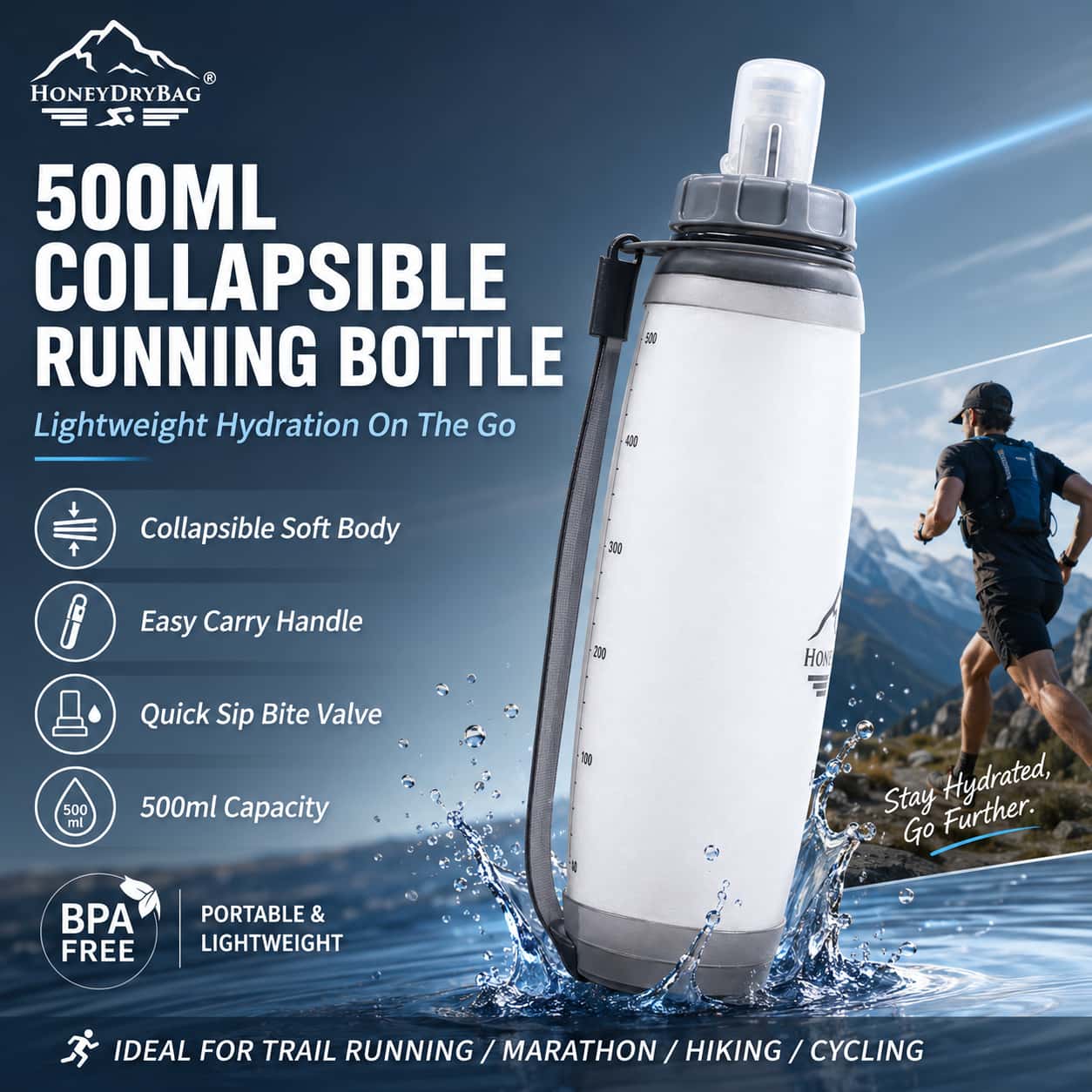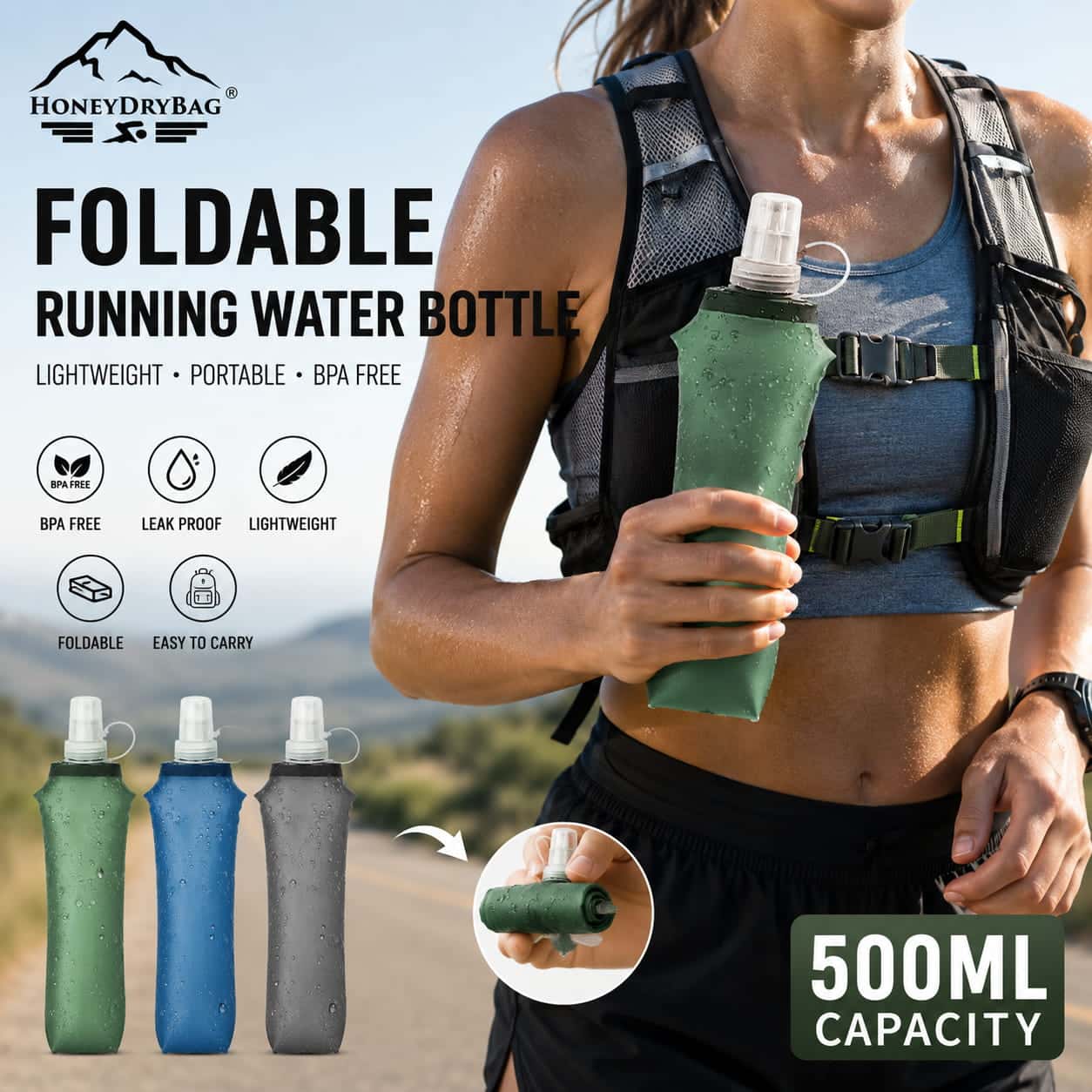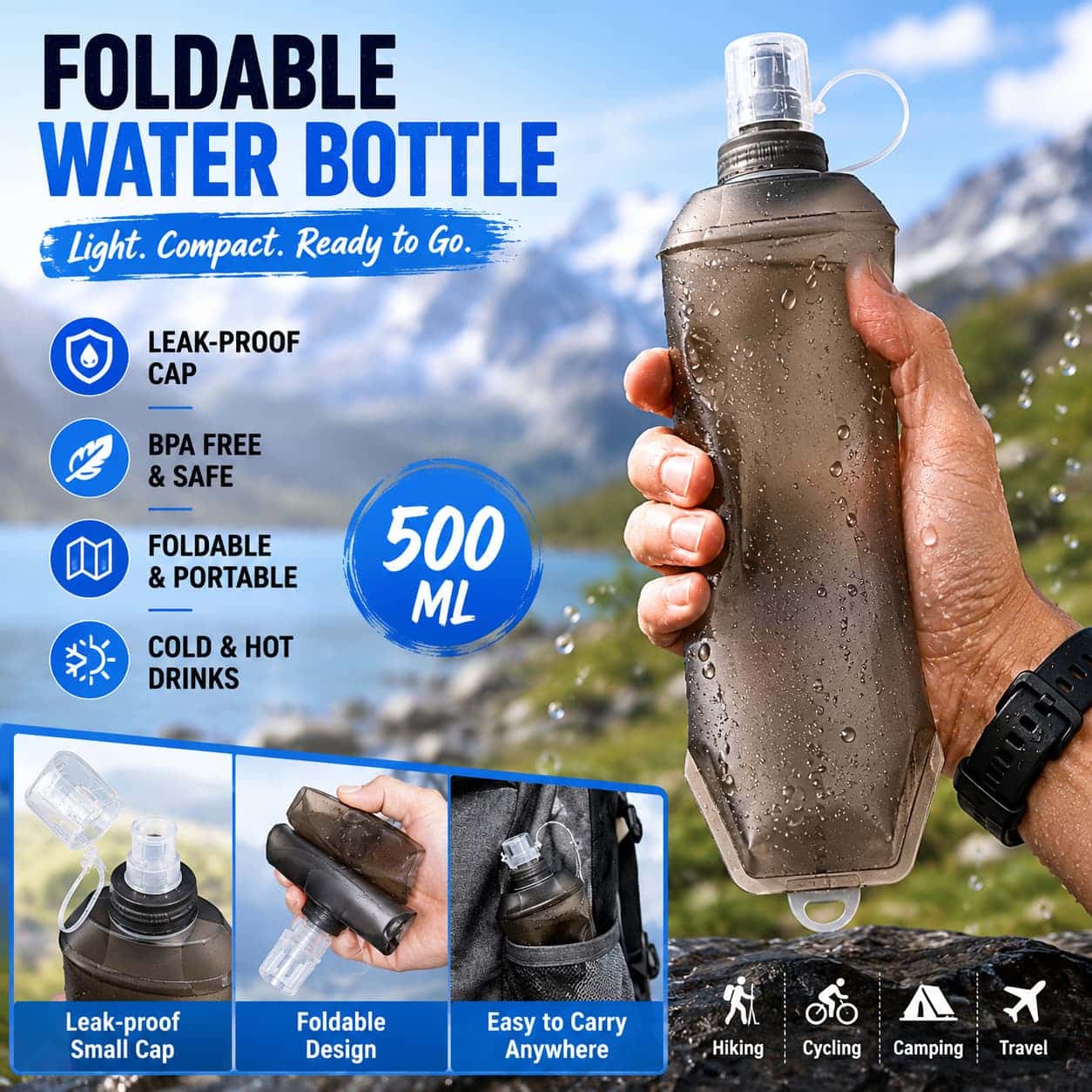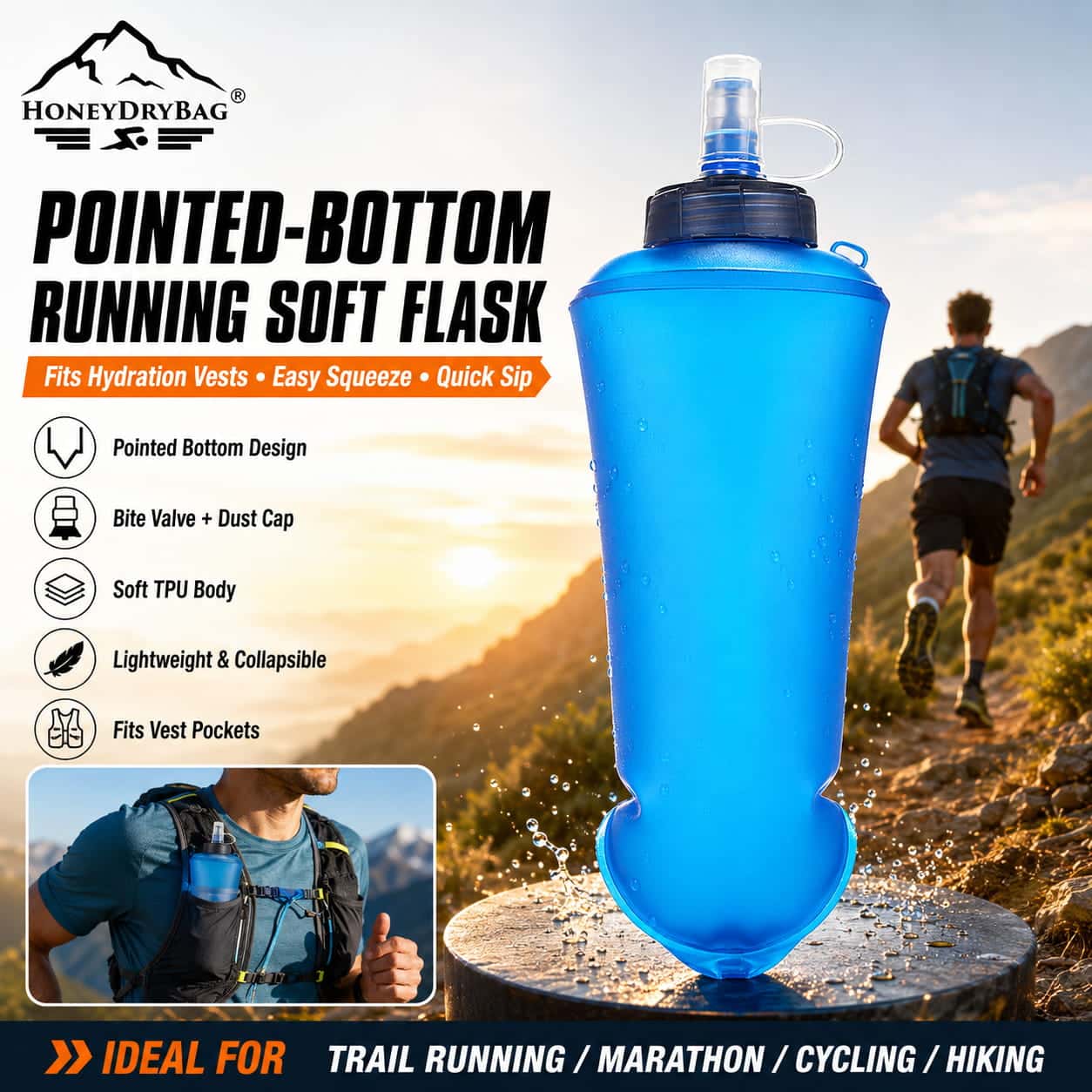
Quick answer: To fill a soft flask with powdered drink mix, support the flexible body with one hand, add part of the water first, pour the powder through a wide opening or small funnel, leave some air space, close the cap firmly, and shake until the mix is dissolved. After the run, rinse the flask, cap, and bite valve as soon as possible so sticky residue does not dry inside the opening or valve.
For runners, this is mostly a handling problem. For brands and B2B buyers, it is a product-design problem. Opening diameter, cap shape, flask stiffness, valve flow, cleaning access, and aid-station refill speed all affect whether a soft flask works well with powdered electrolytes, carbohydrate drink mix, or concentrated race fuel.
Why Is Powdered Drink Mix Hard to Put Into a Soft Flask?
A soft flask is not a rigid bottle. Its flexible TPU body can fold, roll, or squeeze when the user holds it. That flexibility is useful during running because the flask collapses as liquid is consumed and takes up less space in a vest pocket. The same flexibility can make filling less stable on a kitchen counter, at a race aid station, or in a transition area.
Powder also behaves differently from water. It can cling to a wet cap thread, bridge across a narrow opening, or collect around the shoulder of the flask before it drops into the liquid. If the runner pours too quickly, powder may sit on the rim and spill when the cap is closed. If the flask is filled completely before shaking, there may not be enough air space for the powder to dissolve evenly.
The result is a familiar mess: powder on the table, sticky liquid on the outside of the bottle, clumps near the cap, and residue that later affects taste or bite-valve flow.
The Cleanest Way to Fill a Soft Flask With Powder
The best method depends on the powder, opening size, and whether the runner is preparing at home or refilling during a race. As a general process, use this order:
- Open the cap fully and make sure the bite valve is not blocking the opening.
- Hold the neck or shoulder of the flask so the body stays upright.
- Add a small amount of water first, usually enough to cover the bottom.
- Add the powder slowly through the opening or through a clean funnel.
- Add more water, but do not fill the flask completely yet.
- Close the cap tightly and shake the flask.
- Open carefully if pressure has built up, then top up to the required volume.
- Wipe the cap threads and outside of the flask before putting it into a vest pocket.
Adding some water before the powder helps reduce dry powder sticking to the lower corners. Leaving air space makes shaking easier. Wiping the cap area matters because powder trapped on the thread or sealing surface can interfere with closure and create sticky residue.
Always follow the drink-mix manufacturer's serving and mixing instructions. A soft flask can carry many hydration and nutrition mixes, but the flask itself does not determine the correct concentration for training or racing.
Standard Cap, Wide-Mouth Cap, or Funnel: Which Works Best?
A standard opening can be compact and familiar, but powdered drink mix is easier to spill when the opening is small or the cap thread is close to the pour path.
A wider opening makes it easier to add drink mix, ice, or water quickly. It also improves visibility during cleaning because the user can see more of the inside surface near the neck. However, a wide-mouth design is not automatically better. The cap must still seal reliably, stay comfortable in a running vest, and avoid catching on elastic loops or pocket openings.
A small funnel can make powder filling cleaner, especially for concentrated carbohydrate mix or narrow sachets. The trade-off is complexity: a separate funnel can be lost, and a built-in insert must be easy to remove, clean, and dry.
How to Refill a Soft Flask at an Aid Station
Aid-station refilling is harder than kitchen preparation because the runner is tired, rushed, and often handling several items at once.
A practical refill method is:
- Remove the flask and hold it by the neck, not by the soft lower body.
- Open the cap completely.
- Add the pre-measured powder first if the flask is mostly empty.
- Add water slowly until the flask is about 70-80% full.
- Close and shake.
- Add more water if needed.
- Check the cap seal before putting the flask back into the vest.
If the race uses cups instead of bottles or jugs, a wide opening can reduce spillage. If the athlete carries powder in a narrow sachet, the sachet width should also be tested against the flask opening.
Can Thick Drink Mix Clog a Soft Flask Bite Valve?
A thick drink mix can reduce flow if it is not fully dissolved, if the concentration is too high, or if particles collect around the bite valve. This does not always mean the valve is defective.
Common causes include:
- Too much powder for the amount of water
- Poor mixing before the flask is placed in the vest
- Powder stuck around the cap or valve after filling
- Sticky residue drying inside the bite valve
- Pulp, coarse particles, or gel-like fuel that was not intended for that valve style
For runners, the safest approach is to mix according to the nutrition brand's instructions and rinse the valve after use. For brands, the better approach is to test flow with the types of drink mix the target users actually carry, not only with plain water.
If the article topic is more about valve leakage or valve retention, see our guide: Why Does My Soft Flask Leak? 7 Common Causes and How to Fix Them.
Cleaning After Powdered Drink Mix
Powdered sports drink usually leaves more residue than plain water. Sugar, flavoring, electrolytes, colorants, and thickening ingredients can remain near the cap, shoulder, valve, and seams.
A simple care routine is:
- Empty the flask soon after the run.
- Rinse the body, cap, and valve with warm water.
- Use mild soap when the flask carried sports drink rather than plain water.
- Pay attention to the cap thread and bite valve area.
- Rinse thoroughly so no soap remains.
- Leave the flask open and upside down until fully dry.
For a related taste and odor discussion, see Why Does My Running Soft Flask Taste Like Plastic?.
What Should Brands Test Before Ordering Powder-Friendly Soft Flasks?
For a B2B soft flask project, do not approve a design only because the capacity is correct. A 500 ml soft flask can be easy or frustrating to use depending on the opening, cap, shoulder, and valve.
Brands should test:
- Powder pouring from a scoop, sachet, or packet
- Cap sealing after messy filling
- Bite-valve flow with real electrolyte or carbohydrate drink
- Cleaning access around the shoulder, thread, and valve
- Vest-pocket compatibility with the final cap size
- Refill speed under race-like conditions
For a broader overview of material, capacity, and customization choices, read our complete B2B guide to foldable TPU running water bottles.
OEM and ODM Design Checklist
Before confirming a custom soft flask for powdered drink mix, buyers should define:
- Target capacity
- Filled length and maximum width
- Opening diameter and cap style
- Bite valve type and expected flow rate
- Whether the flask is mainly for water, electrolyte mix, carbohydrate drink, or gel-style fuel
- Whether a funnel, wide cap, or pre-measured powder workflow is required
- Cleaning instructions for the body, cap, and valve
- Logo method, color, packaging, and replacement cap or valve options
- Sample tests using real drink mix rather than plain water only
Final Takeaway
Powdered drink mix can be used in a soft flask, but the experience depends on more than capacity. The cleanest process is to support the flask, add part of the water first, pour powder carefully through a suitable opening or funnel, leave air space for shaking, and rinse the cap and valve after use.
For runners, small habits reduce mess. For brands, the key is design validation: test the opening, cap seal, valve flow, cleaning access, and vest fit with real powdered drink mix and real refill conditions.
Honey Dry Bag works with running, triathlon, and outdoor brands on OEM and ODM soft flask projects. Contact us to discuss target capacity, cap options, valve choices, branding, packaging, and sample testing for your hydration product line.