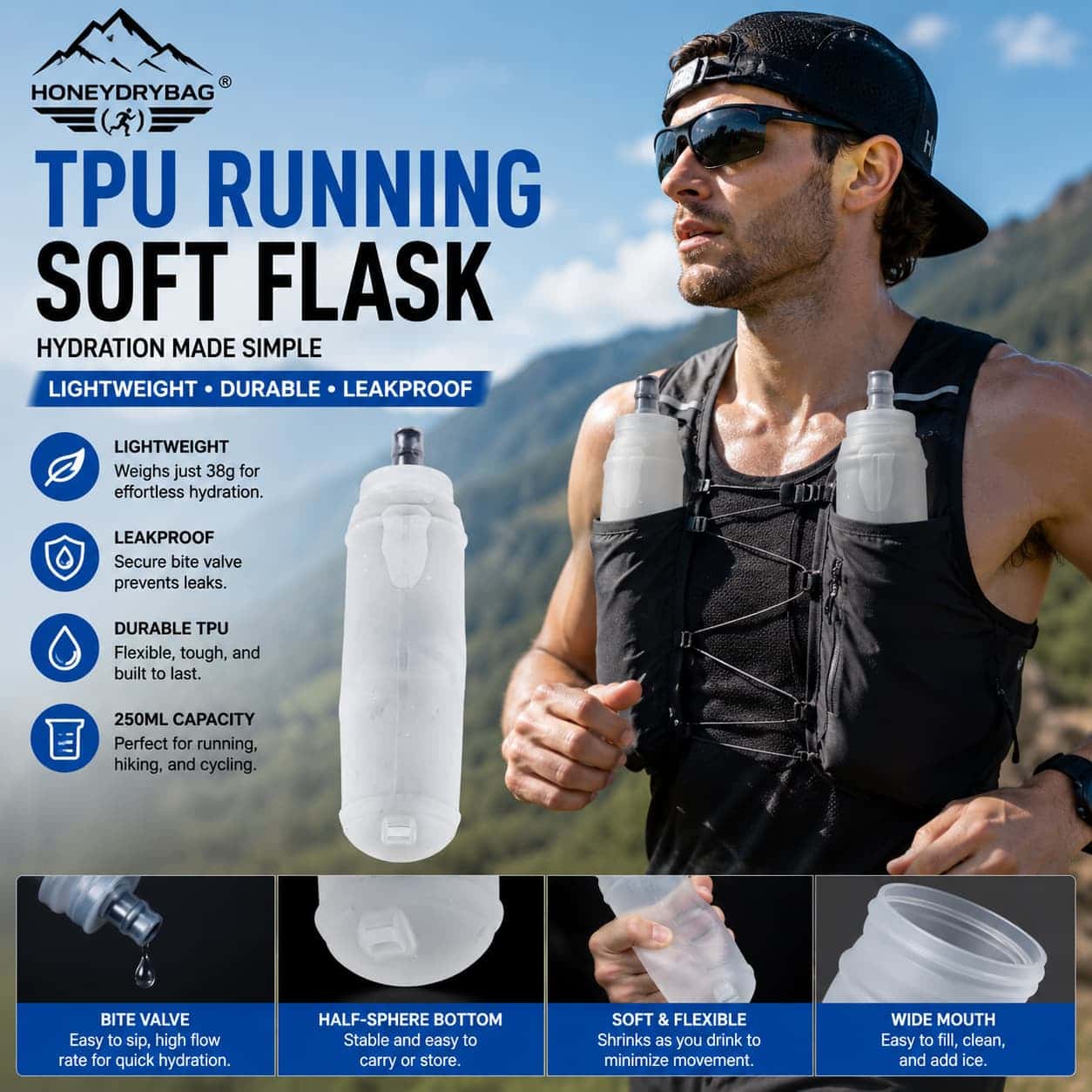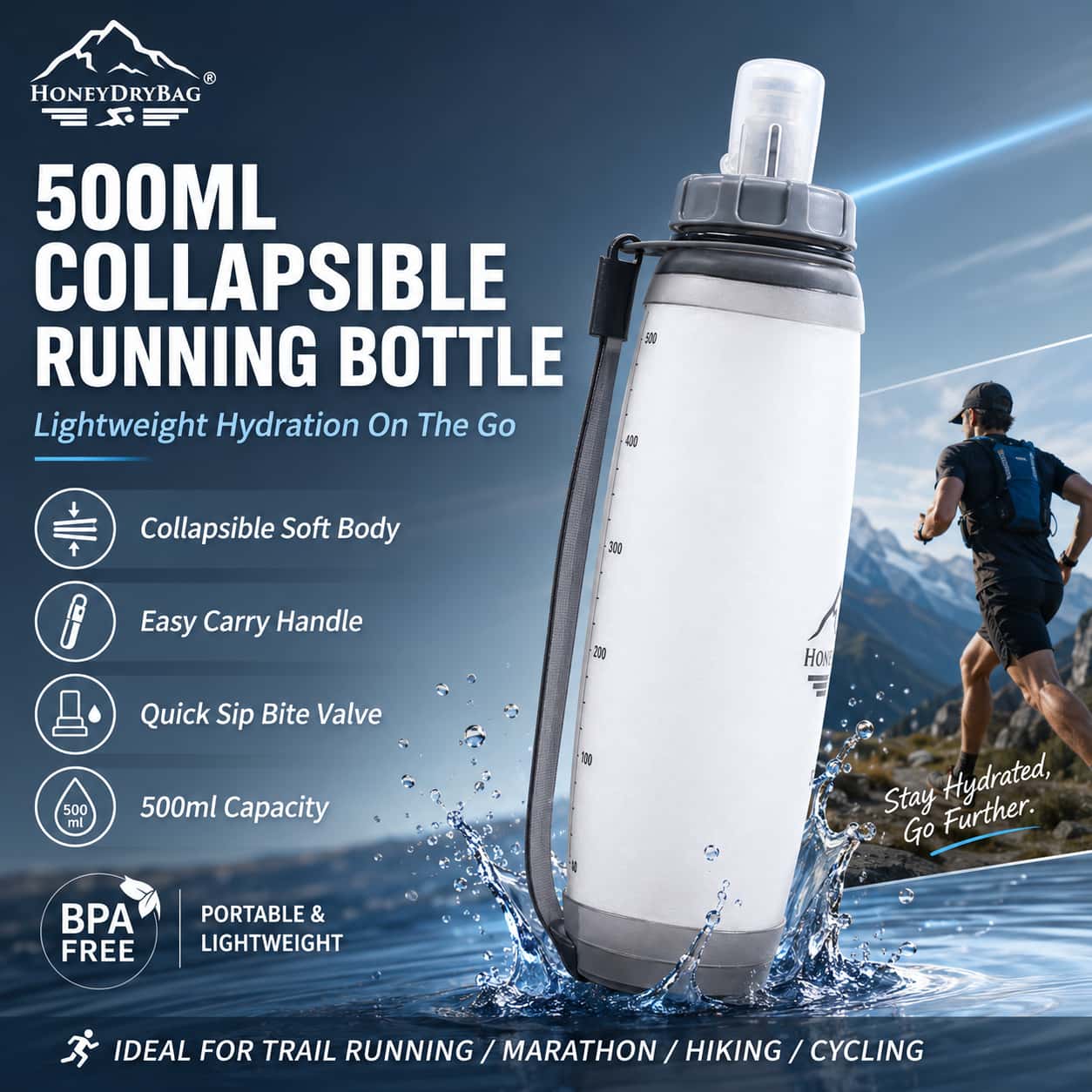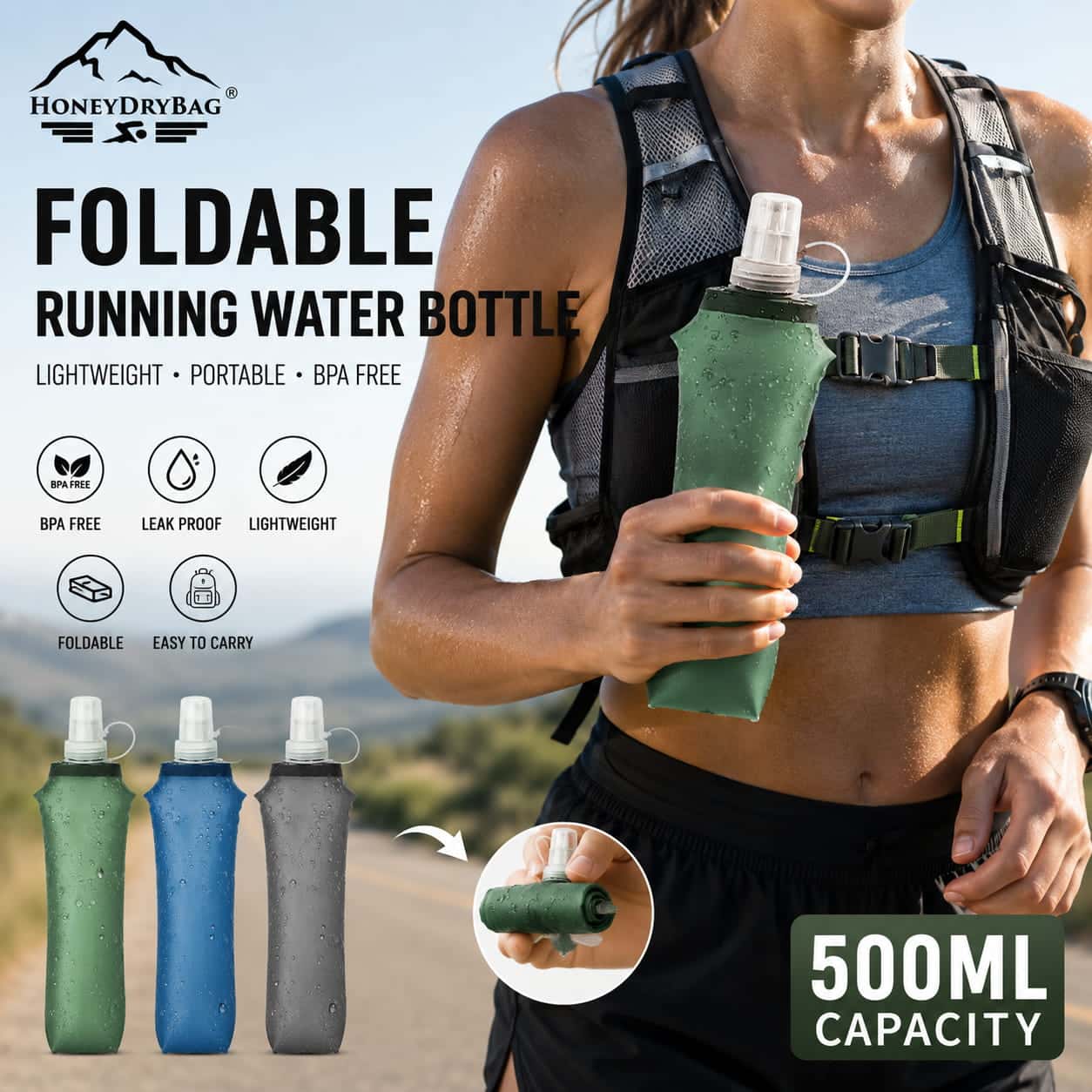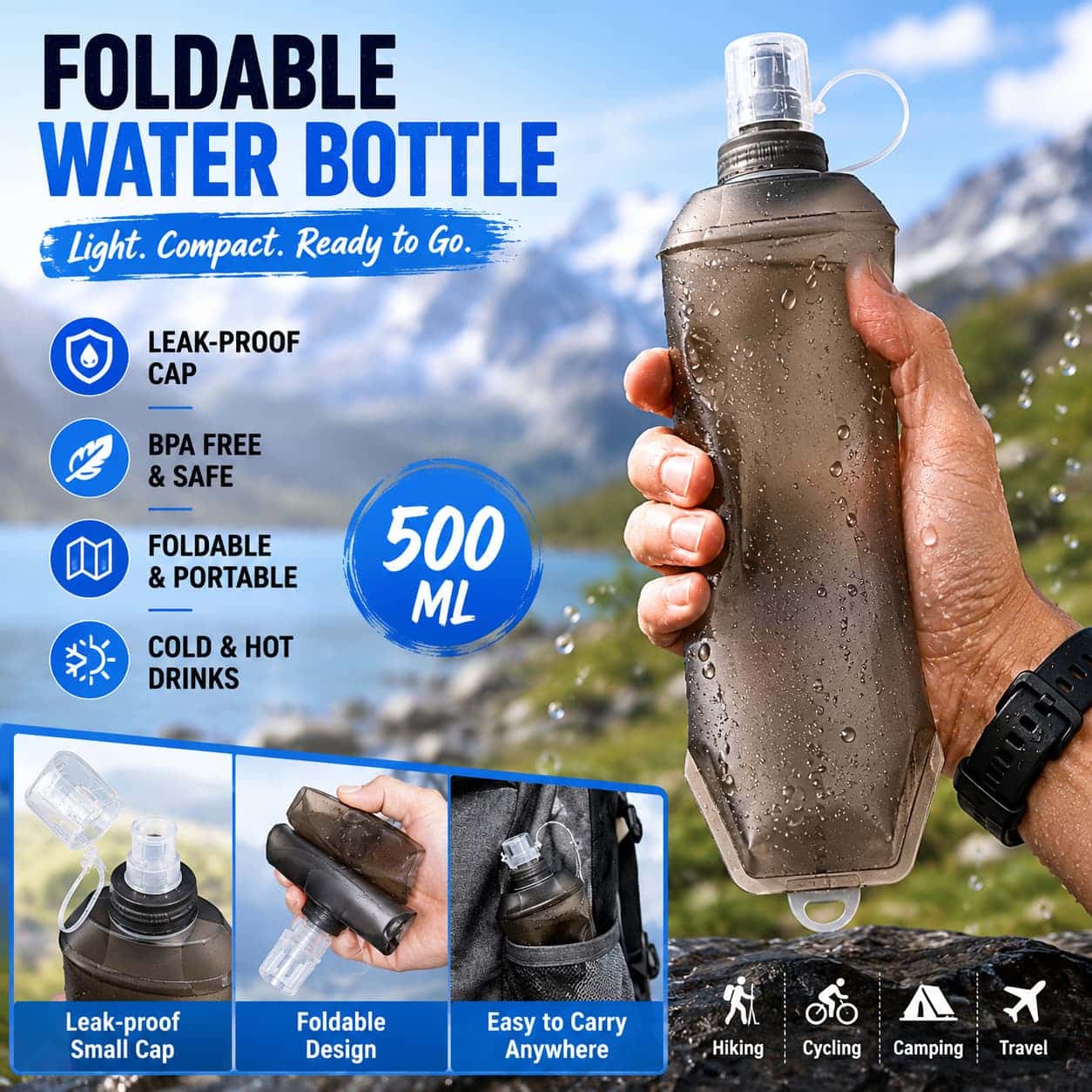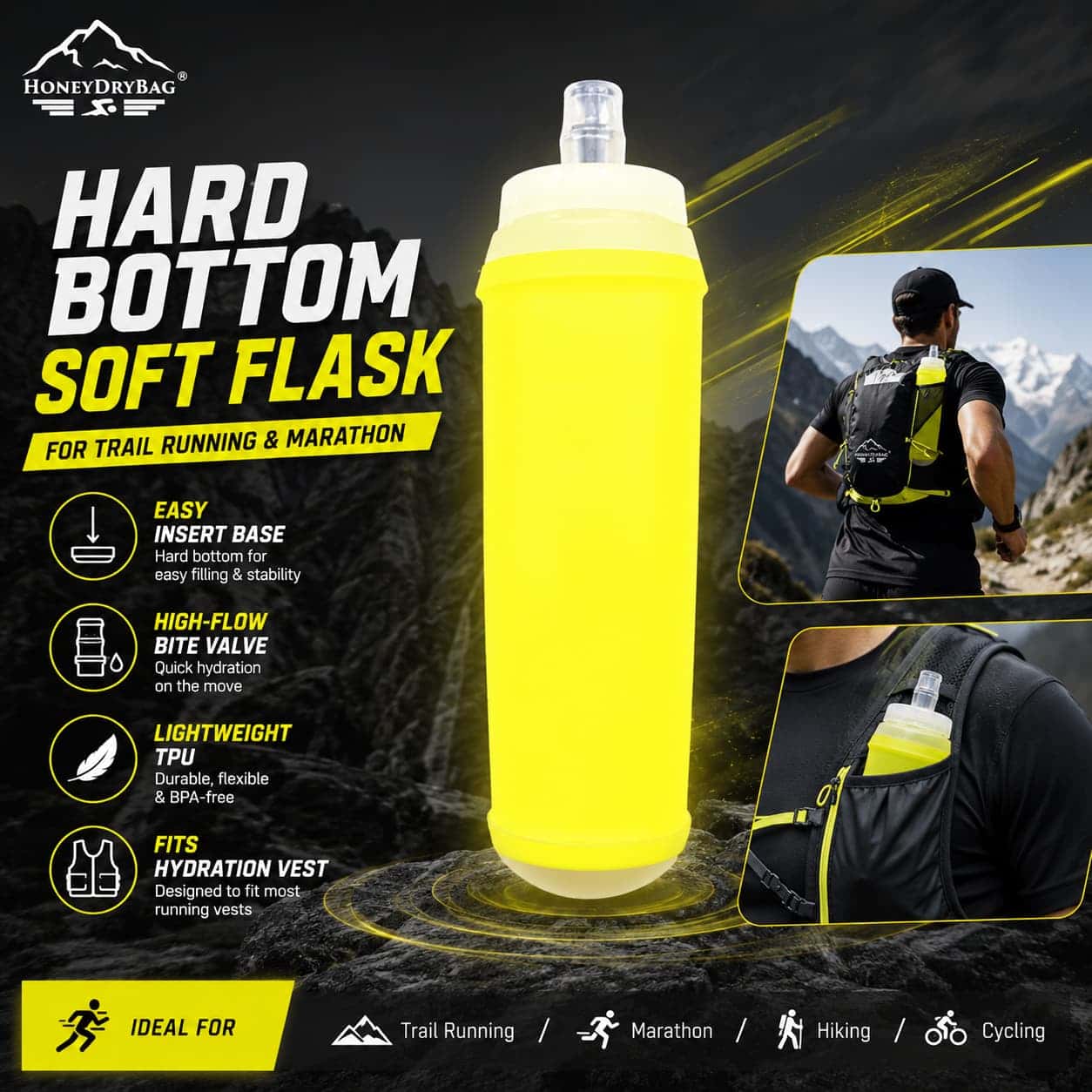
Quick answer: Yes, a soft flask can be used as a gel flask or concentrated-carb flask for a 70.3 run, but it should be tested with the exact gel mix, cap, valve, and carrying system before race day. A small 150-350 ml soft flask can be useful when an athlete wants to carry personal nutrition and drink plain water separately at aid stations. The main risks are thick liquid flow, sticky residue, valve clogging, leakage, pocket fit, and cleaning after the race.
This article focuses on the container and carrying system, not on prescribing a personal nutrition plan. Sports-nutrition guidance recognizes the role of food and fluid before, during, and after exercise, but the right carbohydrate, sodium, caffeine, and fluid strategy depends on the athlete, event, weather, and training history. For nutrition timing and intake decisions, athletes should test their plan in training and follow qualified coaching or medical advice. For the nutrition-side question, see our separate guide to energy gels and nutrition strategy for the triathlon run leg.
When Does a Soft Flask Make Sense as a Gel Flask?
A soft flask makes sense when the athlete wants one refillable container instead of several individual gel packets. On a 70.3 run, this can reduce wrapper handling, make it easier to take smaller sips, and let the athlete carry a familiar mix when the on-course product is unknown or not well tolerated.
It is especially useful when the plan separates concentrated nutrition from plain water. The soft flask carries gel, syrup, or a concentrated carbohydrate-electrolyte drink. Aid-station water is then used to wash it down, reduce sweetness, rinse the mouth, or adjust intake in hot conditions.
That separation is an equipment choice, not a universal nutrition rule. Some athletes prefer individual gels because they are pre-portioned and easier to count. Others prefer a small flask because it gives smoother access and fewer packets to open while running. The better choice is the one the athlete can use reliably at race pace.
If the broader question is whether to carry personal hydration at all, start with our guide to carrying your own soft flask on a 70.3 run. This article goes deeper into the specific case of using a soft flask for concentrated gels.
Soft Flask vs Gel Flask: What Is the Difference?
A traditional gel flask is usually smaller and more rigid than a running hydration flask. It is designed to dispense thick nutrition in small amounts. A running soft flask is more flexible, collapses as it empties, and is often designed for water or sports drink rather than very thick gel.
That does not mean a soft flask cannot work. It means the buyer should define the use case. A flask that performs well with water may feel different with syrup-like carbohydrate mix. The cap, valve opening, shoulder stiffness, and hand grip become more important when the liquid is thicker.
| Flask type | Main use | Strength | Limitation |
|---|---|---|---|
| Small gel flask | Gels, syrup, concentrated mix | Easy to portion and carry | May be too small for water or dilution |
| 150-350 ml soft flask | Concentrated carbs or diluted nutrition | Flexible, compact, pocket-friendly | Must be tested for flow and cleaning |
| 500 ml soft flask | Water, electrolyte drink, mixed fuel | More capacity for longer training | May be too large if used only for gel |
| Hard bottle | Water or mixed drink | Predictable structure and flow | Bulkier, less body-conforming |
For B2B buyers, the important point is not the label. It is the finished combination of capacity, valve, cap, film thickness, opening size, and pocket compatibility.
What Capacity Works for a 70.3 Run?
For concentrated gel or liquid carbohydrate, smaller capacities are usually easier to handle. A 150 ml or 250 ml flask may be enough for a compact gel plan, while a 350 ml flask gives more room for dilution or a longer run segment. A 500 ml flask may still work, but it can be unnecessarily large if it only carries concentrated nutrition.
Capacity should be chosen from the intended use, not from the race distance alone. Ask these questions before selecting a flask:
- Is the flask carrying thick gel, diluted gel, electrolyte drink, or plain water?
- Will the athlete drink from it directly or squeeze gel into the mouth and then take water from an aid station?
- Does the flask need to fit a shorts pocket, belt, handheld strap, or running vest pocket?
- Will the athlete carry one concentrated flask plus separate water, or two different flasks?
- Is the product meant for elite racing, beginner 70.3 use, training, or retail replacement?
A small flask that is easy to squeeze and clean can be more useful than a large flask that holds more but bounces, leaks, or leaves residue in the valve.
Which Cap or Valve Works Better With Gels?
Thicker liquids change how a flask behaves. A standard bite valve may be comfortable for water, but it can require more pressure with gel or syrup. A flip cap can offer a wider opening for thicker nutrition, but it must be secure enough not to open inside a pocket. A straw extension may help access in a running vest, but it also adds more internal surface area to clean.
For a gel-flask use case, the cap should be evaluated with the actual liquid viscosity. Water-only testing is not enough.
Bite Valve
A bite valve is familiar to runners and can reduce accidental spilling. It works best when the mix is still fluid enough to pass through the valve without excessive squeezing. If the gel is too thick, the athlete may bite harder, squeeze harder, or leave sticky residue around the slit.
Flip Lid
A flip lid may be easier for thicker gels because the opening can be wider. The trade-off is security. The lid must stay closed under pocket pressure, sweat, hand contact, and repeated opening while running.
Straw or Valve Extension
A straw can help when the flask sits low in a vest pocket, but it is rarely the first choice for very sticky gel unless the tube is easy to rinse and dry. If the buyer is comparing straw and non-straw designs, the long-straw trade-offs in running vest soft flasks with long straws are worth reviewing.
Why Do Athletes Separate Concentrated Carbs and Water?
Athletes separate concentrated carbs and water because each liquid has a different job. The concentrated flask provides personal fuel. Plain water can help wash it down, dilute mouthfeel, manage thirst, or cool the body in hot conditions.
This arrangement also reduces dependence on the exact drink mix served on course. If the athlete has trained with a specific gel or carbohydrate mix, carrying it in a small flask can make race-day intake more predictable. Aid-station water then becomes the flexible part of the system.
The downside is that the athlete must remember the sequence. A very concentrated gel taken without enough water may feel unpleasant or contribute to stomach discomfort for some athletes. A flask plan should therefore be rehearsed during brick runs or race-pace sessions, not tested for the first time on race day.
For a broader equipment explanation, see our article on why runners separate concentrated carbs and water in hot races.
What Can Go Wrong During the Run?
The most common problems are practical rather than theoretical.
A thick mix may not flow through the valve. A flip lid may become sticky. A half-empty soft flask may collapse in a way that makes it harder to squeeze. The flask may sit well in a pocket when full but sink, fold, or rotate after part of the contents has been used.
Pocket fit also matters. A small soft flask may disappear too deeply in a large vest pocket. A 350 ml flask may be easy to grab from a belt but too wide for a shorts pocket. A 500 ml flask may fit a running vest but feel excessive for concentrated gel.
Test the complete carrying setup:
- Fill the flask with the real gel or mix.
- Carry it in the intended pocket, belt, or vest.
- Run at race effort, not only an easy pace.
- Take several small servings while moving.
- Use water separately if that is part of the plan.
- Reinsert or secure the flask after each use.
- Check the cap, valve, pocket, and hands for stickiness or leakage.
If the flask will sit in a running vest pocket, also test whether the bottle sinks or becomes difficult to access as it empties. The same full-to-empty behavior is discussed in our guide to soft flasks sinking in running vest pockets.
Cleaning Is Part of the Product Test
A soft flask used for gel is harder to clean than a soft flask used only for water. Sugar, flavoring, sodium, and thickener can remain around the cap, valve, seams, and threads. If the flask is packed wet after a race, odor and residue become more likely.
A practical cleaning test should include:
- rinsing immediately after use;
- warm water and mild soap where compatible with the product instructions;
- flushing the valve or cap opening;
- checking whether the bite valve or cap parts can be separated;
- air-drying the flask fully before storage;
- inspecting the valve, thread, gasket, and shoulder area after repeated use.
Do not assume every cleaning method is safe for every flask. Heat, harsh chemicals, dishwashers, or sterilizing products can affect some materials and valves. Follow the manufacturer's instructions for the specific product.
If taste, odor, or packaging smell is already a concern, the article on why a running soft flask tastes like plastic explains how material odor, cap design, storage, and drink residue can overlap.
B2B Sample Testing Checklist
For brands and OEM/ODM buyers, a soft flask for gels should be tested as a distinct product requirement. Do not approve it only because a water-filled sample looks good.
Define the Liquid
Record whether the target use is commercial gel, homemade syrup, concentrated carbohydrate drink, electrolyte mix, or plain water. If several uses are expected, test each one separately.
Define the Capacity and Fill Level
Test the flask full, half full, nearly empty, and empty. The user experience changes as the body collapses, especially when the contents are sticky.
Test the Cap and Valve
Check flow rate, hand pressure, one-handed operation, leakage under compression, valve residue, and whether the cap can be cleaned without special tools.
Test the Carrying System
Place the flask in the target shorts pocket, belt, vest, or handheld sleeve. Add realistic race items such as phone, gels, keys, race belt, and other flasks. A product that works alone may fail when the athlete carries a real load.
Test Cleaning After Repeated Use
Run repeated fill-use-rinse-dry cycles with the intended drink. Record odor, staining, sticky areas, drying time, valve wear, and whether replacement caps or valves are needed.
Define the Claim Carefully
If the product is designed for water and sports drink, do not market it as a gel flask unless testing supports that use. If it is designed for gels, explain which cap, capacity, and cleaning method make it suitable.
Questions to Ask a Soft Flask Manufacturer
Before approving samples, ask:
- What liquid types have been tested: water, electrolyte drink, gel, syrup, or concentrated carbohydrate mix?
- What is the recommended viscosity range, if any?
- Which cap style is best for thicker liquids?
- Can the bite valve, gasket, or cap parts be removed for cleaning?
- What cleaning methods are approved and which methods should be avoided?
- Does the flask fit the target running vest, belt, or shorts pocket when full and half empty?
- Are replacement caps, bite valves, or flip lids available?
- Can the capacity, film thickness, neck shape, or opening size be customized?
- Can production samples be checked against the same gel-flow and cleaning tests as the approved sample?
Final Takeaway
A soft flask can be a useful gel flask for a 70.3 run when the athlete wants compact personal nutrition and separate access to plain water. The best setup is not defined by capacity alone. It depends on the liquid thickness, cap design, valve flow, pocket fit, full-to-empty handling, and cleaning process.
For brands, this is a product-specification issue. A gel-compatible soft flask should be tested with the real mix, real carrying system, and realistic race handling before production.
Honey Dry Bag works with running and triathlon brands on OEM and ODM soft flask projects, including capacity selection, valve options, cap design, branding, sample development, and compatibility testing for race-day hydration and nutrition systems. Contact us to discuss custom soft flask options for your product line.