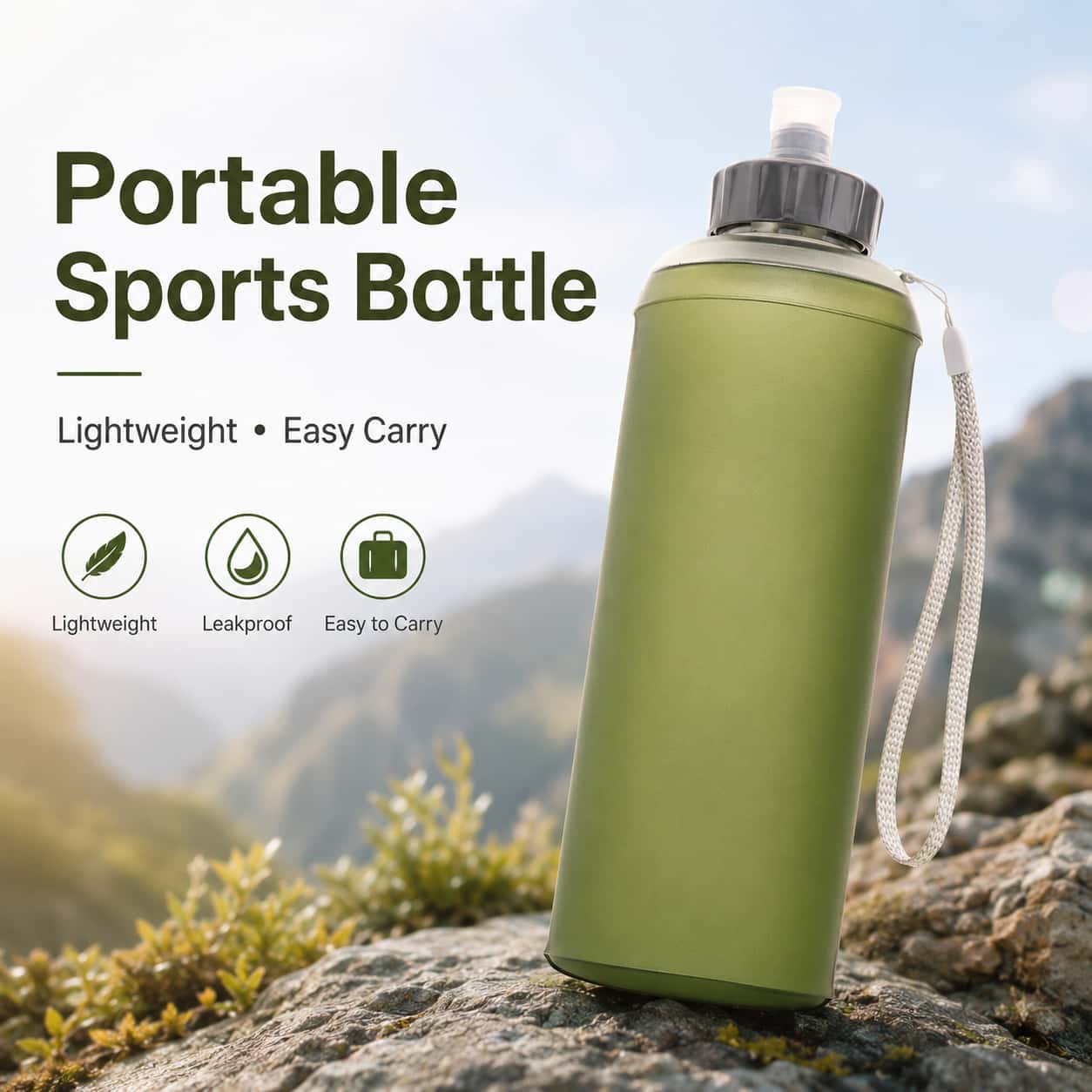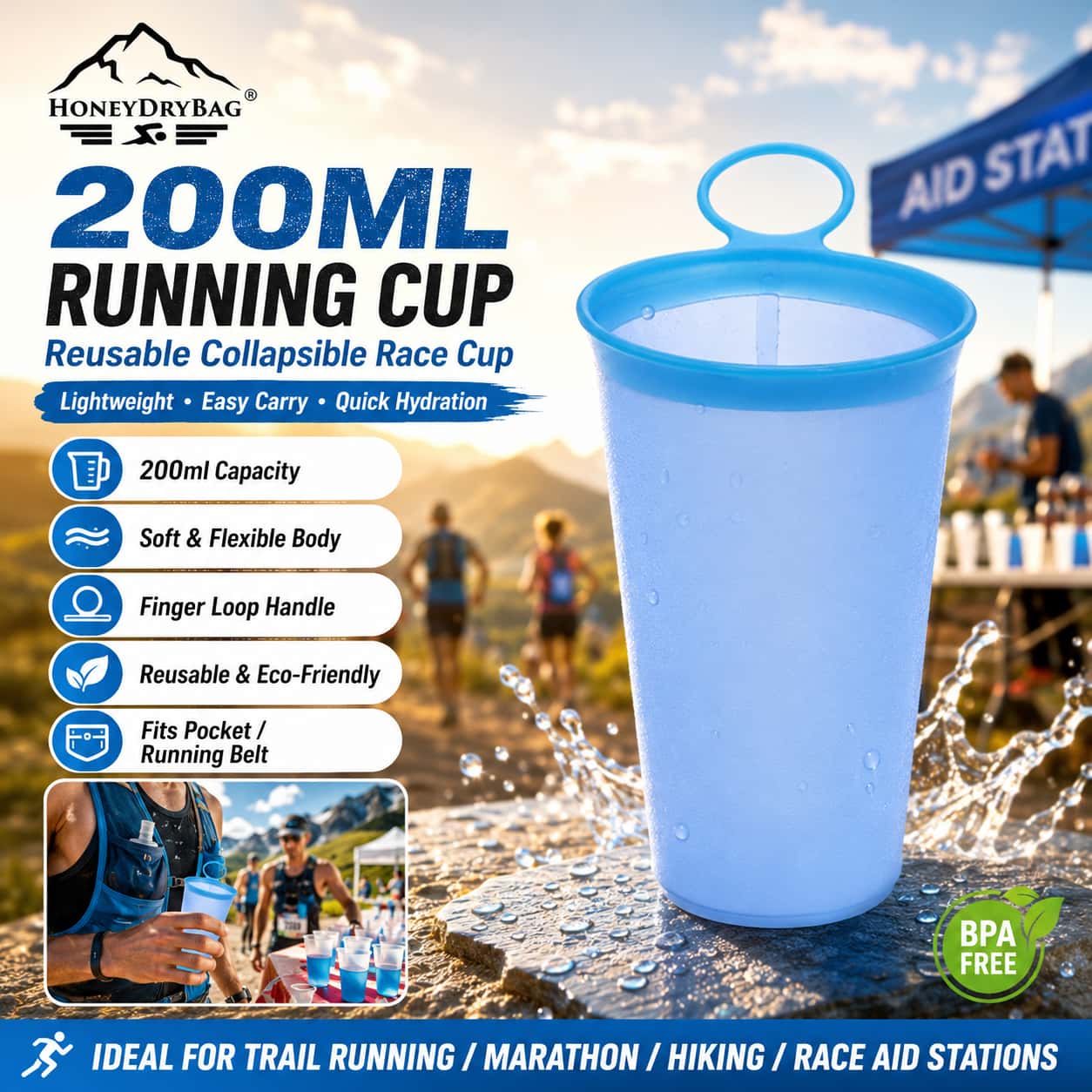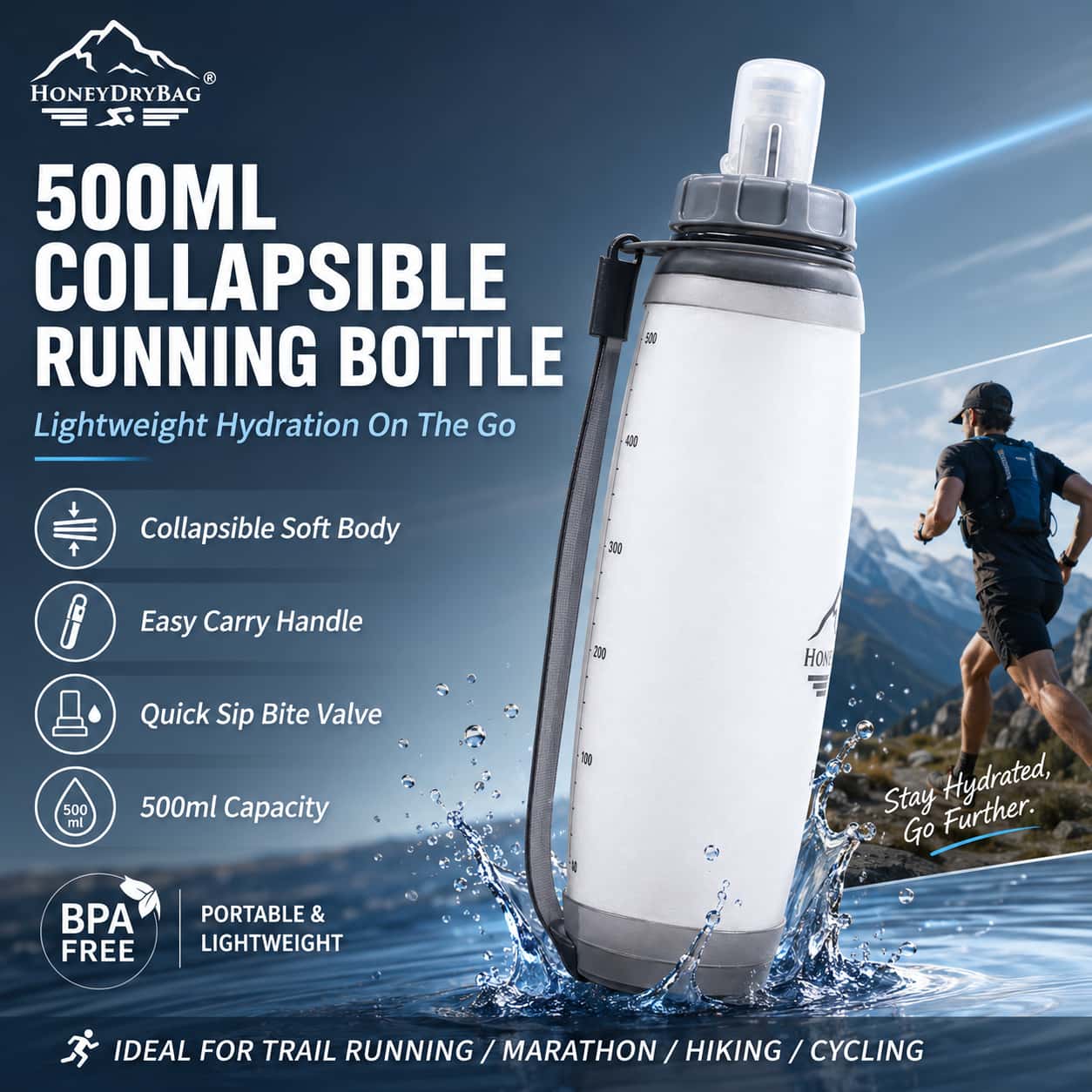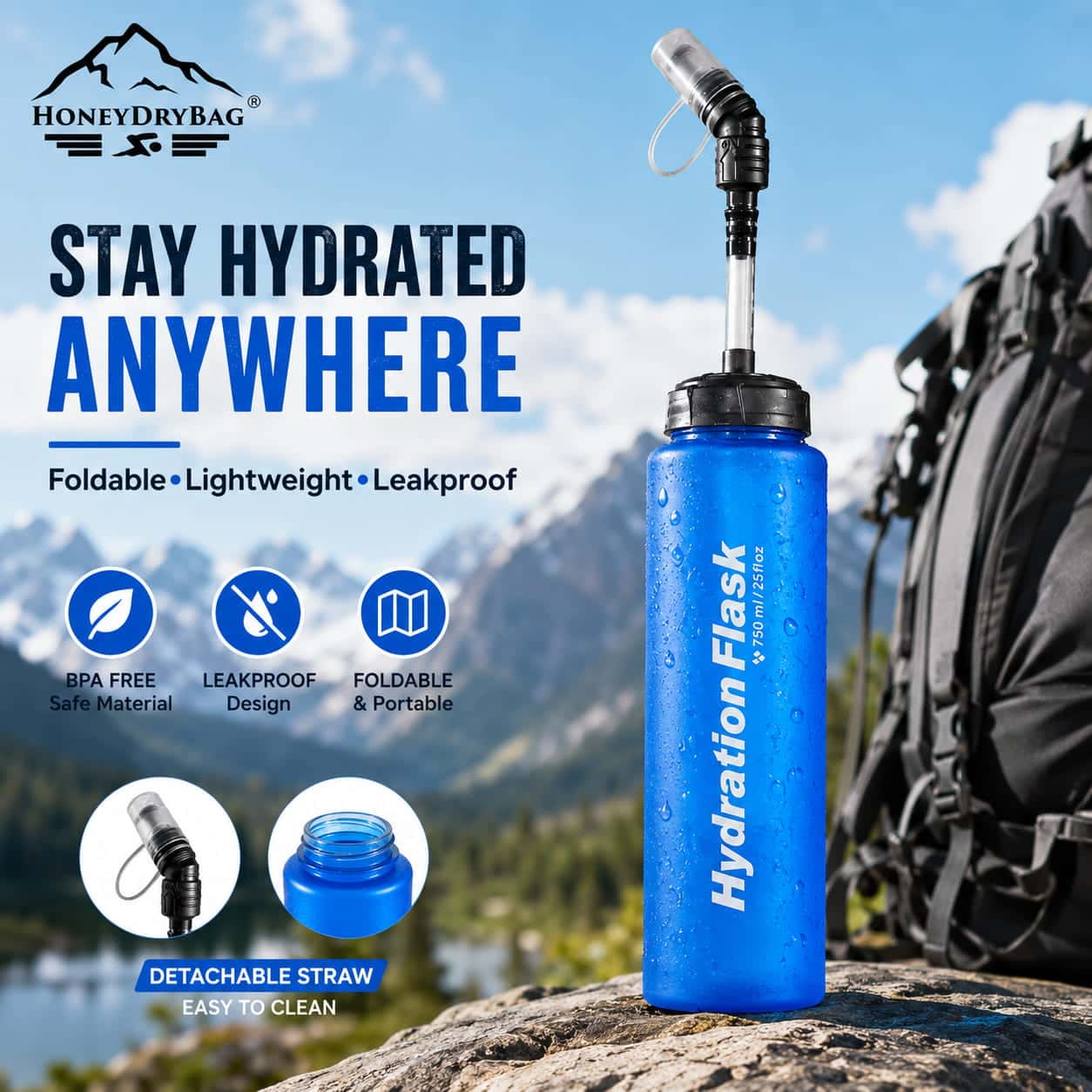
Quick answer: You do not have to carry your own soft flask on every 70.3 run. Aid stations may be enough if you have trained with the on-course products, can drink comfortably from cups, and do not need a personal mix. Carrying a small soft flask becomes useful when you want more control over concentrated carbs, electrolytes, timing, taste, or hot-weather backup.
This article is about the carrying system, not a nutrition prescription. Athletes should practice their fueling plan in training, follow the event athlete guide, and avoid trying a new drink concentration, gel mix, or flask setup for the first time on race day.
Why Athletes Consider Carrying a Flask on the 70.3 Run
The run leg of a 70.3 is long enough for small hydration and fueling problems to matter. Athletes may be tired after the bike, aid stations may feel crowded, and hot weather can make fluid access more important than it felt during training.
A personal soft flask gives the athlete one controllable item. It can hold plain water, an electrolyte drink, a concentrated carbohydrate mix, or a gel mix that the athlete has already tested. The flask can also act as a backup if an aid-station drink tastes different, is more diluted than expected, or is difficult to drink from a cup while moving.
The benefit is not that a soft flask replaces the race plan. The benefit is that it can reduce dependency on one source of fluid or fuel.
When Aid Stations May Be Enough
Relying on aid stations can be the lighter and simpler choice. Many athletes prefer not to carry anything extra on the run, especially if the race has frequent aid stations and the athlete has practiced drinking from cups.
Aid stations may be enough when:
- The athlete has trained with the on-course drink or a similar product.
- The athlete can take cups without choking, spilling most of the fluid, or losing rhythm.
- The race conditions are moderate rather than unusually hot.
- The athlete does not need a special carb, sodium, caffeine, or flavor plan.
- The athlete is comfortable using gels, chews, or other course nutrition as supplied.
- The athlete accepts that concentration and cup volume may vary during the race.
This option has one clear advantage: less weight and fewer parts to manage. There is no flask to hold, no belt bottle to bounce, and no sticky soft flask to clean after the race.
When Carrying Your Own Soft Flask Helps
A personal soft flask is more useful when the athlete wants control. That control may involve product tolerance, taste, concentration, timing, or simply having backup fluid before the next aid station.
Carrying a soft flask may help when:
- The race is expected to be hot.
- The athlete is a heavy sweater or knows they need a specific electrolyte plan.
- The athlete does not tolerate the on-course sports drink well.
- The athlete wants a concentrated carb mix and plain water separately.
- The athlete wants to take small, planned sips between aid stations.
- Aid-station cups are hard to drink from at the athlete's running pace.
- The athlete wants a backup if an aid station is crowded or the drink tastes weak.
The most common practical setup is not a large full bottle for the entire half marathon. It is often a small flask that carries a known mix, while the athlete still uses aid-station water for drinking, dilution, cooling, or washing down gels.
What Should Go in the Soft Flask?
The right contents depend on the athlete's trained plan. From a product-design perspective, the important point is that different contents create different requirements for the flask.
| Flask contents | Why athletes use it | Product issue to test |
|---|---|---|
| Plain water | Simple backup, gel wash-down, mouth rinse | Weight, grip, cap sealing, pocket fit |
| Electrolyte drink | Familiar taste and planned sodium source | Valve flow, residue, odor after use |
| Concentrated carb mix | More control over fueling between aid stations | Viscosity, squeeze force, valve clogging |
| Gel mix | Replaces multiple gel packets in one container | Mouth opening, flow rate, sticky residue |
| Caffeine or special mix | Personal tolerance or race plan | Clear labeling, leak control, no first-time use |
A soft flask used for plain water is mainly a carrying product. A soft flask used for concentrated carbs or gel mix becomes a nutrition-container product. That second use case needs more attention to valve flow, cleaning, drying, and residue.
For sports-nutrition brands and OEM buyers, our guide to energy gel soft flasks for sports-nutrition brands explains what to check when the flask is intended for thicker fuel rather than only water.
Where Can You Carry the Flask?
The best carry location depends on flask size, running form, clothing, and whether the athlete wants hands-free access.
Handheld Soft Flask
A handheld flask is simple and easy to access. It works well for athletes who want to see the flask and drink without opening a pocket. The drawback is that it changes arm swing and may fatigue one hand or shoulder over a long run.
Running Belt
A belt can carry one or two small flasks while keeping the hands free. The main risk is bounce. A flask that feels fine when walking may shift during faster running or when partly empty.
Trisuit Pocket
A small flask can sometimes fit in a rear or side trisuit pocket. This keeps the setup minimal, but it must be tested carefully. The flask should not dig into the body, fall out, leak, or interfere with running posture.
Running Vest Front Pocket
A running vest offers more storage and easier access to multiple items. For a 70.3 race, many athletes may consider a vest too much, but it can make sense for training, hot conditions, or athletes who prioritize self-supply. If the flask is carried in a vest pocket, test whether it can be removed, returned, and reached as it empties. For pocket-fit problems, see our guide on soft flask and running vest compatibility.
T2 Bag or Special-Needs Style Backup
For events that allow certain bag or pickup options, a flask can be staged as backup rather than carried from the start. Athletes should confirm event rules and logistics before relying on this.
Soft Flask Size: Small Backup or Main Run Bottle?
For a 70.3 run, bigger is not automatically better. A large flask gives more fluid, but it also adds weight and movement. A small flask can be enough if its job is to carry concentrated mix or wash down gels rather than supply all fluid for the run.
A useful product range may include:
- 150-200 ml for gel mix, concentrated fuel, or short backup use.
- 250-330 ml for a 70.3 run flask, belt bottle, or handheld option.
- 500 ml for training runs, vest pockets, or athletes who want more fluid between refills.
Capacity should be matched to the carrying position. A 250 ml flask that fits securely in a belt may be more useful than a 500 ml flask that bounces, leaks, or changes running form.
For a broader run-leg bottle overview, see our triathlon running hydration bottle guide.
Risks of Carrying Your Own Flask
A personal flask solves some problems but creates others. Athletes should test the full setup before race day.
Extra Weight and Movement
Even a small flask adds weight. A belt, pocket, or vest can bounce if the flask is not supported. Movement often changes as the flask becomes partly empty.
Sticky Residue
Concentrated carbs, electrolyte drinks, and gel mixes can leave residue in the body, cap, valve, or straw. If the flask is not cleaned and dried soon after use, odor and residue complaints become more likely.
Valve or Cap Problems
A valve that works well with water may not work as well with thick liquid. Test squeeze force, flow rate, sealing, and whether the valve clogs.
Race-Day Novelty
The biggest user mistake is testing the flask for the first time on race day. The athlete should test the exact flask, contents, carry position, and cleaning method during training.
For cleaning after sports drinks or sticky mixes, see our guide on how to clean a soft flask properly.
Runner Test: Should You Carry One?
Use this simple test during training, not at the race expo.
- Choose the flask size and contents you might use on race day.
- Carry it in the intended place: hand, belt, trisuit pocket, or vest.
- Run at expected 70.3 effort, not only easy pace.
- Drink when tired and check whether the valve is still easy to use.
- Test the flask full, half full, and nearly empty.
- Practice taking aid-station-style water separately.
- Clean and dry the flask afterward, then check for odor or residue the next day.
If the flask improves control without causing bounce, hand fatigue, leaks, or cleaning problems, it may be worth carrying. If it creates more handling problems than it solves, aid stations or a smaller flask may be better.
B2B Checklist for 70.3 Soft Flask Projects
For brands, the 70.3 run use case should be tested as a system: flask, contents, carry method, heat, movement, and cleaning.
| Test area | What to verify | Why it matters |
|---|---|---|
| Capacity | 150, 200, 250, 330, or 500 ml options | Different sizes serve gel mix, backup, or training use |
| Viscosity | Water, electrolyte drink, concentrated carbs, gel mix | Thick liquids change flow and squeeze force |
| Valve | Bite force, flow rate, sealing, clogging | Race use depends on quick drinking without leaks |
| Carry position | Handheld, belt, trisuit pocket, vest pocket | Fit changes by athlete and product category |
| Half-empty handling | Shape, bounce, pocket retention, grip | Soft flasks behave differently as volume drops |
| Cleaning | Cap, valve, straw, drying access | Sticky residue can cause odor and complaints |
| Packaging | Ventilation, valve protection, clear labeling | Helps reduce shipping deformation and smell issues |
| Branding | Logo durability, color, capacity marks | Supports private-label and sports-nutrition programs |
If the buyer sells both hydration gear and race nutrition, the flask should be tested with the actual drink or gel mix the customer plans to use. A water-only test is not enough for a sports-nutrition flask.
For material, valve, capacity, and OEM/ODM sourcing decisions, start with our complete B2B guide to foldable TPU running water bottles.
Questions to Ask a Soft Flask Manufacturer
Before approving samples, ask:
- Which capacities are available for 70.3 run, gel mix, and concentrated drink use?
- Has the valve been tested with thicker liquids, not only water?
- Can the flask be cleaned and dried easily after carbohydrate or electrolyte drink?
- Does the cap seal when the flask is squeezed in a belt or pocket?
- How does the flask behave when half full and nearly empty?
- Can the body color, cap color, bite valve, logo, capacity marks, and packaging be customized?
- Can samples be tested in a running belt, trisuit pocket, and running vest pocket?
- Can production tolerances be controlled for capacity, neck fit, valve assembly, and seam strength?
These questions turn a race-day athlete problem into a practical OEM/ODM specification.
Final Takeaway
A personal soft flask is not mandatory for every 70.3 run. It is most useful when the athlete wants more control over a familiar mix, needs backup between aid stations, or wants to separate concentrated carbs from plain water. It is less useful when the race aid stations match the athlete's trained plan and carrying the flask creates bounce, hand fatigue, or cleaning problems.
For runners, the decision should be made in training with the exact flask, contents, and carry position. For brands, the product should be tested beyond capacity: valve flow, thick-liquid compatibility, half-empty handling, cleaning, drying, packaging, and pocket or belt fit all affect the final user experience.
Honey Dry Bag works with running, triathlon, and sports-nutrition brands on OEM and ODM TPU soft flasks, gel flasks, bite valves, long-straw caps, custom logos, capacity options, color matching, packaging, and running vest or belt compatibility testing. Contact us to discuss sample development for your race-day hydration product line.