Challenge Xiamen 2026: the essential event details
Challenge Family lists Challenge Xiamen for November 7, 2026, in Xiamen, China. The official event page identifies middle-distance, Olympic-distance, sprint and duathlon formats. Participants should confirm their own category, timetable, rules and any last-minute changes with the organizer.
The featured middle-distance course is described as:
- Swim: 1.9 km
- Bike: 90 km
- Run: 21.1 km
The official course description places the event along Xiamen’s Huandong coastal area, including an ocean swim starting from Meifeng Sports Park and coastal cycling and running routes.
Why course-specific hydration planning matters
Coastal races can involve changing sun exposure, wind and temperatures. Conditions on race day are not predictable from the event location alone. Athletes should review the latest forecast, official aid-station information and event regulations before finalizing a hydration strategy.
Rather than copying a generic fluid target, practice a plan that accounts for session duration, personal sweat rate, weather, gastrointestinal tolerance and available drink stations. For individualized guidance, especially if you have a medical condition or previous heat illness, consult an appropriate sports-health professional.
Triathlon gear checklist before race week
Swimming and transition
Confirm the event’s wetsuit and equipment rules. Organize goggles, swim cap, race identification and transition essentials. Use a clearly labeled wet/dry bag for training and travel; do not assume a personal bag may be brought into restricted transition areas.
Cycling
Check bottle-cage security and accessibility, and verify how on-course hydration is distributed. Test the actual bike setup before traveling. Secure loose items and avoid last-minute changes to drinking systems.
Running
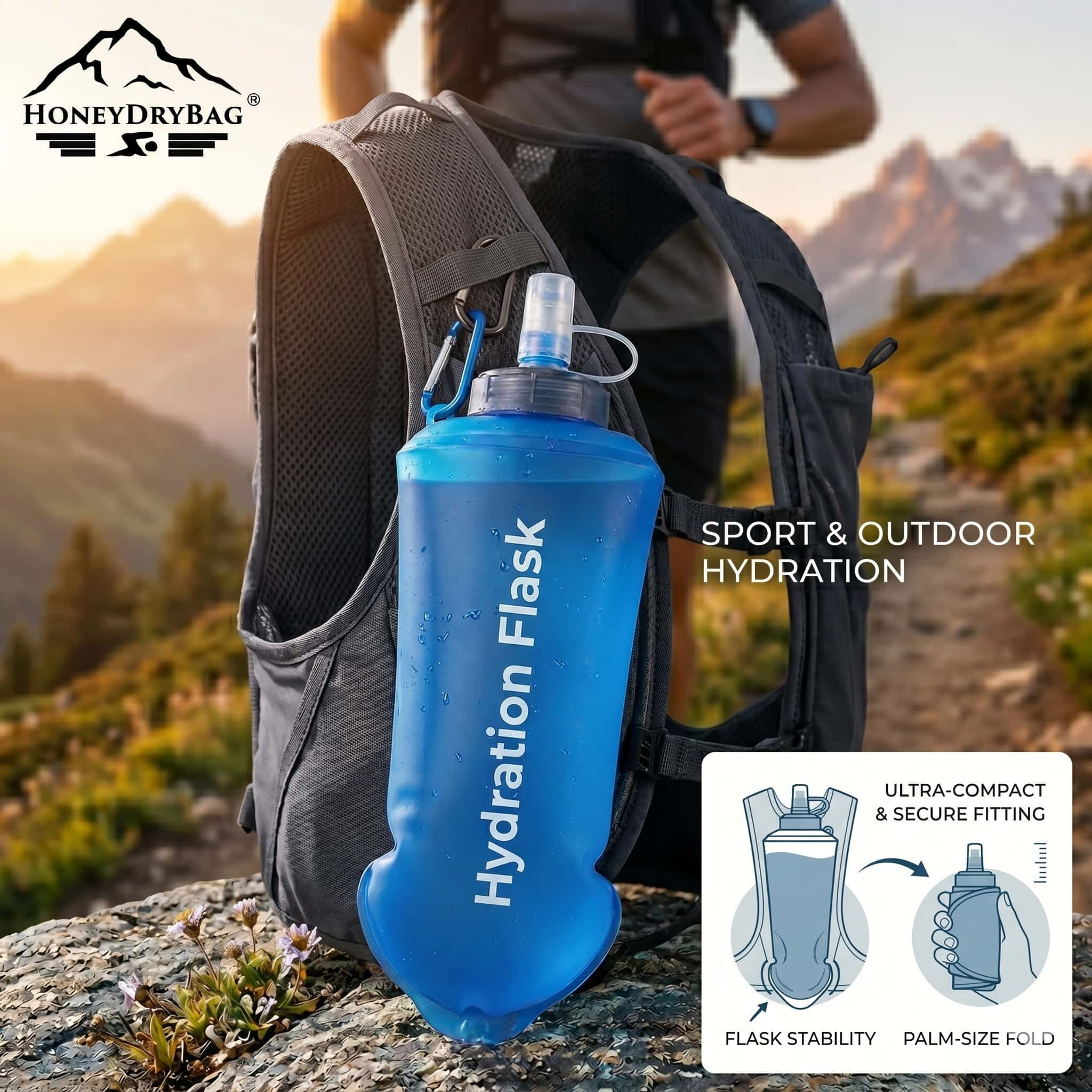
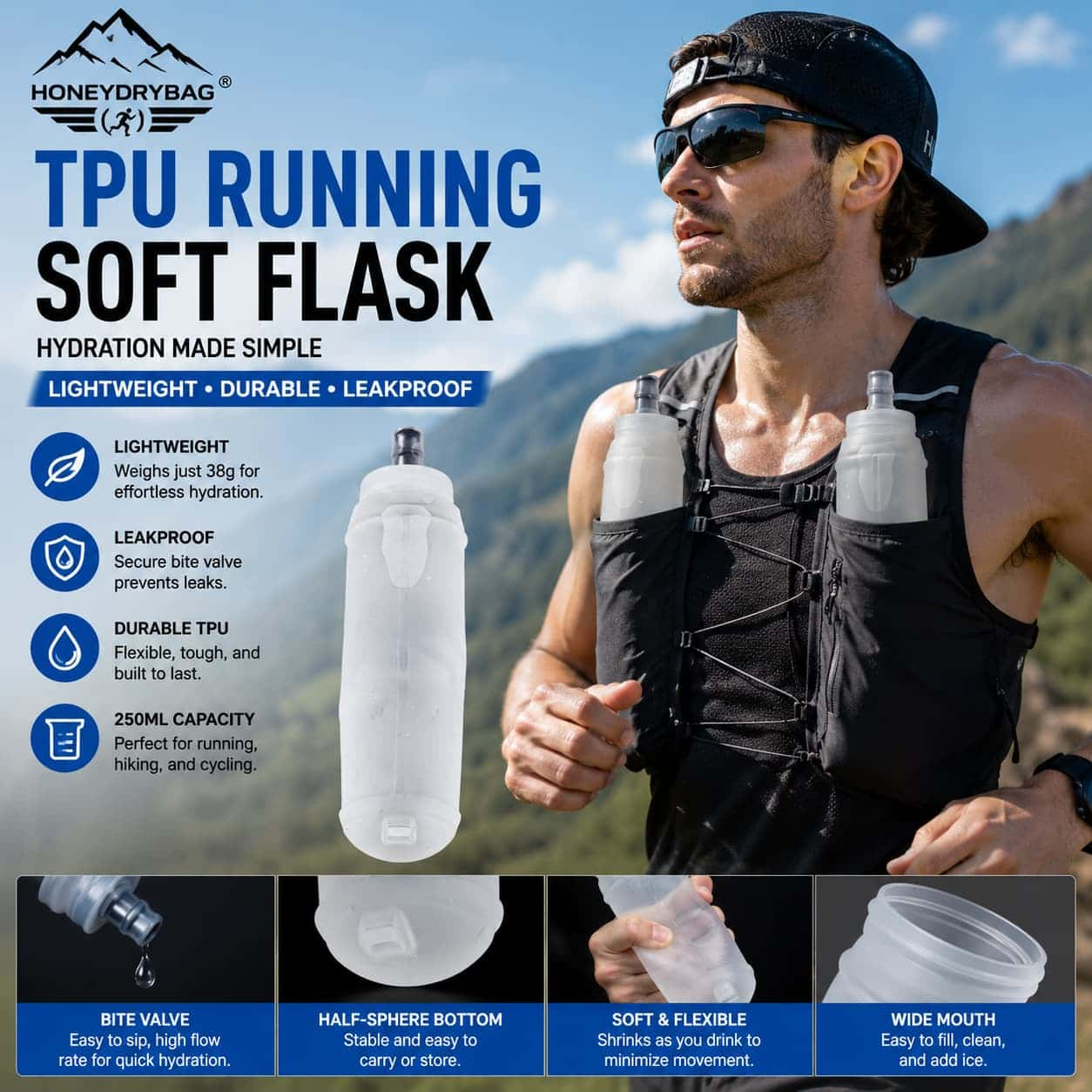
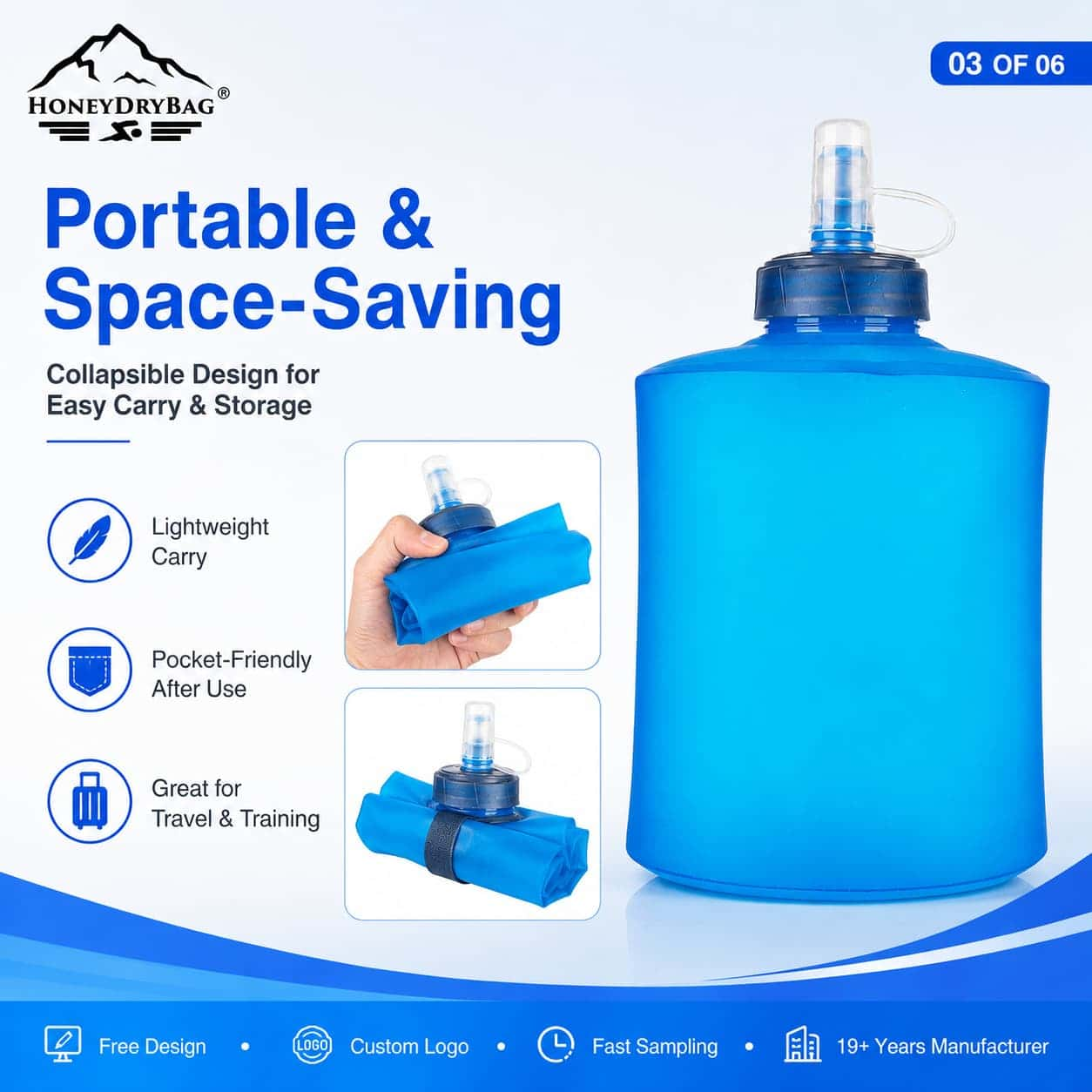
If the rules permit carried hydration, test whether a soft flask, compatible running vest or belt works for your intended distance. Important factors include secure fit, ease of drinking, valve leakage, capacity and cleaning. A smaller flask is not automatically sufficient; choose based on the course and your practiced plan.
Post-race and travel
Separate wet gear from clean clothing, rinse reusable hydration equipment according to its care instructions and allow components to dry thoroughly before storage.
Soft flask considerations for running and endurance brands
A triathlon race offers useful context for product design, but it does not prove demand for a particular capacity or carrying system. Brands evaluating OEM/ODM soft flasks should define the intended activity, volume, valve type, fit with running equipment, cleaning requirements and relevant material testing before approving production samples.
Honey Dry Bag supports custom TPU soft flask development for running, trail-running and hydration brands. For a product discussion, specify the use case and technical requirements rather than relying on a single event as a market-demand signal.
For running practice and gear evaluation, see the R50020 500ml TPU running soft flask and the R50023 250ml compact soft flask. Confirm suitability for your carrying system and the event rules; neither model is presented as official Challenge Xiamen equipment.
Sources
Information checked October 30, 2026. Event schedules and race rules may change; the organizer is the final authority.