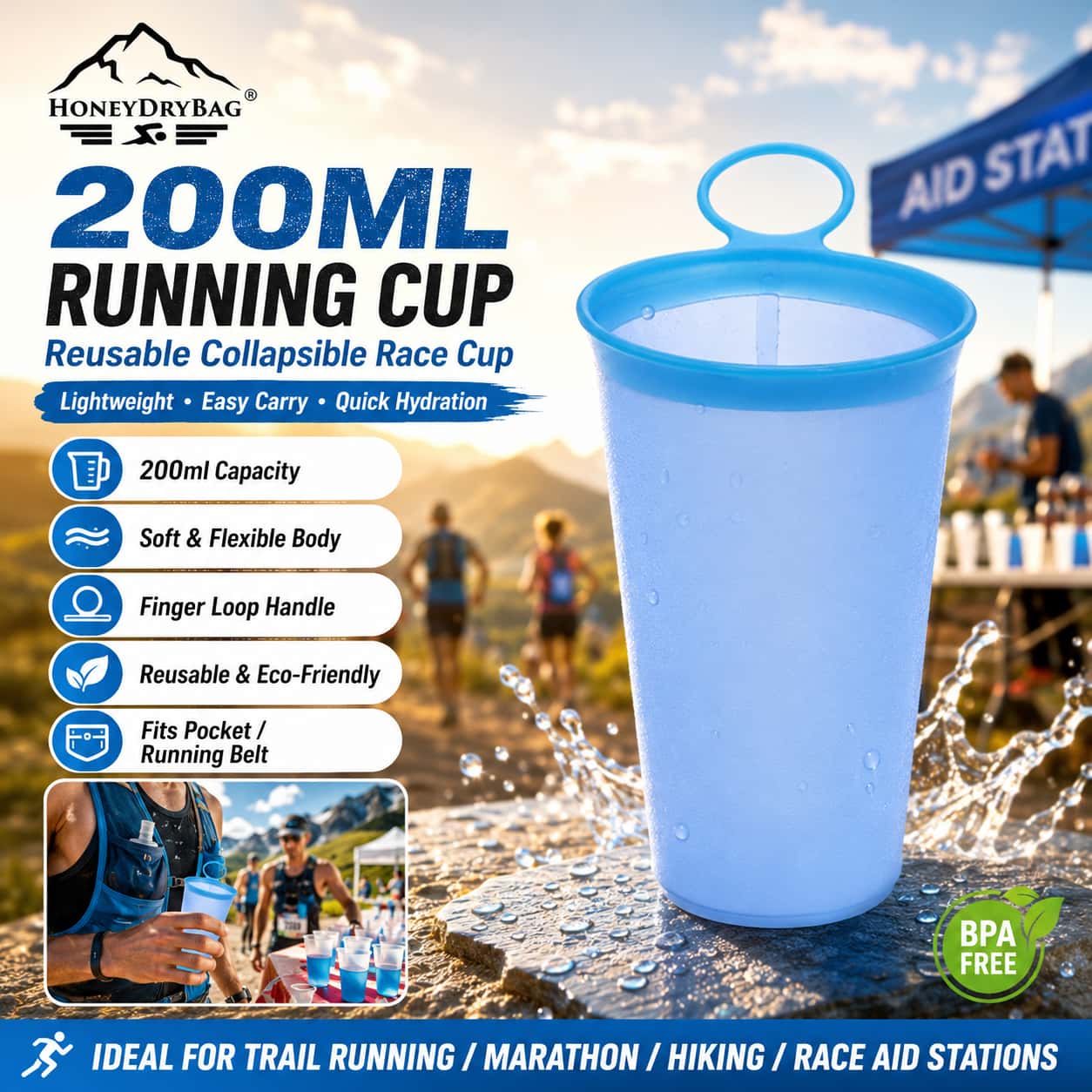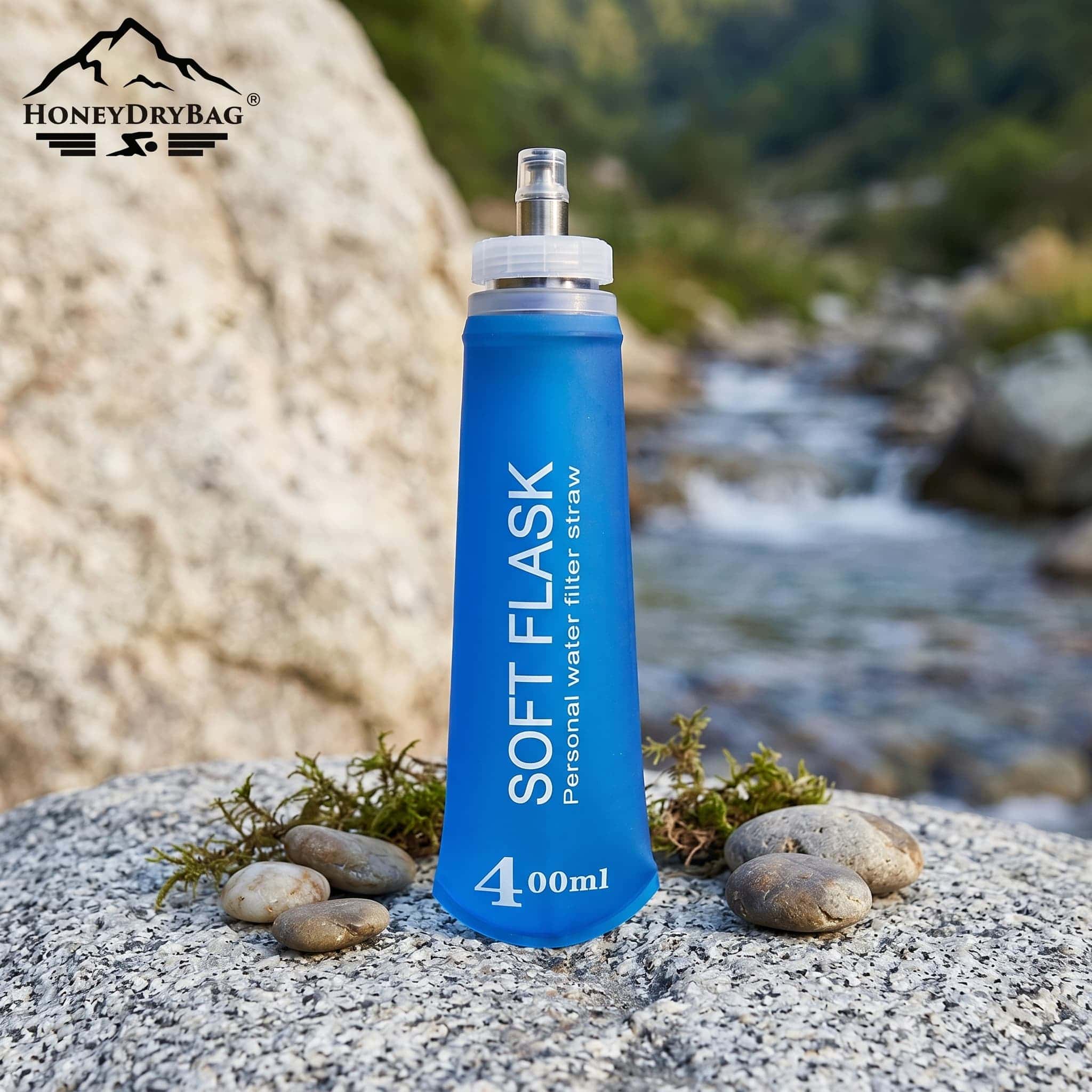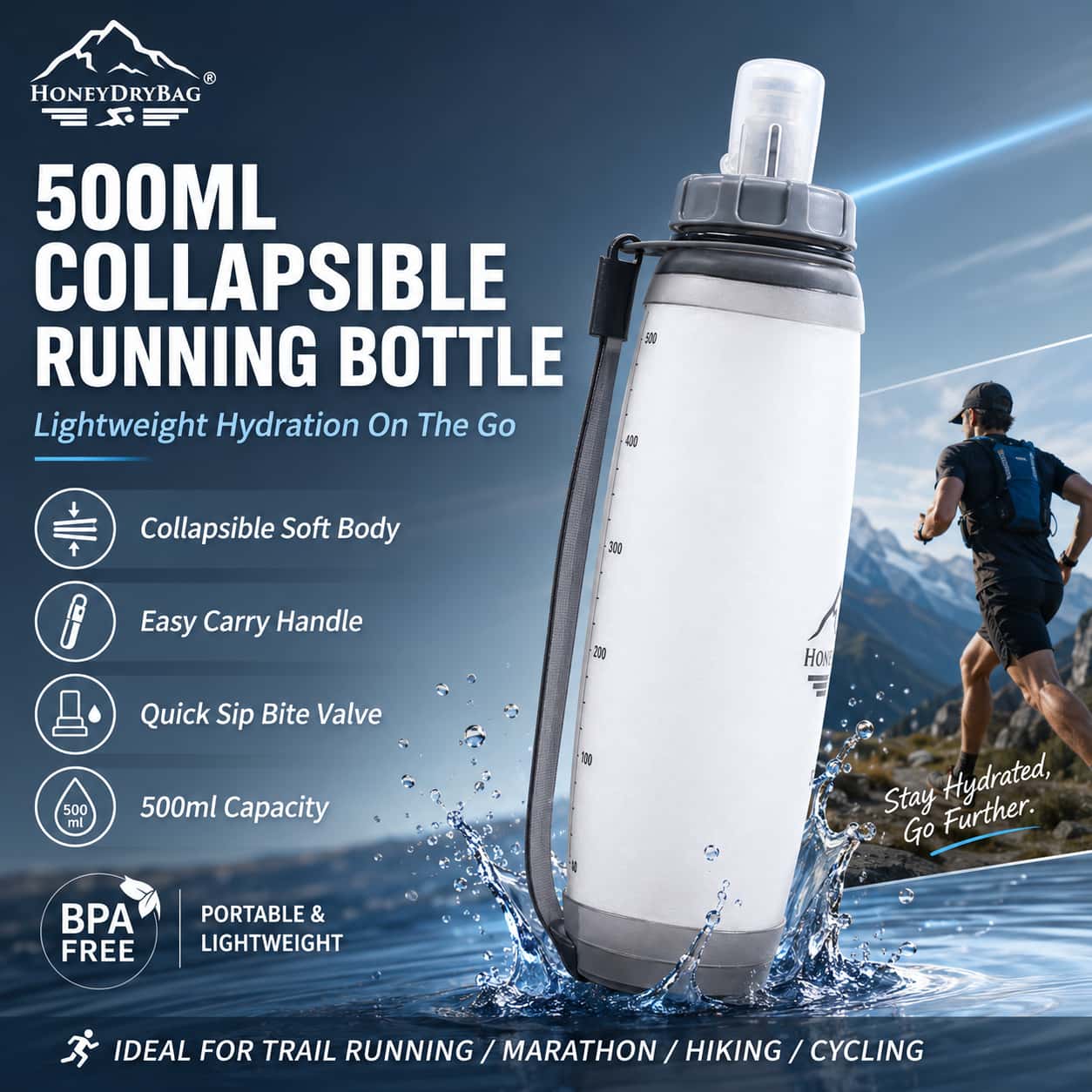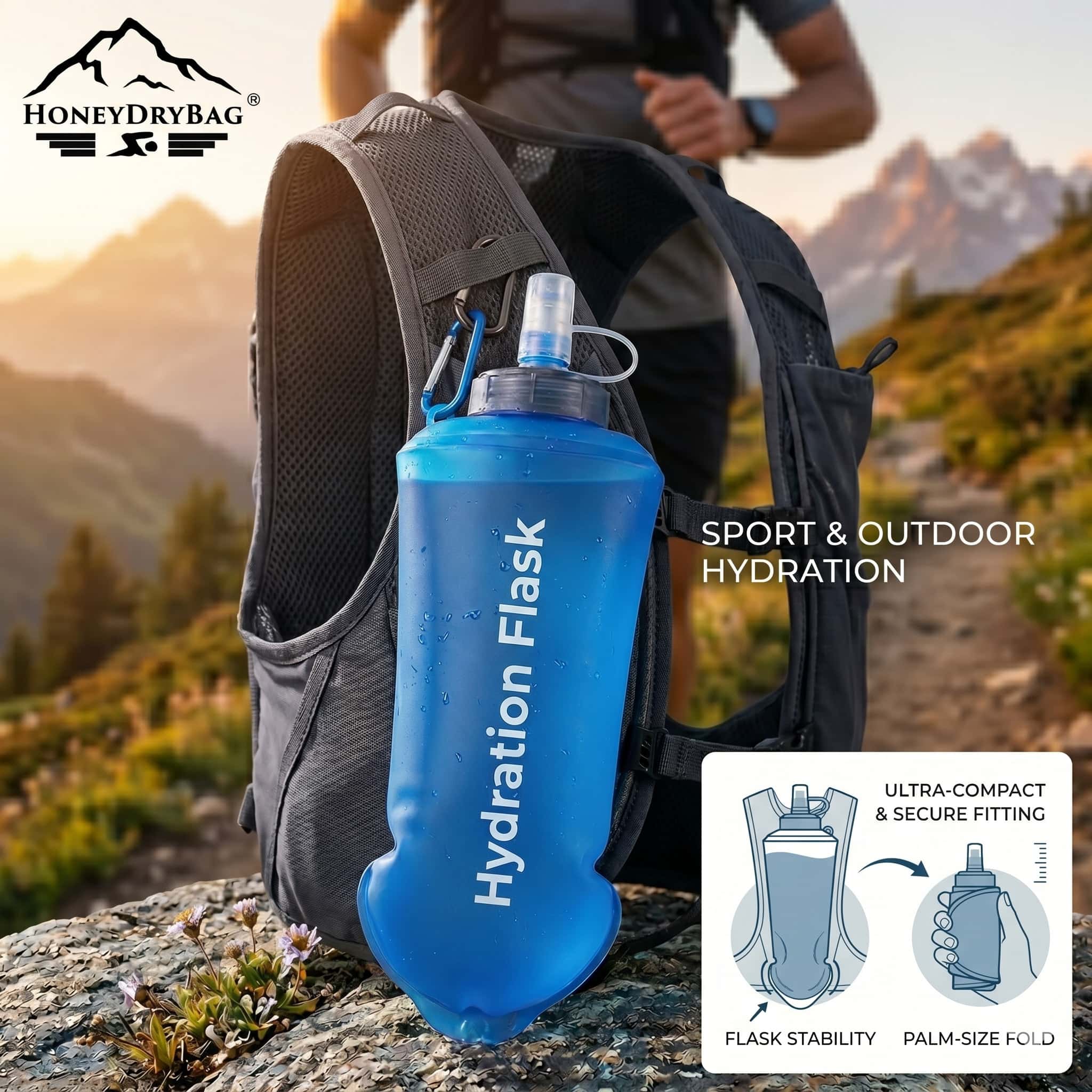
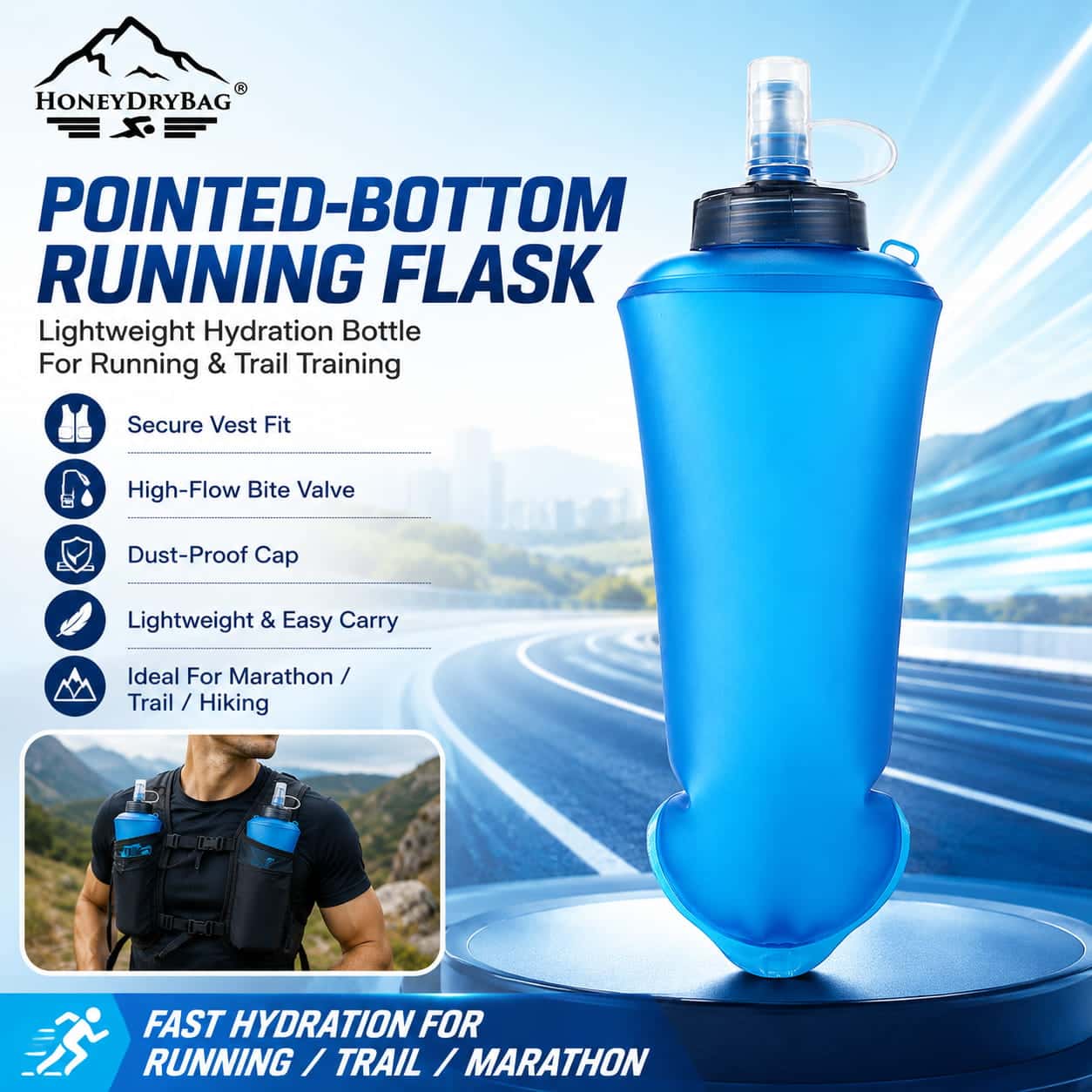
A foldable TPU water bottle is a soft-flask style hydration container made from thermoplastic polyurethane (TPU), a flexible, food-grade material that combines the elasticity of rubber with the durability of plastic. Unlike rigid hard-shell bottles, a TPU bottle collapses flat or rolls down to a fraction of its filled size when empty, making it a popular choice for running, hiking, cycling, and other lightweight outdoor activities.
For B2B buyers — sporting-goods brands, private-label sellers, outdoor gear distributors, and promotional product companies — foldable TPU bottles are increasingly sourced as a core SKU in hydration lines, thanks to low shipping volume, customization flexibility, and strong demand from endurance-sports markets.
Why TPU Instead of Traditional Plastics?
TPU is chosen over PET, PC, or silicone for soft-flask applications for several practical reasons:
- Flexibility without brittleness: TPU can be repeatedly folded, rolled, and compressed without cracking, unlike rigid PET or PC plastics.
- Food-grade safety: Medical- and food-grade TPU formulations are BPA-free and commonly used in products requiring direct contact with drinking water.
- Cold resistance: TPU stays flexible in low temperatures better than many alternative soft plastics — important for winter running and high-altitude use.
- Puncture and abrasion resistance: Compared to standard silicone, TPU generally resists punctures and wear better under repeated compression in a vest or belt pocket.
- Low weight-to-volume ratio: An empty TPU flask weighs significantly less than a hard-shell bottle of equivalent capacity — a key selling point for endurance athletes.
Why Runners Choose Foldable Bottles
Traditional hard-shell bottles present two recurring problems during running: fixed volume (an empty bottle still takes up the same space as a full one) and liquid sloshing, which disrupts pacing and comfort. Foldable TPU bottles solve both:
- Compressible storage: An empty flask rolls to roughly one-fifth its filled size, fitting easily into a vest pocket, waist belt, or hand strap.
- Reduced sloshing: The soft-sided structure collapses as liquid is consumed, reducing the air pocket that causes noise and movement inside rigid bottles.
- Multi-purpose capacity: Runners use these for water, electrolyte mixes, and energy-drink concentrates during training and races.
Key Specifications B2B Buyers Should Evaluate
When comparing suppliers, check each of these specs and understand why it matters:
- Material grade — Confirm food-grade TPU with BPA-free certification. This governs regulatory compliance for export markets (FDA, LFGB, REACH).
- Wall thickness — Typically 0.3–0.6mm for running flasks. Thinner is lighter but less durable; thicker is more puncture resistant.
- Capacity — Common range is 150ml–800ml. 250–350ml fits short runs; 500ml+ suits marathon and ultra distances.
- Cap and seal design — Push-pull cap, screw cap, or bite valve. Leak resistance during compression is a common failure point.
- Fold/compression cycles rated — Ask for manufacturer test data if available; it indicates expected lifespan under repeated use.
- Customization options — Printing, molding, color, and cap style; relevant for private-label and OEM orders.
TPU vs. Silicone vs. PEVA: Which Material Is Best?
These are the three most common materials for collapsible flasks, each with distinct trade-offs:
- TPU — High durability (resists punctures and repeated folding), light weight, good cold flexibility. Typical bulk cost roughly $0.80–$2.50/unit. Best for running, hiking, and general endurance sports.
- Silicone — Medium durability (softer, more prone to tearing under sharp folds), slightly heavier than TPU, excellent temperature stability. Typical bulk cost roughly $1.00–$3.00/unit. Best for baby/food products, kitchenware, and low-abrasion use.
- PEVA — Lower durability (thinner, less puncture-resistant), lightest weight, poor cold flexibility (becomes brittle). Typical bulk cost roughly $0.30–$0.90/unit. Best for disposable or single-season low-cost products.
Bottom line: TPU offers the best balance of durability, weight, and cold-weather performance for repeated-use running products, which is why it dominates the premium soft-flask category. PEVA suits low-cost promotional or one-season products but isn't recommended for anything marketed as durable or reusable.
How Foldable TPU Bottles Are Manufactured
Most foldable TPU bottles are produced by one of two methods:
- High-frequency (HF) welding: Two layers of TPU film are heat-sealed along the seam using high-frequency energy. This is the most common method for running flasks — it produces a strong, flexible seam that withstands repeated folding.
- Blow molding: Used for thicker-walled TPU bottles with more rigid shape retention. Less common for ultra-compressible flasks, but used in mid-flex hybrid designs.
Cap and valve components (push-pull caps, bite valves, screw threads) are typically injection-molded separately from harder TPU or PP blends, then bonded or threaded onto the flexible body.
Is TPU Environmentally Friendly?
TPU is not biodegradable, but it's more durable and reusable than single-use PEVA or PVC alternatives, which lowers per-use impact through a longer lifespan. Key points for buyers:
- Recyclability: TPU is technically recyclable but needs specialized facilities; it's not accepted in most curbside programs — worth disclosing to end customers.
- PVC-free formulations: Buyers targeting the EU increasingly request PVC-free, phthalate-free TPU as a baseline, not an upgrade.
- Reusability as the main argument: Because a well-made TPU bottle can replace hundreds of single-use bottles, most brands position durability and reusability — rather than end-of-life recyclability — as the core sustainability claim.
Certifications to Request From Suppliers
- FDA (US): Material approved for food and beverage contact in the US market.
- LFGB (Germany/EU): A stricter food-contact standard commonly required for the EU.
- REACH (EU): Confirms the material doesn't contain restricted substances above regulated thresholds.
- Phthalate-free / BPA-free test reports: Increasingly requested even outside regulatory requirements, as a trust signal for end consumers.
Request third-party lab reports (SGS or Intertek) rather than supplier self-declarations, especially for first-time orders.
Common Failure Points to Watch
- Seam leakage — Poor bonding where the body is welded can cause slow leaks under compression. Reinforced or double-layer sealing reduces this risk.
- Cap threading failure — Repeated compression stresses the cap-to-body connection more than in rigid bottles; test cap-thread durability before bulk orders.
- Odor retention — Lower-grade or recycled material can retain a plastic smell; food-grade virgin TPU minimizes this.
- Cracking after cold exposure — TPU formulations vary in low-temperature flexibility; for winter or high-altitude markets, request cold-flex test data.
Frequently Asked Questions
Is TPU safe for drinking water?
Food-grade TPU meeting FDA or LFGB standards is considered safe for direct contact with drinking water and is widely used in soft flasks, hydration bladders, and reusable bottles.
How long do foldable TPU bottles last?
With proper care, a well-made TPU running bottle generally lasts one to two years of regular use before showing wear such as thinning at fold lines. Lifespan depends heavily on wall thickness and fold-cycle durability.
What capacity is best for running?
Short runs (under 10km) typically use 250–350ml flasks. Half-marathon, marathon, and ultra runners commonly carry 500ml or larger, often in pairs for balanced weight.
Can TPU bottles hold sports drinks, not just water?
Yes. Food-grade TPU is generally resistant to sports drinks and electrolyte powders, though manufacturers advise against hot liquids or carbonated beverages, which can accelerate degradation.
What MOQ and customization are typical for B2B orders?
MOQs vary but commonly range from 500 to 2,000 units for custom colors or printed branding, with lower minimums for blank designs. Customization usually covers cap style, body color, printed logos, and capacity.
How much does a custom TPU foldable bottle cost?
Bulk pricing typically runs $0.80–$2.50 per unit depending on wall thickness, cap design, and printing complexity, with lower costs at higher volumes. Custom mold/tooling for unique shapes is usually a one-time fee separate from per-unit pricing.
Is TPU recyclable or biodegradable?
TPU is not biodegradable and is only recyclable through specialized facilities not typically available curbside. Its main sustainability advantage is long lifespan and reusability rather than end-of-life recyclability.
Summary
Foldable TPU water bottles address a specific, well-documented need in endurance sports: compact storage, low weight, and reduced liquid movement during activity. For B2B buyers, the key differentiators between suppliers come down to material grade, seam and seal durability, and cold-weather performance — all worth verifying with test data before placing bulk orders. If you're sourcing custom foldable TPU bottles, contact us with your target capacity, customization, and order quantity for a quote and samples.