Quick answer: A soft flask is usually more convenient than a rigid water bottle for running because its flexible body compresses as you drink and can fit into many running vest pockets. A traditional hard bottle, however, keeps its shape and can be easier to handle in situations where compact storage is not important.
Neither design is automatically better for every activity.
The right choice depends on how you carry your water, how far you run, how much capacity you need and whether you use a running vest.
What Is a Soft Flask?
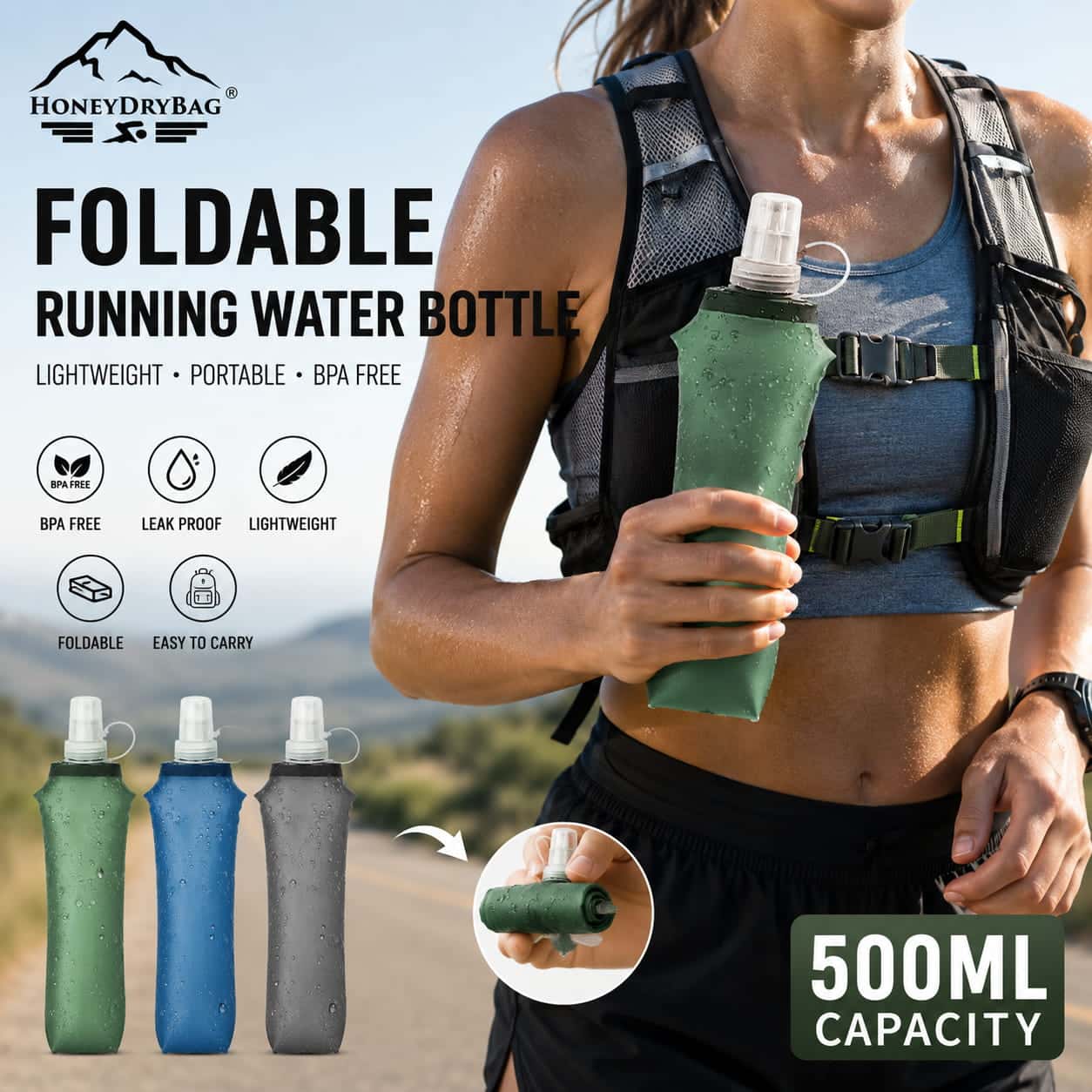
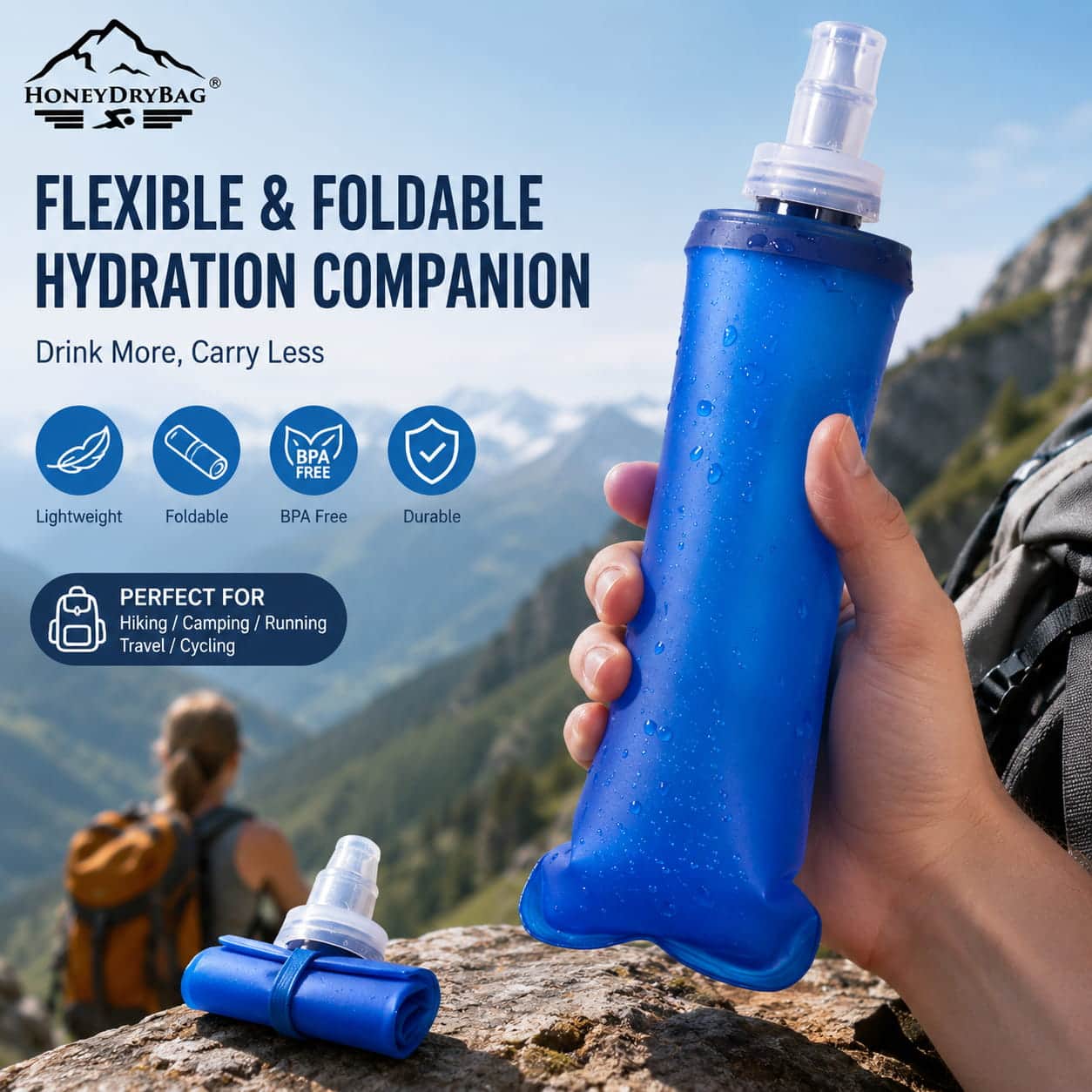
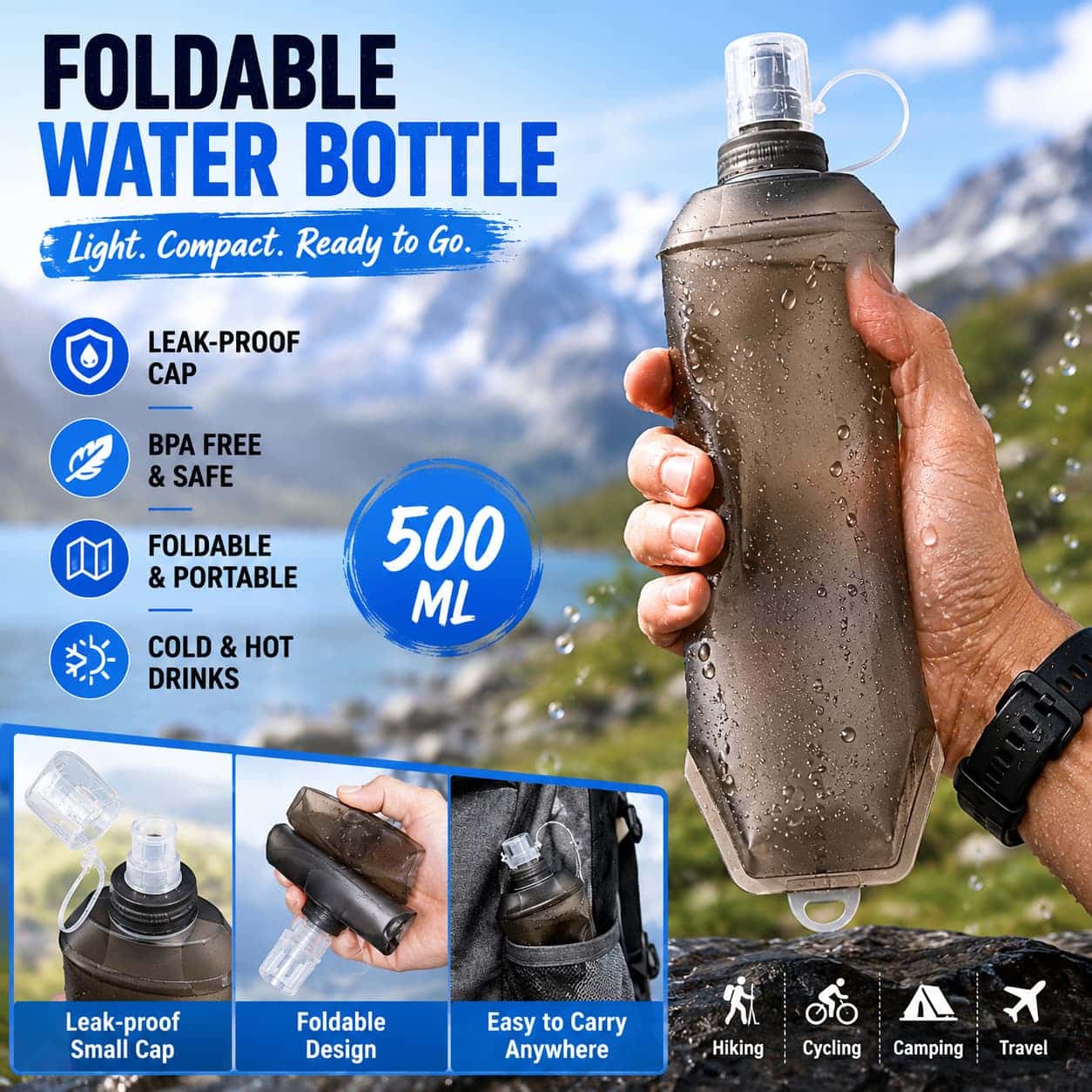
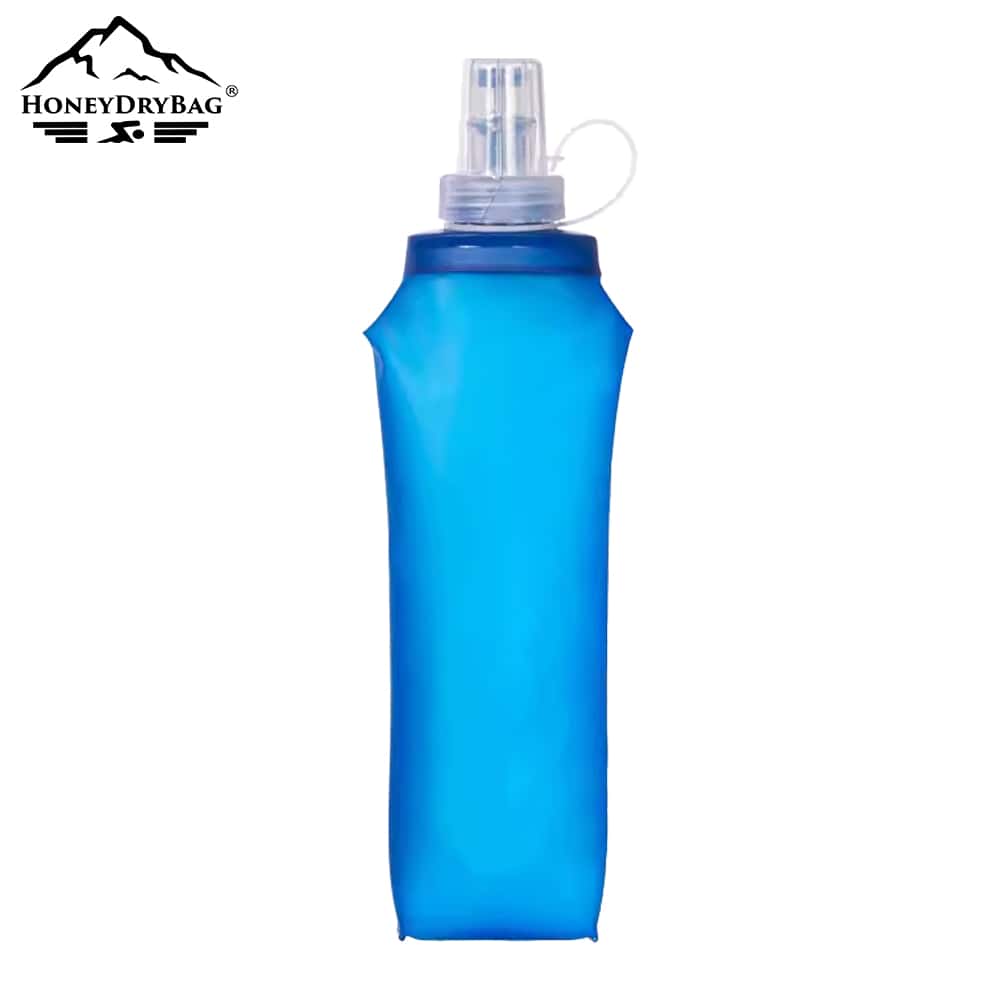
A soft flask is a flexible hydration container designed to change shape as the amount of liquid inside it changes.
Unlike a conventional rigid water bottle, the body of a soft flask can be squeezed and compressed.
Many running soft flasks are made from flexible materials such as TPU and are designed to work with a bite valve or drinking nozzle.
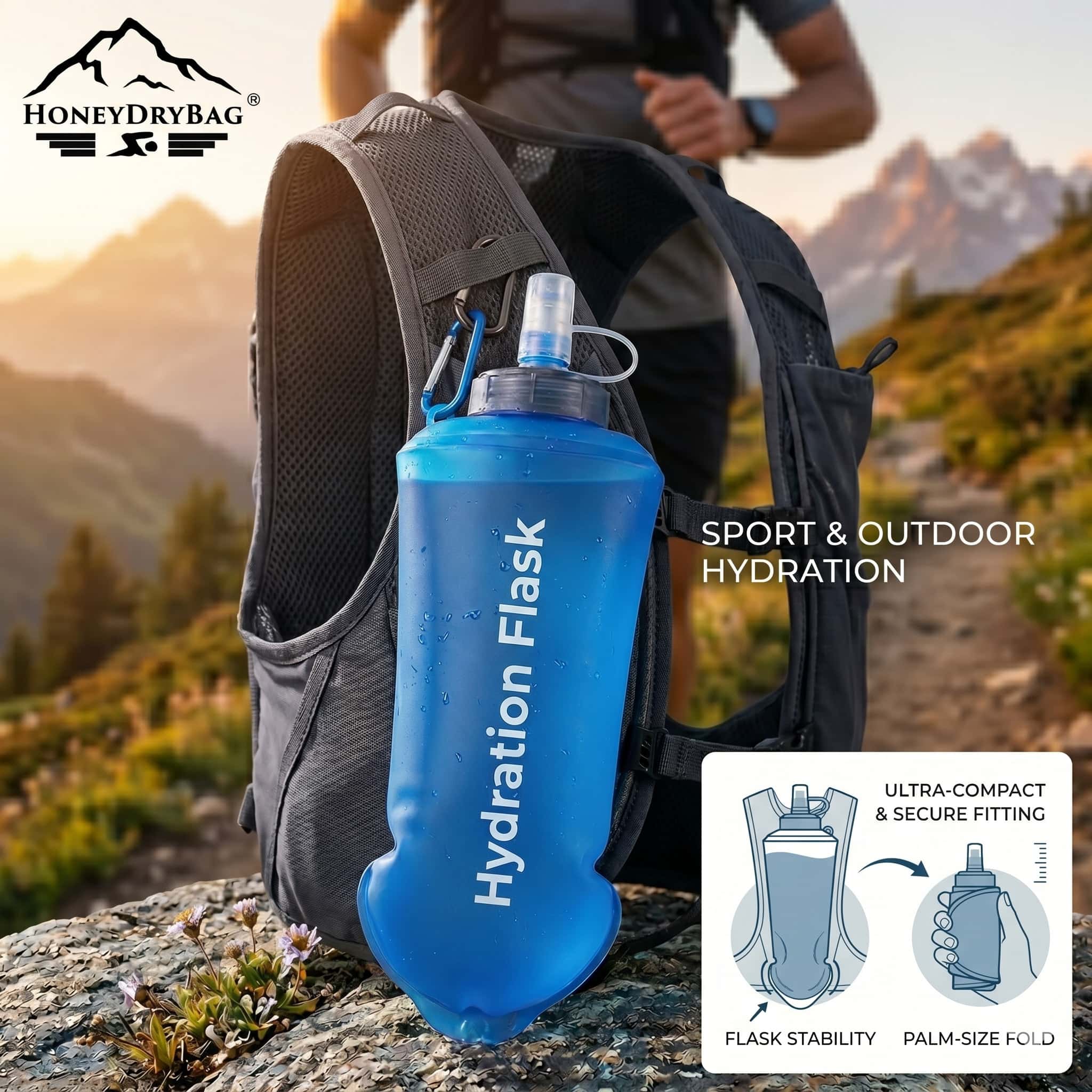
Soft flasks are commonly used for:
- Running
- Trail running
- Ultramarathons
- Hiking
- Cycling
- Outdoor sports
- Hydration vests
They are also sometimes described more broadly as collapsible water bottles because the flexible body takes up less space when empty.
What Is a Traditional Water Bottle?
A traditional water bottle normally has a rigid or semi-rigid body that maintains approximately the same shape whether it is full or empty.
Depending on the application, rigid bottles may be made from materials such as:
- Plastic
- Stainless steel
- Aluminum
- Glass
Rigid bottles are widely used for everyday hydration because they are simple to fill, store and place on a flat surface.
For running, however, the fixed shape creates different carrying characteristics compared with a soft flask.
Soft Flask vs Water Bottle: Main Differences
The most important difference is not simply the material.
It is how the container behaves while you use it.
| Feature | Soft Flask | Rigid Water Bottle |
|---|---|---|
| Body | Flexible | Rigid or semi-rigid |
| Shape when drinking | Compresses | Remains mostly unchanged |
| Empty storage | Can be compressed | Keeps original size |
| Running vest compatibility | Often designed for vest pockets | Depends on bottle and vest |
| Squeezability | High | Usually lower |
| Stability when standing | Lower | Higher |
| Everyday desk use | Less convenient | More convenient |
| Running use | Often highly suitable | Depends on carrying system |
These differences explain why soft flasks have become closely associated with running and trail-running hydration systems.
1. Soft Flasks Take Up Less Space as You Drink
One of the main advantages of a soft flask is its flexible construction.
As water is consumed, the flask becomes smaller.
This means that a partially empty soft flask does not have to occupy the same volume as a full one.
A rigid bottle behaves differently.
A 500ml rigid bottle generally occupies approximately the same external space whether it contains:
- 500ml
- 250ml
- 50ml
- No water
A flexible bottle can collapse as the liquid level decreases.
This can be useful when space is limited.
2. Why Soft Flasks Work Well With Running Vests
Running vest pockets are one of the main applications for soft flasks.
Many running vests have front pockets designed to hold hydration containers close to the runner's chest.
A flexible flask can conform more easily to the shape of the pocket and the runner's movement than many rigid bottles.
Another advantage is accessibility.
Depending on the vest design, a runner may be able to drink directly from the bite valve without completely removing the flask.
This is useful during:
- Trail running
- Long-distance training
- Racing
- Ultramarathons
However, compatibility should not be assumed simply because a product is called a running soft flask.
The physical dimensions of both products still matter.
3. Capacity Is Not the Same as Physical Size
This is an important distinction when comparing hydration products.
A bottle's capacity tells you how much liquid it is designed to contain.
It does not tell you its exact external dimensions.
For example, two soft flasks may both be rated at 500ml, but one may be:
- Longer
- Narrower
- Shorter
- Wider
The same applies when comparing a soft flask with a rigid bottle.
For running vest compatibility, buyers should consider:
- Capacity
- Length
- Width
- Neck diameter
- Cap diameter
- Filled shape
- Valve position
This is particularly important for running brands developing a vest and hydration system together.
4. Which Is More Comfortable While Running?
Comfort depends heavily on how the bottle is carried.
A rigid bottle keeps its shape throughout the run.
If it is carried in a poorly fitting pocket, its fixed structure may be more noticeable against the body.
A soft flask can deform around the available space.
As the runner drinks, the flask also becomes smaller.
This is one reason flexible hydration products are commonly paired with running vests.
But design still matters.
A soft flask that is too wide, too tall or poorly matched to a vest pocket can still be uncomfortable.
Flexible does not automatically mean compatible.
5. What About Water Movement?
Water can move inside any partially filled hydration container.
In a rigid bottle, the bottle volume remains fixed as water is consumed.
A soft flask changes shape as liquid leaves the container.
This difference can reduce the amount of unused internal space compared with a rigid container.
Actual movement during running will still depend on factors including:
- How full the flask is
- Flask construction
- Pocket fit
- Running movement
- Carrying position
So it is better to evaluate the complete hydration system rather than assuming that one bottle design eliminates movement entirely.
6. Is a Soft Flask Lighter Than a Water Bottle?
Sometimes, but this should not be treated as a universal rule.
Product weight depends on the specific design.
A soft flask can include:
- TPU body
- Cap
- Bite valve
- Strap
- Additional carrying components
A rigid bottle can also vary significantly depending on its material and construction.
Therefore, comparing two actual product weights is more useful than assuming that every soft flask is lighter than every hard bottle.
For runners who care about equipment weight, check the finished product specification.
7. Which Is Easier to Store?
For compact storage, a soft flask has a clear design advantage.
When empty, many soft flasks can be:
- Flattened
- Folded
- Rolled
- Compressed
This is why terms such as soft flask and collapsible water bottle sometimes overlap.
A rigid bottle maintains its structure and therefore requires approximately the same storage space when empty.
For travel, running packs and outdoor equipment, collapsibility can be useful.
For a desk, car or everyday household use, however, a rigid bottle's ability to stand upright may be more convenient.
8. Soft Flask vs Collapsible Water Bottle
Are they the same thing?
Not always.
Collapsible water bottle is a broad description for a bottle designed to reduce in size when empty.
Soft flask usually refers to a more specific flexible hydration format commonly associated with running, trail running and hydration vests.
A running soft flask may include features such as:
- Bite valve
- Sports cap
- Narrow body profile
- Running vest compatibility
- Flexible TPU construction
A collapsible water bottle designed for travel or general outdoor use may have a different cap, body shape and intended carrying method.
There is overlap between the two categories, but they should not automatically be treated as identical products.
9. When Is a Rigid Water Bottle Better?
Soft flasks have advantages for running, but rigid bottles remain useful.
A traditional bottle may be more suitable when:
- You want the bottle to stand upright
- You use it primarily at a desk
- You store it in a conventional bottle holder
- Compact empty storage is not important
- You prefer a fixed bottle shape
This is why the question should not simply be:
"Are soft flasks better?"
A better question is:
"Which bottle design is better for this particular use?"
10. When Is a Soft Flask Better?
A soft flask is particularly worth considering when:
- You run with a hydration vest
- Storage space is limited
- You want the container to compress after drinking
- You need front-pocket hydration
- You participate in trail or endurance running
- You want a flexible hydration container
For these applications, the flexible construction provides advantages that a conventional rigid bottle cannot provide in the same way.
What Size Soft Flask Is Best for Running?
Common capacities include:
250ml
Useful for smaller quantities of fluid, shorter activities or liquid nutrition.
350ml
A middle option between compact and higher-capacity flasks.
500ml
A practical capacity for many running vest applications and longer-distance hydration.
There is no universally correct capacity.
The runner should consider:
- Running distance
- Temperature
- Water availability
- Aid stations
- Vest capacity
- Number of flasks carried
A runner using two 500ml flasks, for example, can carry approximately one liter of fluid across the two containers.
What Should B2B Buyers Consider?
For brands sourcing soft flasks, choosing a product involves more than selecting a capacity.
Important specifications may include:
Material
What material and construction are used for the flexible body?
Dimensions
Will the flask fit the intended running vest or carrying system?
Capacity
Does the product range need 250ml, 350ml, 500ml or multiple options?
Cap and Valve
What drinking system is appropriate for the intended user?
Customization
Does the project require:
- Custom colors
- Logo printing
- Packaging
- Custom dimensions
- Different caps or valves
Sample Testing
Before bulk production, a physical sample can be used to verify important characteristics such as:
- Dimensions
- Weight
- Printing
- Construction
- Leakage
- Compatibility
For a running brand, testing the flask together with the intended vest can be particularly useful.
Soft Flask or Water Bottle: Which Should You Choose?
For everyday general hydration, a traditional rigid bottle remains simple and practical.
For running and trail running, a soft flask offers several useful characteristics:
- Flexible construction
- Compressible storage
- Running vest compatibility
- Reduced volume as water is consumed
- Easy squeezing
- Multiple capacity options
The best choice ultimately depends on the activity.
If your priority is running vest hydration and compact storage, a soft flask is usually the more purpose-built option.
If your priority is structural stability and everyday general use, a rigid water bottle may be more practical.
Looking for a Custom Soft Flask?
Honey Dry Bag focuses on TPU soft flask products for running, trail running, endurance sports and outdoor hydration applications.
For B2B projects, different configurations can be discussed according to the intended application, including:
- 250ml, 350ml and 500ml capacities
- Product dimensions
- TPU construction
- Logo printing
- Custom colors
- Caps
- Bite valves
- Packaging
- OEM and ODM requirements
If you are developing a running hydration product, contact us with your intended use, capacity, estimated quantity and customization requirements.
We can discuss a suitable soft flask configuration for your project.