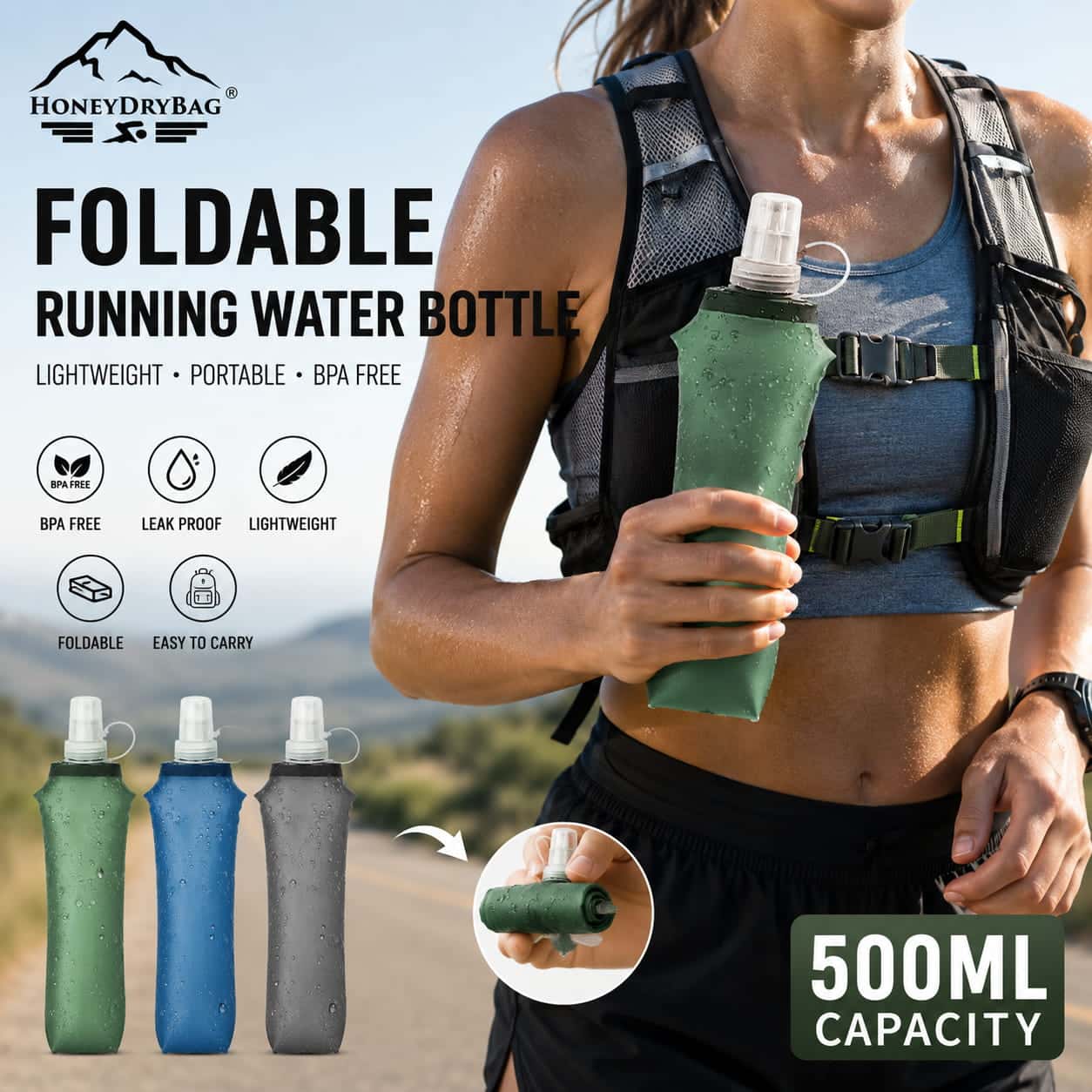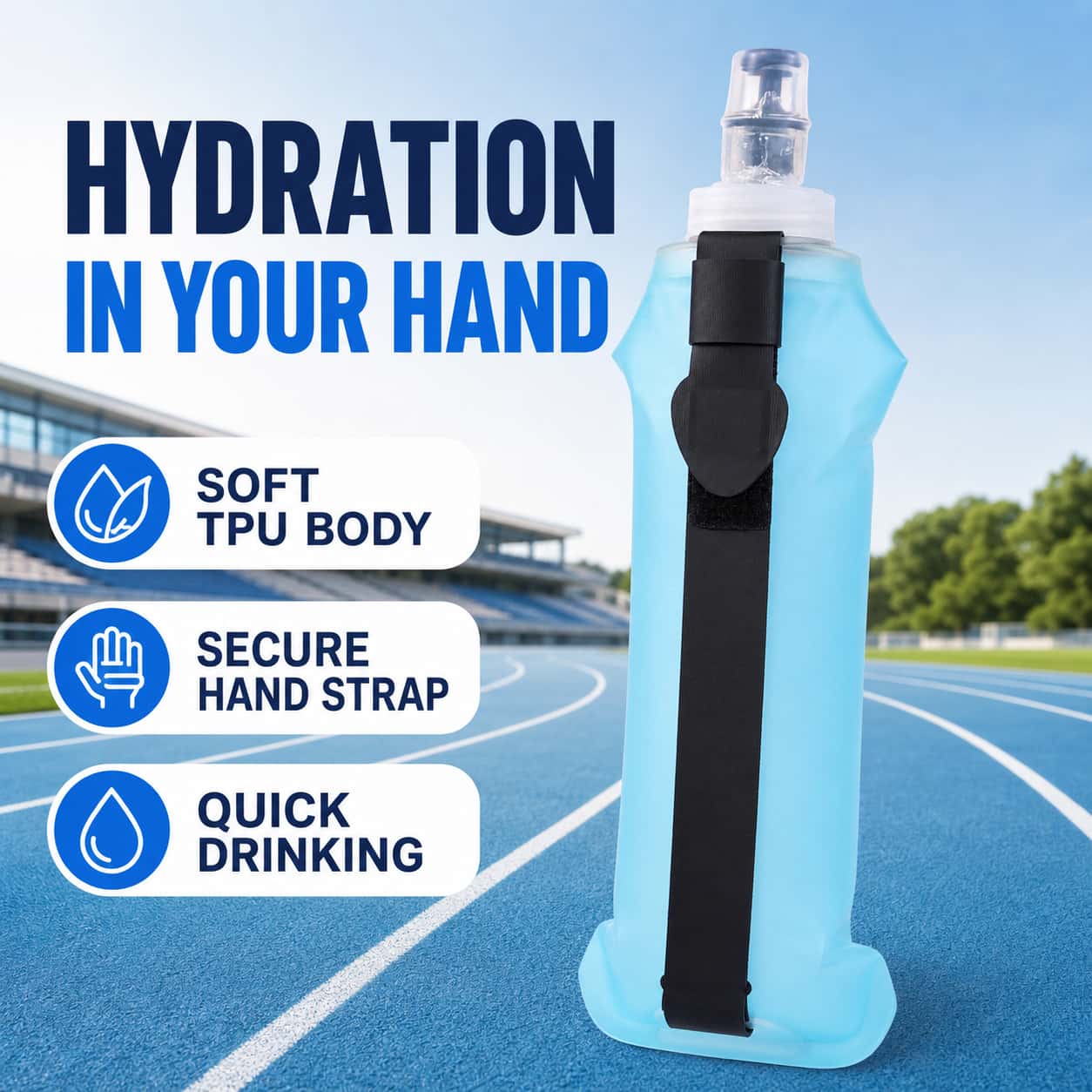
Quick answer: A soft flask for a running belt should be tested by filled size, pocket depth, opening tension, bounce, leakage, half-full stability, phone pressure, and how easily the runner can remove and reinsert it. Capacity alone is not enough. A 500 ml soft flask may work in one running hydration belt but feel unstable, hard to access, or too wide in another.
Running belts are no longer just phone holders. Many runners use them as lightweight hydration and nutrition systems for road running, trail running, marathon training, and triathlon run sessions. That creates a useful opportunity for soft flask brands, but it also creates a compatibility problem: the bottle and belt must work as one carrying system.
Why Soft Flask Compatibility Matters for Running Belts
A soft flask behaves differently from a hard bottle. When full, liquid gives it shape. As the runner drinks, the body collapses, the base can curl, and the flask may become easier to squeeze but harder for a pocket to support. This changing shape is one reason runners like soft flasks, but it is also why belt compatibility cannot be judged from nominal capacity alone.
A running belt adds another layer of complexity. The belt moves with the waist and hips, not the chest. It may be worn over shorts, tights, a tri suit, or a light jacket. The soft flask may sit at the back, side, or front. It may share space with a phone, gels, keys, salt tablets, or a small food pouch. A flask that feels stable on a table can bounce once it is loaded into a belt and used at running cadence.
For B2B buyers, this means a soft flask should not be approved only because it is labeled 250 ml, 350 ml, or 500 ml. The real question is whether the finished flask works in the target belt pocket under full, half-full, and nearly empty conditions.
250 ml, 350 ml, or 500 ml: Which Capacity Fits a Running Belt?
Smaller soft flasks are usually easier to place in a waist belt because they are shorter, lighter, and less likely to pull the belt downward. Larger flasks carry more water, but they need better pocket support and a more stable belt structure.
| Soft flask size | Main advantage | Main limitation | More suitable when |
|---|---|---|---|
| 150-250 ml | Light, compact, easy to pair with gels | Limited hydration volume | Short runs, race-day rinse water, concentrated fuel |
| 300-350 ml | Balanced volume and belt comfort | Still needs a secure pocket | Medium runs, warm-weather training, minimalist belts |
| 500 ml | Higher hydration capacity | More bounce risk and larger pocket requirement | Long runs, trail running, dual-flask belt systems |
| 600 ml+ | More water per bottle | Often too large for many waist belts | Specialized belts or handheld-style systems |
Capacity should be matched with filled width, length, base shape, and cap size. Two 500 ml soft flasks can have very different external shapes. One may be long and narrow, while another is shorter and wider. The second one may be easier to hold but harder to fit into a narrow belt pocket.
Single Soft Flask vs Dual Soft Flask Belt Setup
A single soft flask is simpler, but it can create weight imbalance if carried on one side. A rear-center pocket can reduce side-to-side imbalance, but it may make the flask harder to reach while running. A front or side pocket can improve access, but it can also bounce more if the belt does not hold the flask firmly.
A dual-flask setup can balance weight better when both sides are filled evenly. It also allows the runner to separate drinks, such as plain water in one flask and electrolyte drink in the other. The trade-off is bulk. Two flasks need more pocket structure, more elastic control, and more careful testing with other items in the belt.
Brands should test both setups:
- One full flask on the right side
- One full flask on the left side
- One rear flask in the center
- Two full flasks
- Two half-full flasks
- One full flask and one nearly empty flask
The last case is often overlooked. During a run, runners rarely drink from both sides at exactly the same rate. Uneven liquid levels can change how the belt feels.
What Makes a Soft Flask Bounce in a Running Belt?
Soft flask bounce usually comes from a mismatch between flask shape, belt tension, pocket support, and load placement. It is not always a defect in the flask or the belt.
Common causes include:
- The flask is too heavy for the belt fabric.
- The pocket opening is loose and allows vertical movement.
- The pocket is shallow, so the cap and shoulder move with each stride.
- The belt is worn too low on the hips.
- A phone or gel packet presses against the flask.
- The flask contains air, increasing sloshing.
- The flask becomes unsupported as it empties.
A soft flask can also bounce differently at different speeds. A belt may feel acceptable when walking or jogging but become unstable during tempo running, downhill running, or race pace. For B2B testing, the movement test should include more than a short indoor try-on.
Pocket Depth, Opening Tension, and Flask Shape
The pocket is one of the most important parts of the system. It must hold the flask securely without making the bottle impossible to remove.
A pocket that is too loose allows bounce. A pocket that is too tight can squeeze the flask, push liquid toward the bite valve, or make reinsertion difficult. A pocket that is too shallow may hold the lower body but let the cap swing. A pocket that is too deep may hide the cap and slow access.
Test these details:
- Opening width before and after stretch
- Usable pocket depth
- Whether the pocket narrows toward the bottom
- Internal seams that catch the flask base
- Elastic tension after repeated insertion
- Cap clearance when the runner bends or twists
- Whether the flask can be removed with one hand
- Whether the flask can be reinserted when half empty
A soft flask with a shaped base may slide into some pockets more easily. A fully soft base may feel better against the body but can fold at the pocket opening. Neither design is universally better; compatibility depends on the target belt.
Phone, Gels, Keys, and Flask Pressure
Running belts often carry more than water. A phone, gels, keys, a card, or a small food pouch may share the same storage zone or press into the hydration pocket from behind. This can change how the soft flask behaves.
A phone can flatten the flask or push it outward. Gel packets can create pressure points. Keys can rub against the flask film if there is no separate compartment. A tight belt can squeeze the bottle and increase leakage risk if the cap or bite valve is not properly closed.
For realistic testing, load the belt as a runner would use it:
- Phone in its intended pocket
- Two to four gels
- Keys or small essentials
- One or two soft flasks
- Optional race bib or small food pouch
Then test bounce, leakage, comfort, and access. A belt-and-flask combination that works when empty may fail when the phone and nutrition are added.
Leakage Tests for Belt Use
A soft flask in a belt may be squeezed from multiple directions. The runner's waist, the belt fabric, adjacent gear, and hand pressure during reinsertion can all compress the body. This makes leakage testing especially important.
A practical leakage test should include:
- Fill the flask with water and close the cap normally.
- Place it in the target belt pocket.
- Add the expected phone, gels, and keys.
- Run, jog, and bend forward.
- Remove and reinsert the flask several times.
- Repeat when the flask is half full.
- Repeat with electrolyte drink if the product is marketed for sports drink use.
Check the cap thread, bite valve, welds, and shoulder area. If the flask leaks only when compressed inside the belt, the problem may be a system-fit issue rather than a bottle-only issue.
For a broader leakage discussion, see Why Does My Soft Flask Leak? 7 Common Causes and How to Fix Them.
Half-Full Stability Is More Important Than Full-Bottle Fit
Many product checks focus on the full bottle. That is useful, but it does not represent most of a run. Once the runner drinks, the soft flask loses liquid support. It may collapse, twist, sink, or become harder to grip.
A good test should include:
- Full flask
- Three-quarters full
- Half full
- Nearly empty
- Empty
Half-full testing is especially important for running belts because the waist area moves continuously. If the pocket only holds the flask well when it is full, the runner may experience bounce or folding during the middle of the run.
This is also why air removal matters. Some runners squeeze out excess air before closing the cap to reduce sloshing. Brands should test whether the flask remains easy to drink from after air is removed and whether the belt still supports the collapsed shape.
Can a Running Belt Soft Flask Carry Sports Drink or Gel?
A soft flask can often carry water, electrolyte drink, or diluted carbohydrate mix, but the use case should be defined clearly. Thick mixes or gel-style fuel may require different valve flow, cleaning, and cap design than plain water.
If the flask is carried in a belt, sticky leakage is more annoying because it can reach clothing, phone pockets, keys, or food. Sports drink residue can also collect around the cap and bite valve after repeated squeezing.
Before approving a sports-drink use claim, test:
- Mixing and filling process
- Valve flow with the actual drink mix
- Leakage after belt compression
- Taste and odor after repeated use
- Cleaning access around the cap and valve
- Drying time after washing
For more detail, read How to Fill a Soft Flask With Powdered Drink Mix Without Making a Mess. If heat is part of the use case, see Can You Freeze a Soft Flask for Hot Runs?.
B2B Testing Checklist for Soft Flasks Used With Running Belts
For OEM and ODM soft flask projects, the buyer should define the target belt or pocket specification before approving the flask. If the flask is intended for multiple belt brands, test a representative range rather than assuming universal compatibility.
1. Measure the finished flask
Record:
- Filled capacity
- Filled length
- Maximum filled width
- Neck and cap diameter
- Cap height
- Base shape
- Film thickness
- Valve type
Use tolerances, not only a single sample measurement.
2. Define the target belt pocket
Record:
- Pocket opening width
- Usable depth
- Stretch direction
- Elastic tension
- Internal seams
- Cap clearance
- Whether the pocket is rear, side, or front mounted
3. Test loaded movement
Test walking, easy running, faster running, downhill movement, and bending. Include phone, gels, keys, and any other items the belt is expected to carry.
4. Test liquid levels
Repeat the test when the flask is full, half full, nearly empty, and empty. A soft flask changes shape during the run, so one fill level is not enough.
5. Test removal and reinsertion
Check whether the runner can remove the flask with one hand and whether a half-empty flask can be reinserted without folding. This is especially important during races and long runs.
6. Test leakage under compression
Squeeze the flask inside the belt pocket and while reinserting it. Test water first, then electrolyte drink if relevant.
7. Test cleaning and drying
If the product is sold for sports drink, check cap cleaning, bite valve cleaning, odor retention, and drying time. A belt-friendly flask that is hard to clean may still create complaints.
For a wider sourcing overview, read our complete B2B guide to foldable TPU running water bottles.
Final Takeaway
A soft flask for running belts should be evaluated as part of a carrying system. Capacity matters, but filled width, pocket depth, opening tension, half-full stability, leakage under compression, phone pressure, and cleaning access matter just as much.
For runners, the best soft flask is the one that stays stable, remains easy to drink from, and does not become frustrating after the liquid level drops. For brands and B2B buyers, the best approach is to test the finished soft flask inside the intended running belt with realistic water, phone, gel, and movement conditions.
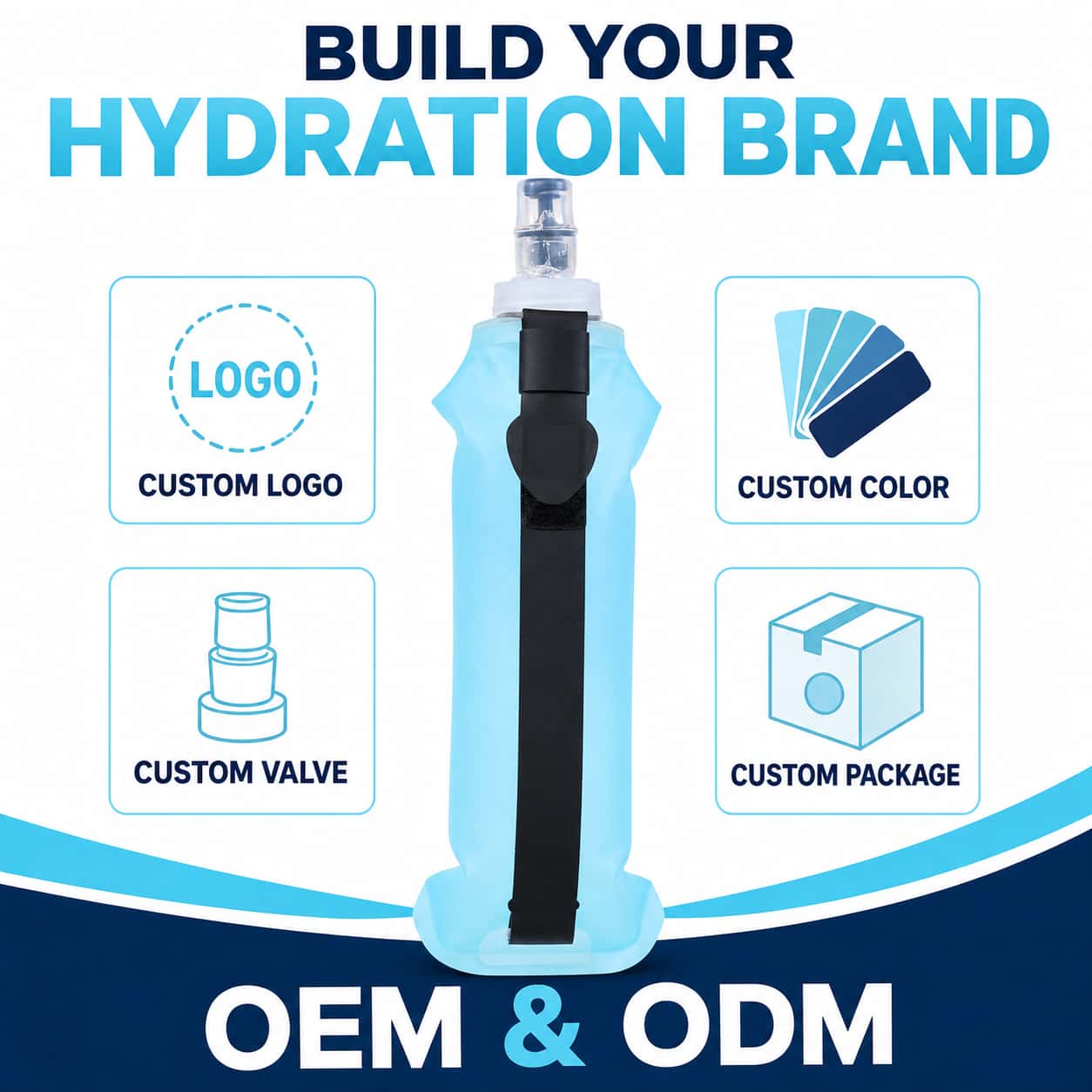
Honey Dry Bag works with running, triathlon, and outdoor brands on OEM and ODM soft flask projects. Contact us to discuss capacity options, cap and valve choices, belt compatibility testing, branding, packaging, and sample development for your hydration product line.