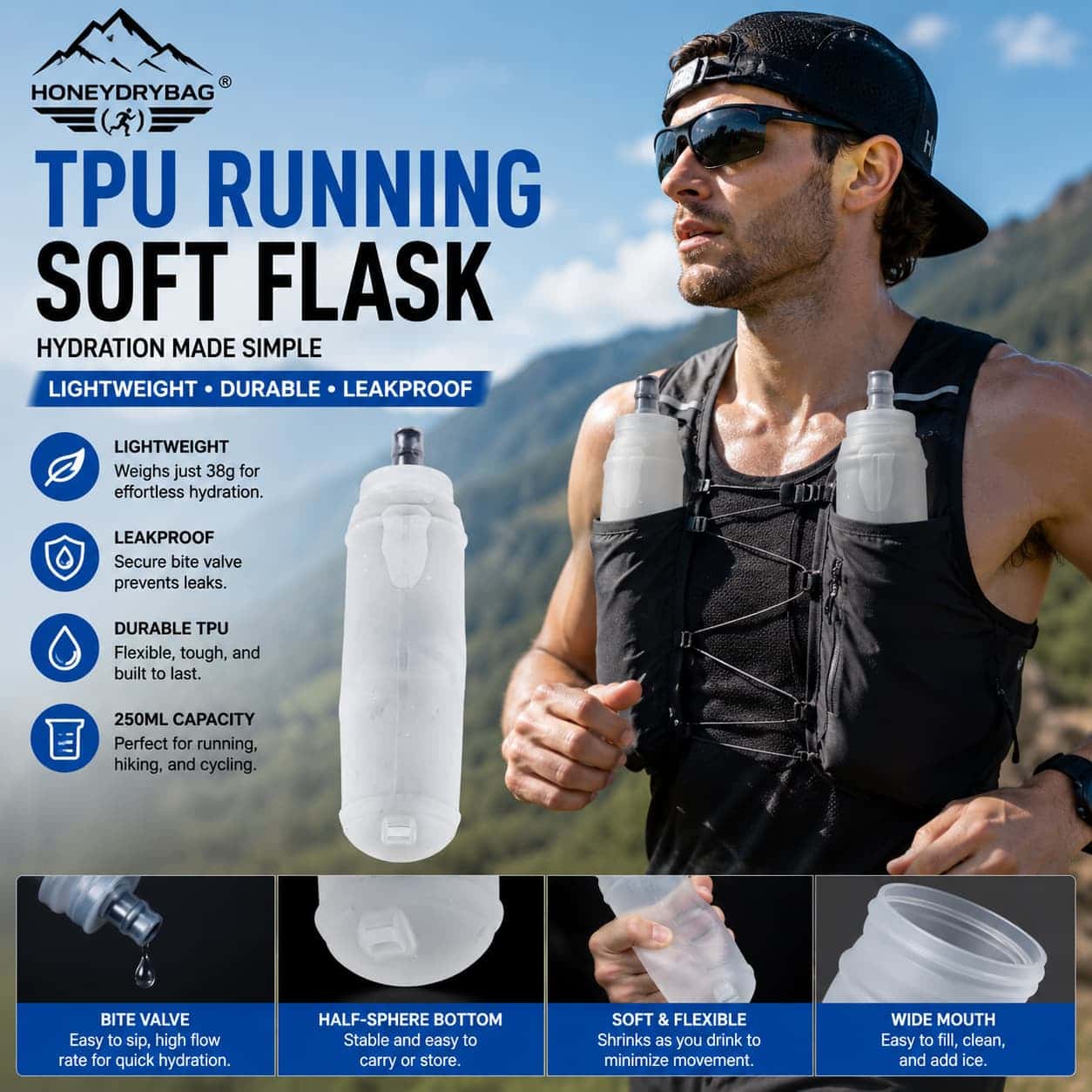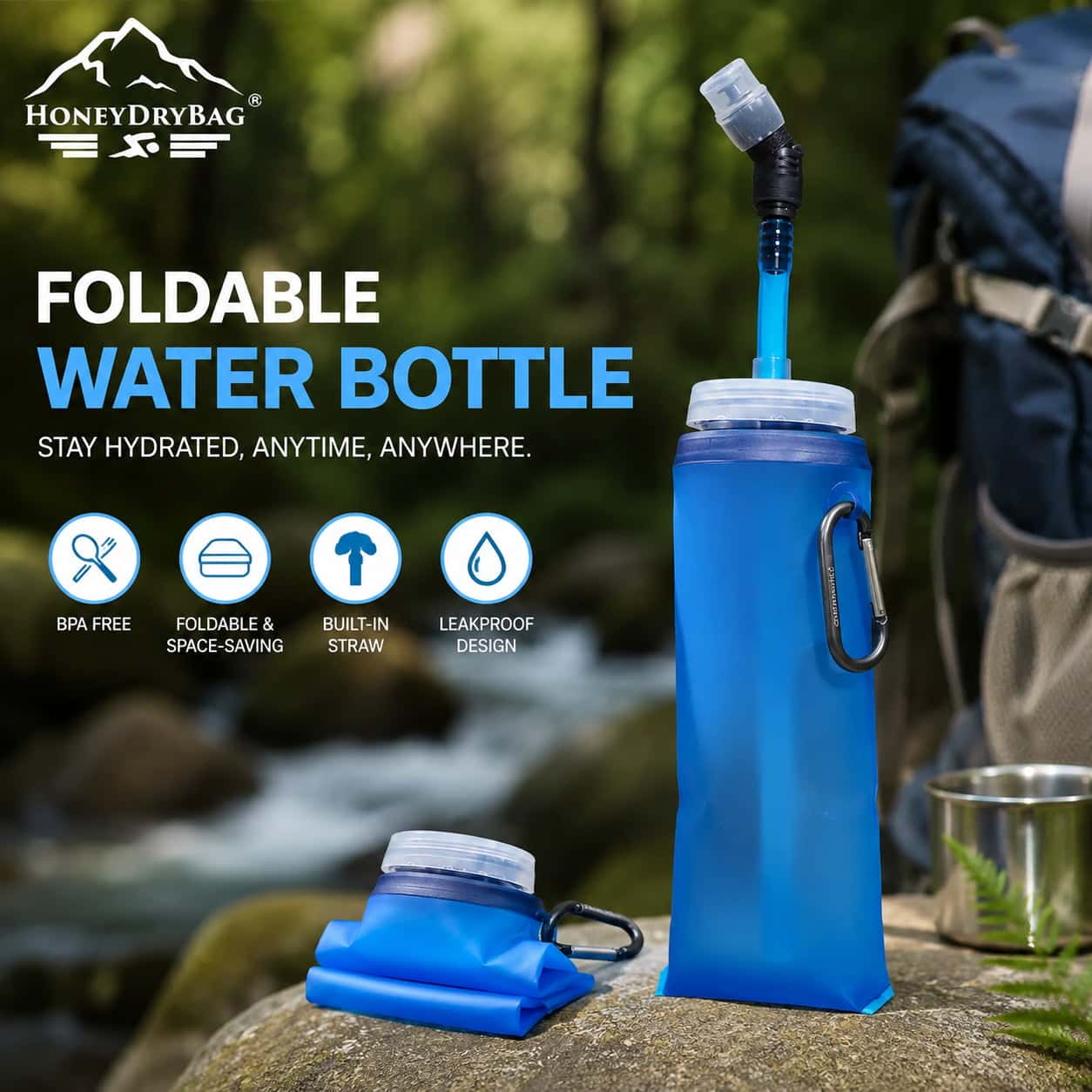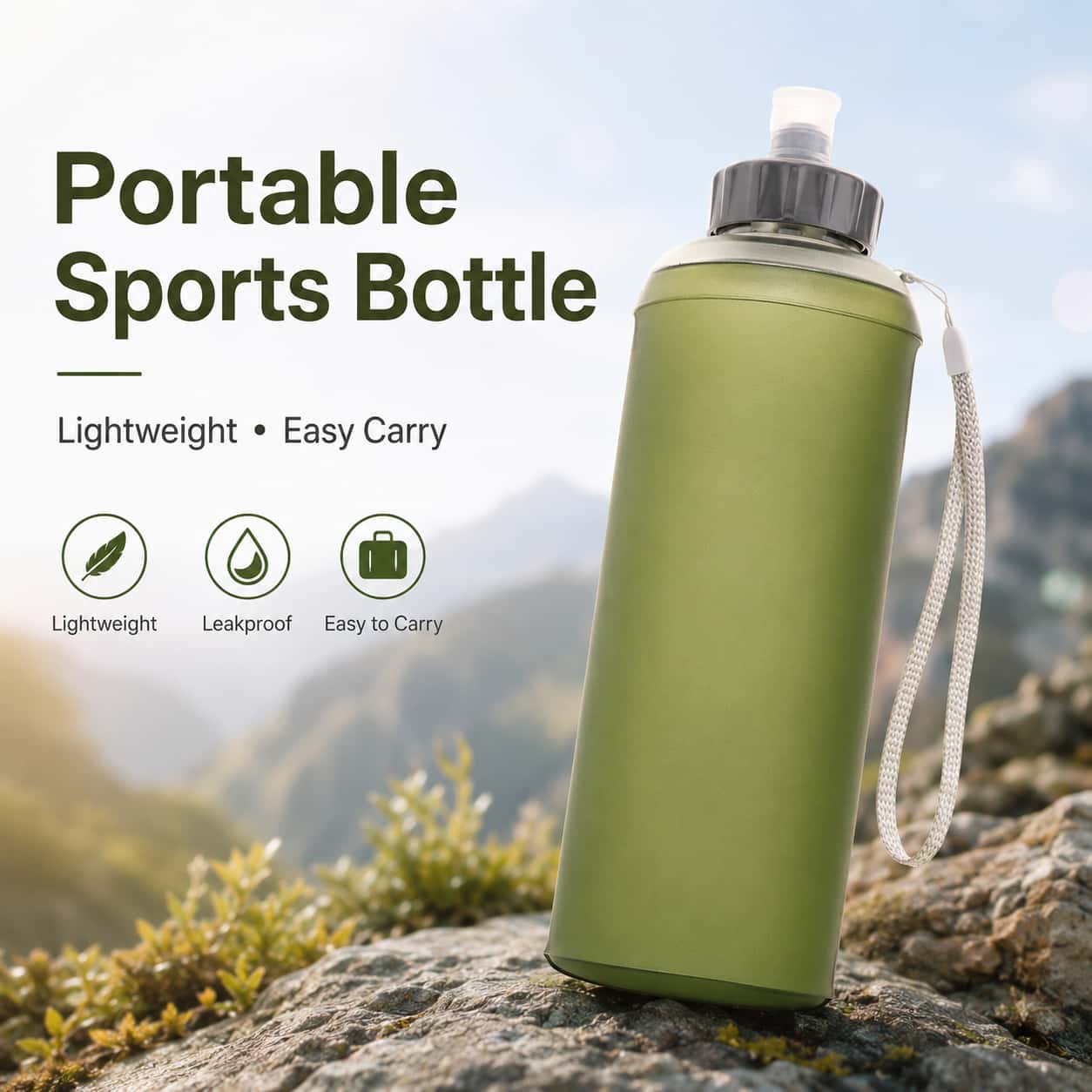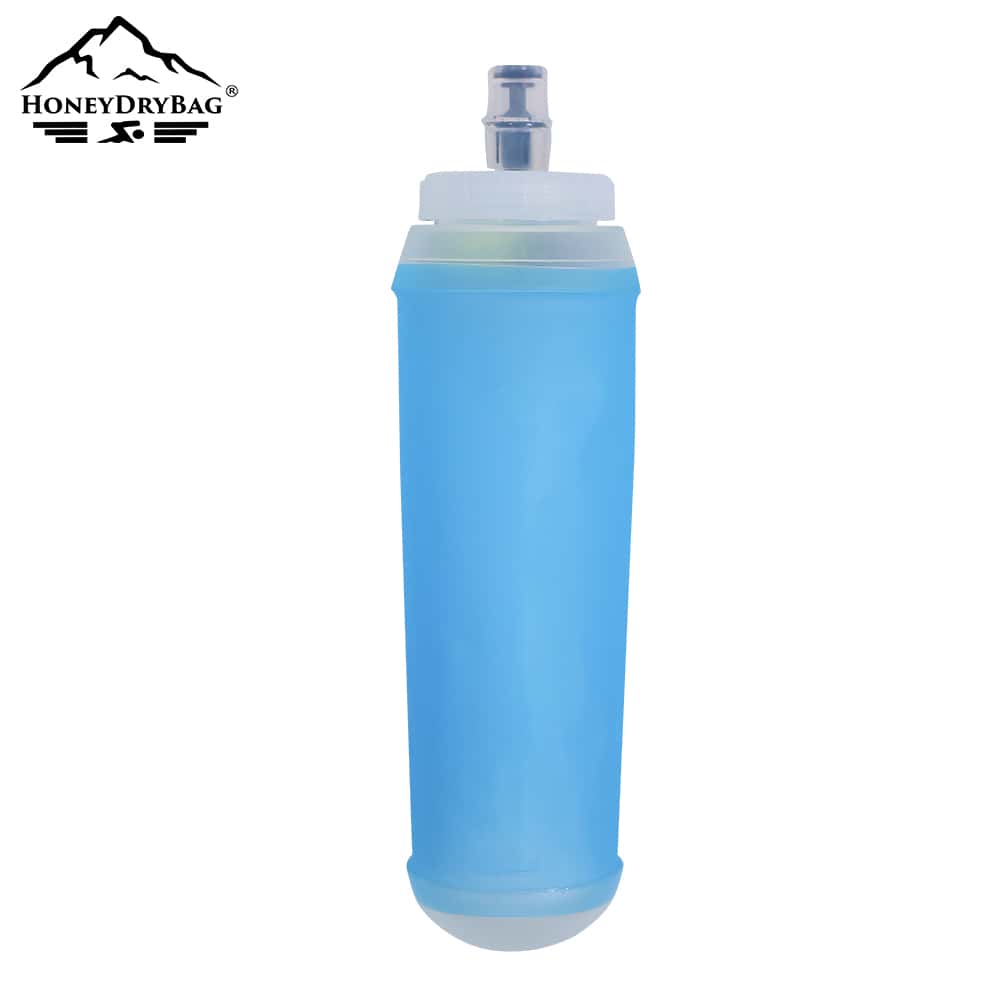
Quick answer: For many runners using a hydration vest, a 500ml soft flask is a practical all-around option because it provides useful capacity without requiring a separate hydration bladder. Smaller 250ml or 350ml flasks can make more sense for shorter runs, racing, gels or situations where reducing bulk matters.
There is no single best soft flask size for every runner.
The right capacity depends on how long you run, how much water you need, what your running vest can hold and whether you carry one flask or two.
250ml vs 350ml vs 500ml Soft Flask
The easiest way to compare soft flask sizes is by considering how they will actually be carried.
| Capacity | Typical Use | Main Advantage | Main Limitation |
|---|---|---|---|
| 250ml | Short runs, racing, gels | Small and compact | Limited hydration capacity |
| 350ml | Short to medium runs | Balance between size and capacity | Less water than 500ml |
| 500ml | Trail running, long runs, running vests | Higher practical capacity | Larger when completely full |
Capacity alone, however, does not determine whether a flask is suitable.
The physical dimensions of the flask and the dimensions of the running vest pocket are also important.
When Does a 250ml Soft Flask Make Sense?
A 250ml soft flask is useful when compact size matters more than maximum water capacity.
It may be suitable for:
- Short training sessions
- Races with frequent aid stations
- Carrying a concentrated sports drink
- Carrying liquid nutrition or gels
- Smaller running vest pockets
- Runners who want to minimize bulk
A smaller flask also changes less in size as liquid is consumed because there is less total volume.
The trade-off is straightforward: 250ml does not provide much water for longer unsupported runs.
For this reason, runners should consider distance, temperature and access to water rather than choosing the smallest flask simply because it is lighter.
What About a 350ml Soft Flask?
A 350ml soft flask sits between the compact 250ml format and the more common higher-capacity 500ml format.
This can be useful when a 500ml flask feels unnecessarily large but 250ml does not provide enough capacity.
Potential applications include:
- Medium-distance training
- Racing
- Smaller hydration vests
- Supplemental hydration
- Electrolyte drinks
For product buyers, 350ml can also be useful when building a soft flask range rather than offering only one capacity.
Why Are 500ml Soft Flasks Common for Running Vests?
500ml is a practical capacity for many front-pocket hydration systems.
A runner using two 500ml soft flasks can carry approximately one liter of fluid while keeping the water accessible from the front of the vest.
This makes it possible to:
- Drink without removing the vest
- Separate water and sports drink
- Monitor remaining liquid
- Refill individual bottles at aid stations
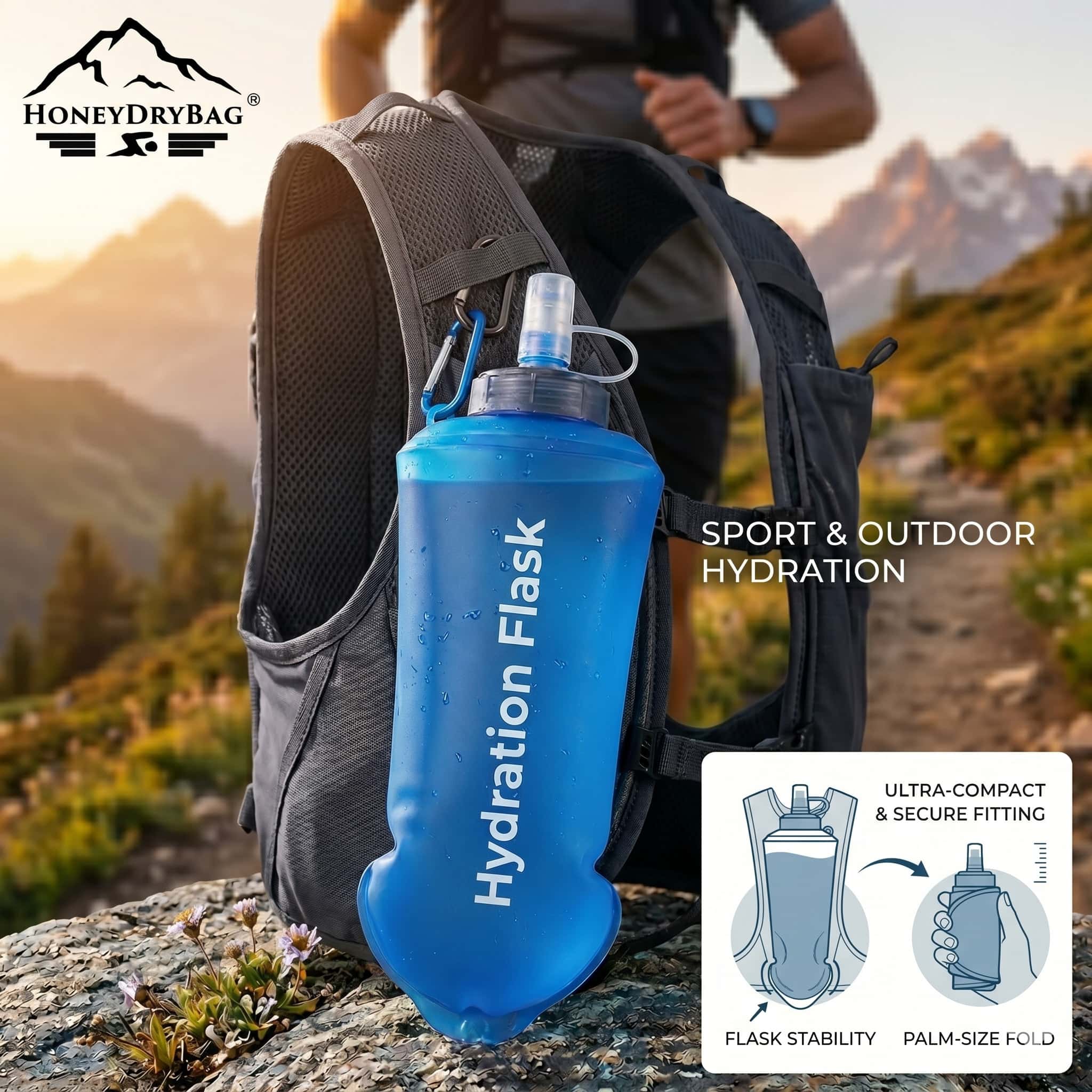
Another advantage of a soft flask is that the flexible body reduces in volume as the liquid is consumed.
Unlike a rigid bottle, an empty or partially empty soft flask takes up less space and can be compressed.
Is 500ml Always Better?
No.
More capacity also means more liquid weight when the flask is full.
Water itself weighs approximately one kilogram per liter, so carrying more capacity has an obvious weight consequence.
A runner who only needs a small amount of hydration may therefore prefer a smaller flask.
Vest compatibility can also be a problem.
Two products labeled "500ml" do not necessarily have identical:
- Length
- Width
- Neck diameter
- Body shape
- Valve position
This is particularly important for B2B buyers developing a hydration vest and soft flask as a system.
Capacity should not be the only specification used to select a flask.
Soft Flask Size and Running Vest Compatibility
One of the most common mistakes when selecting a soft flask is looking only at capacity.
Suppose two models both hold 500ml.
One may be relatively tall and narrow, while another is shorter and wider.
Both have the same nominal capacity, but they may behave differently inside the same running vest pocket.
Important measurements can include:
- Overall length
- Body width
- Neck diameter
- Cap diameter
- Filled profile
- Valve height
For brands sourcing both running vests and soft flasks, testing the actual combination before bulk production can be valuable.
The flask should sit securely enough to remain stable while still allowing the runner to drink and remove it when necessary.
One 500ml Flask or Two?
This depends on the intended hydration strategy.
Using two front soft flasks provides flexibility.
For example:
Flask 1: Water
Flask 2: Electrolyte or carbohydrate drink
Another option is to start with two flasks and refill them during a longer event.
For shorter runs, a runner may carry only one.
The important point is that soft flask capacity should be considered as part of the complete hydration system rather than as an isolated product specification.
How Should B2B Buyers Choose Soft Flask Capacity?
For a retailer or running brand, the question is slightly different from the one an individual runner asks.
Instead of asking only:
"Which size is best?"
consider:
Who will use this product?
A trail-running customer may have different requirements from a road-racing customer.
Which running vest will it be used with?
Pocket dimensions can influence the appropriate flask geometry.
What capacity range should the product line cover?
Offering more than one capacity can address different running scenarios.
Does the product need customization?
Logo printing, color, cap configuration and packaging may affect the final product specification.
Has the actual sample been tested?
A physical sample can help verify dimensions, weight, fit, printing and functional characteristics before bulk production.
Which Soft Flask Size Should You Choose?
A simple starting point is:
Choose 250ml when:
You prioritize compact size, carry smaller quantities of liquid or use the flask for shorter events.
Choose 350ml when:
You want more capacity than 250ml without moving to a full 500ml flask.
Choose 500ml when:
You need greater hydration capacity, especially for trail running, longer training sessions or running vest use.
But the final choice should consider more than capacity.
Fit, physical dimensions, intended distance and the complete hydration system matter too.
For Running Brands and B2B Buyers
Honey Dry Bag develops TPU soft flask products for running, trail running, endurance sports and outdoor hydration applications.
Different projects may require different:
- Capacities
- Flask dimensions
- TPU constructions
- Colors
- Logo printing
- Caps
- Bite valves
- Packaging
For brands developing a running vest, we recommend considering the vest pocket and soft flask together rather than selecting both products independently.
If you are sourcing a custom soft flask, contact us with your required capacity, application, estimated quantity and customization requirements.
We can discuss which existing soft flask configuration is suitable for your project.