Quick answer: The running soft flask documented in this real sample inspection weighed approximately 44g on a digital scale.
But weight alone does not determine whether a soft flask is suitable for running.
Capacity, dimensions, cap and valve design, construction and compatibility with a running vest should also be considered.
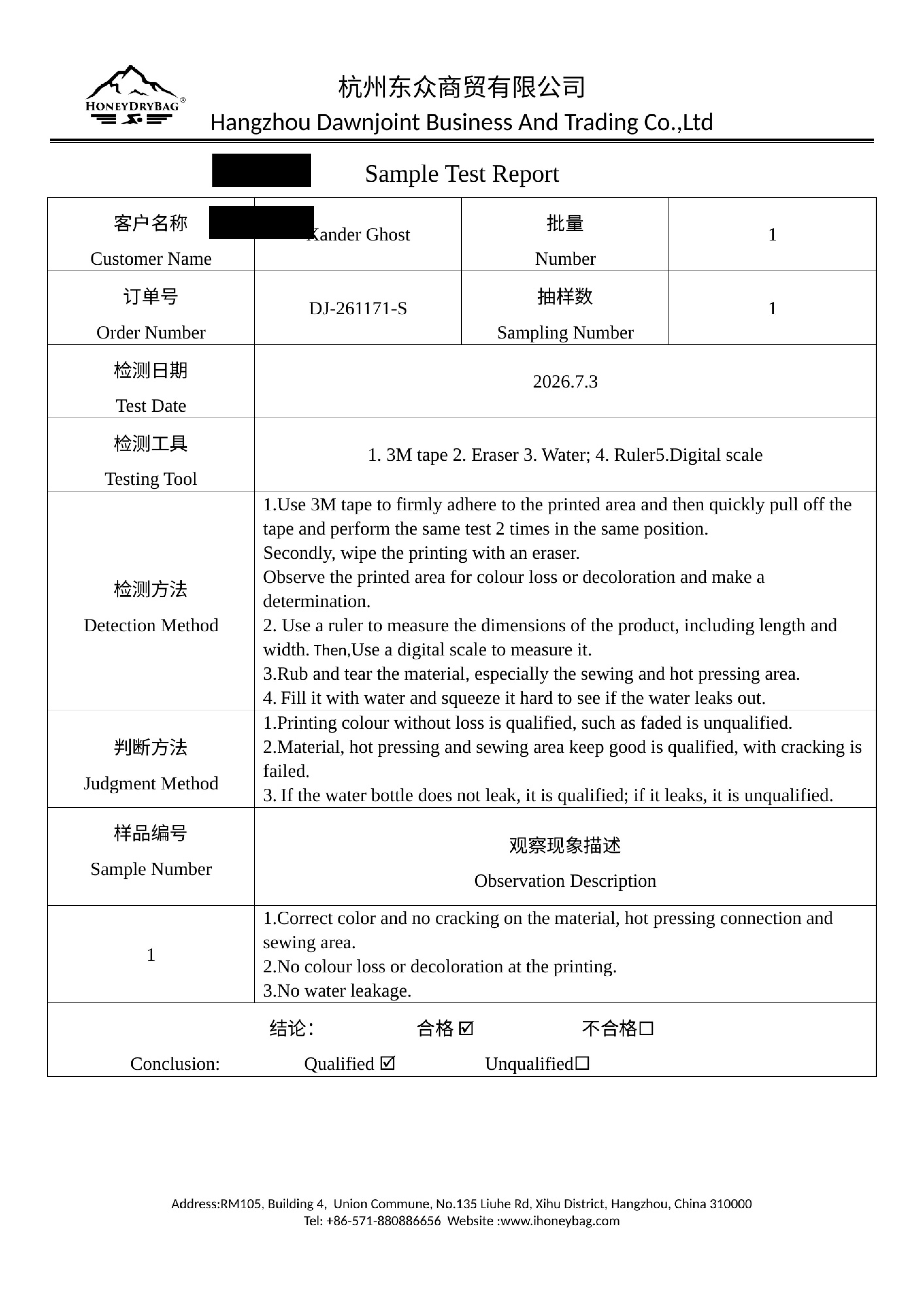
This article uses a real customer sample inspection performed by Hangzhou Dawnjoint Business And Trading Co., Ltd. / Honey Dry Bag on July 3, 2026.
Customer-identifying information, order information and customer branding have been redacted from the public report.
How Much Did This Soft Flask Weigh?
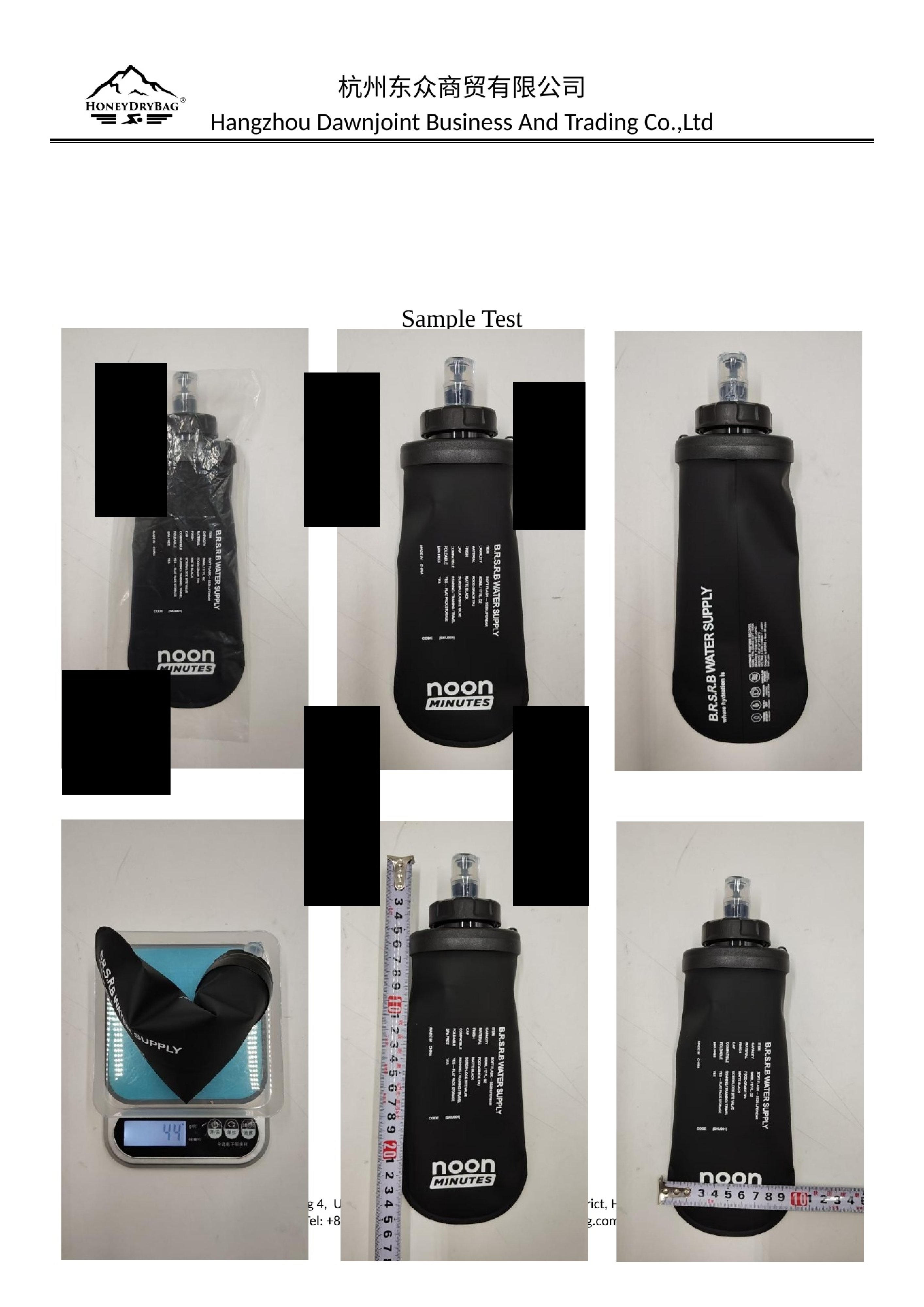
During this sample inspection, the finished soft flask was placed on a digital scale.
The scale showed approximately:
44g
This is useful real-world information, but it is important to understand what the number means.
The 44g measurement applies to the particular sample shown in this report.
It does not mean every soft flask weighs 44g.
Actual finished weight can vary depending on:
- Capacity
- Flask dimensions
- TPU body construction
- Cap
- Bite valve
- Neck design
- Additional straps or accessories
For B2B buyers, comparing actual finished samples is therefore more useful than assuming a standard weight for every soft flask.
Why Does Soft Flask Weight Matter for Running?
Running equipment is carried for thousands of repeated steps.
For this reason, runners often pay attention to the weight of hydration equipment, especially for:
- Trail running
- Long-distance running
- Racing
- Ultramarathons
- Lightweight running vest setups
However, the weight of an empty flask is only one part of the total hydration weight.
Water itself contributes much more weight once the flask is filled.
For example, approximately 500ml of water weighs around 500g.
This means the complete carried weight includes both:
the flask + the liquid inside it.
Reducing unnecessary product weight can still be useful, but it should not come at the expense of appropriate construction or function.
Actual Dimensions Matter Too
The report does not rely only on a product specification sheet.
The physical sample was also measured using a ruler.
The inspection photographs show measurements of the actual finished product.
For running applications, this is important because two soft flasks with similar capacity can still have different:
- Length
- Width
- Body profile
- Neck diameter
- Cap dimensions
These differences can affect whether the flask fits correctly inside a running vest pocket.
Capacity alone does not determine running vest compatibility.
Lightweight Does Not Automatically Mean Better
It can be tempting to compare running soft flasks using only one number:
weight.
But the lightest product is not automatically the best product.
A useful running soft flask also needs to perform its intended function.
Depending on the project, buyers may need to consider:
- Material construction
- Welded or hot-pressed areas
- Cap connection
- Bite valve
- Leakage resistance
- Printing
- Dimensions
- Running vest compatibility
This is why the sample documented here was checked for more than weight.
Printing Adhesion Inspection
The inspected sample included customized printing.
For OEM and private-label projects, printing quality is part of the finished product specification.
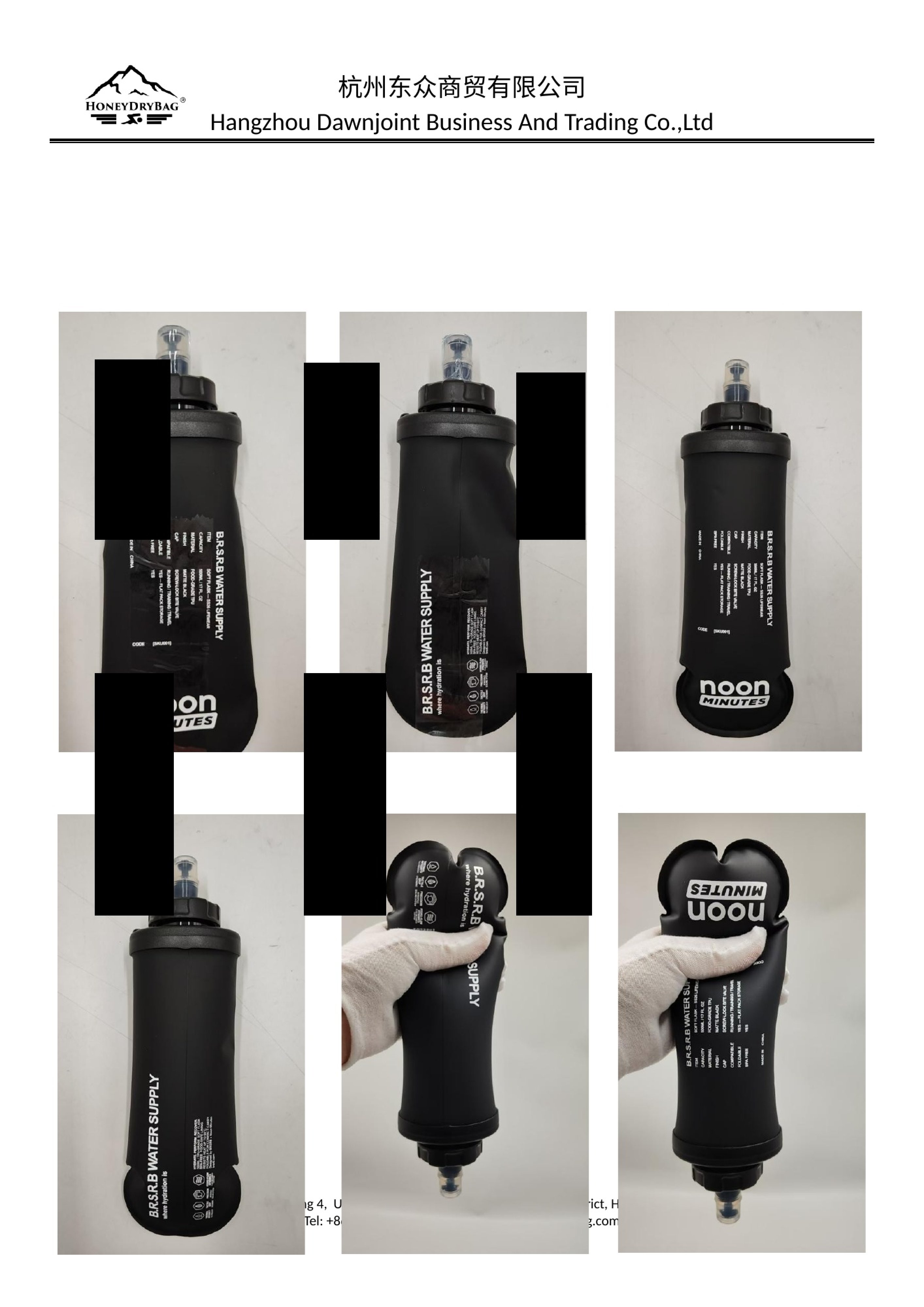
The report describes using 3M tape on the printed area.
The tape was firmly attached and then quickly removed, with the test repeated twice at the same position.
The printing was also wiped with an eraser.
The purpose was to observe whether there was visible colour loss or decoloration.
For this inspected sample, the recorded observation was:
No colour loss or decoloration at the printing.
Customer branding visible on the original product photographs has been redacted from the public version of the report.
Material and Construction Check
A running soft flask is repeatedly deformed during use.
It may be:
- Squeezed
- Folded
- Compressed
- Inserted into a vest pocket
- Removed from the pocket
- Filled
- Emptied
- Refilled
The sample inspection therefore included rubbing and pulling the material, particularly around relevant construction areas.
The report recorded:
Correct color and no cracking on the material, hot pressing connection and sewing area.
This result refers specifically to the inspected sample.
It should not be interpreted as a universal guarantee for every product or future production batch.
Water Leakage Test
Weight is useful for comparing running equipment, but a lightweight flask still needs to hold water properly.
The inspection method documented in the report included filling the flask with water and squeezing it firmly to check for leakage.
The acceptance method was straightforward:
No leakage = qualified
Leakage = unqualified
For the inspected sample, the report recorded:
No water leakage.
The final conclusion was:
QUALIFIED
What Should a Runner Look for Besides Weight?
For an individual runner, a practical soft flask comparison should consider several factors.
Capacity
How much water do you actually need?
Common soft flask capacities can include:
- 250ml
- 350ml
- 500ml
- Other application-specific sizes
Fit
Will the flask fit your running vest pocket?
Valve
Can you comfortably reach and drink from the bite valve while running?
Shape
Does the flask remain stable inside the intended pocket?
Weight
How much does the complete flask configuration weigh?
Compressibility
Can the flask reduce in volume as water is consumed?
The best option is therefore not necessarily the product with the lowest empty weight.
It is the product that provides an appropriate balance for the intended use.
What Should B2B Buyers Check?
For brands sourcing running hydration products, weight should be treated as one specification within a larger product system.
A sample review can include:
Physical Specifications
- Capacity
- Weight
- Length
- Width
- Neck dimensions
Construction
- TPU body
- Hot-pressed areas
- Cap
- Bite valve
- Connections
Customization
- Product color
- Logo size
- Logo position
- Printing adhesion
- Packaging
Function
- Leakage
- Compression
- Drinking performance
- Running vest compatibility
If the soft flask is being developed for a particular running vest, testing the actual flask and vest together can be especially useful.
Why We Publish Actual Sample Measurements
Supplier websites frequently describe products using general terms such as:
"Lightweight."
"High quality."
"Leakproof."
Those words alone provide very little evidence.
For this reason, Farhview.com is gradually publishing actual examples from our soft flask development and inspection work.
This case includes:
- A real customer sample
- A real inspection date
- An actual digital scale measurement
- Physical dimension measurements
- Printing inspection
- Material and construction inspection
- Leakage testing
- A recorded QC conclusion
Customer-identifying information and customer branding are removed before publication.
The goal is not to claim that every product has identical specifications.
The goal is to show real examples of what we actually inspect.
What This 44g Measurement Does Not Mean
The number needs context.
This report does not prove that:
- Every soft flask weighs 44g
- Every running soft flask should weigh 44g
- A 44g flask is automatically better than a heavier model
- Every capacity has the same weight
- One sample inspection guarantees every future production unit
Different product configurations can produce different results.
The measurement published here belongs to the particular sample shown in this report.
Final Sample Inspection Result
For this customer sample, the inspection documented:
Sampling quantity: 1
Approximate measured weight: 44g
Printing: No colour loss or decoloration observed
Material and construction: No cracking observed in the inspected areas
Water leakage: No leakage observed
Final conclusion: QUALIFIED
This provides a real example of how product weight can be evaluated together with other practical characteristics during soft flask sample inspection.
Looking for a Lightweight Custom Soft Flask?
Honey Dry Bag focuses on TPU soft flask products for running, trail running, endurance sports and outdoor hydration applications.
Depending on the project, B2B buyers can discuss:
- Different capacities
- Product dimensions
- Finished weight
- TPU construction
- Custom colors
- Logo printing
- Cap configurations
- Bite valves
- Packaging
- OEM and ODM requirements
If you are developing a lightweight running soft flask, contact us with your intended application, target capacity, estimated quantity and customization requirements.
We can discuss an existing model or sample configuration suitable for your project.