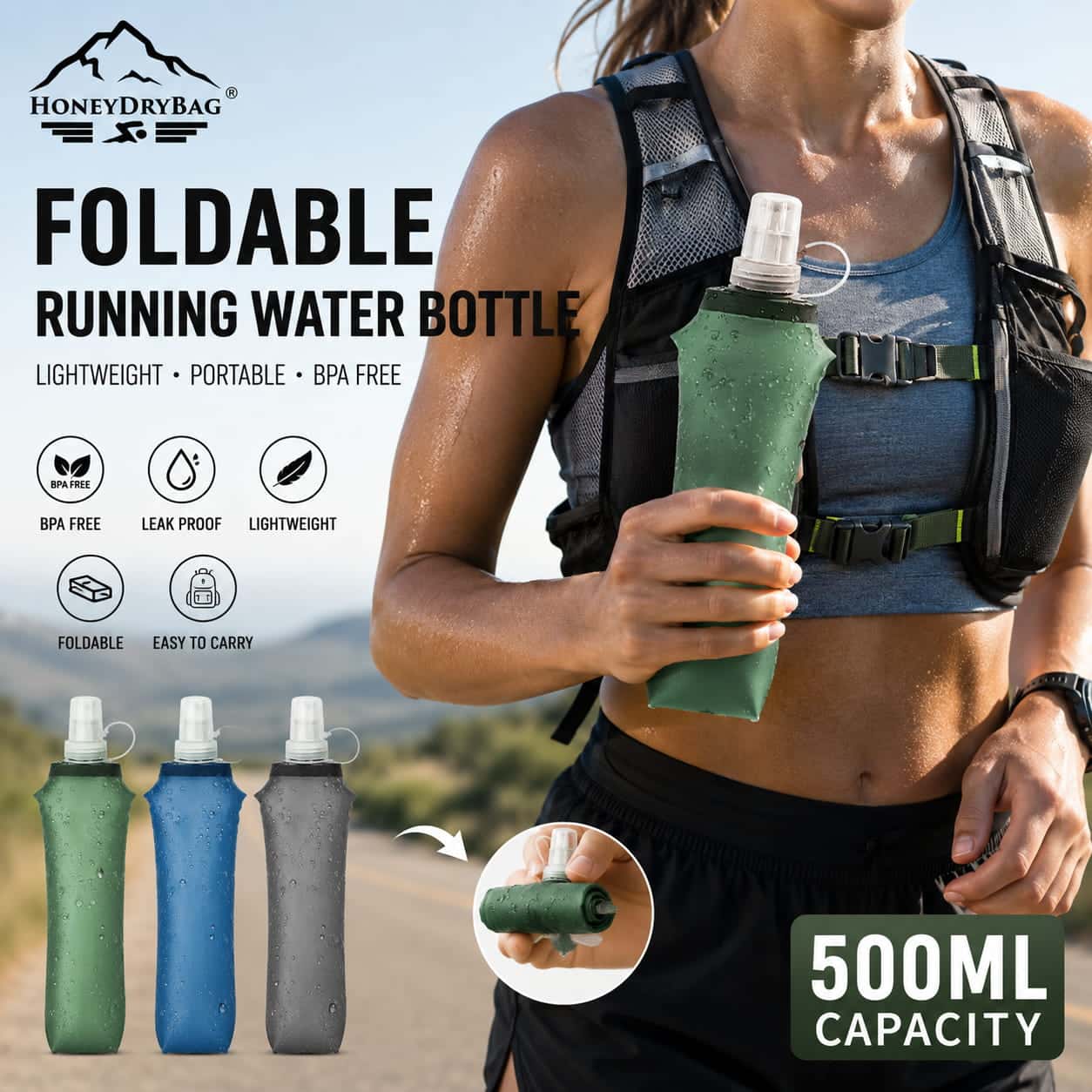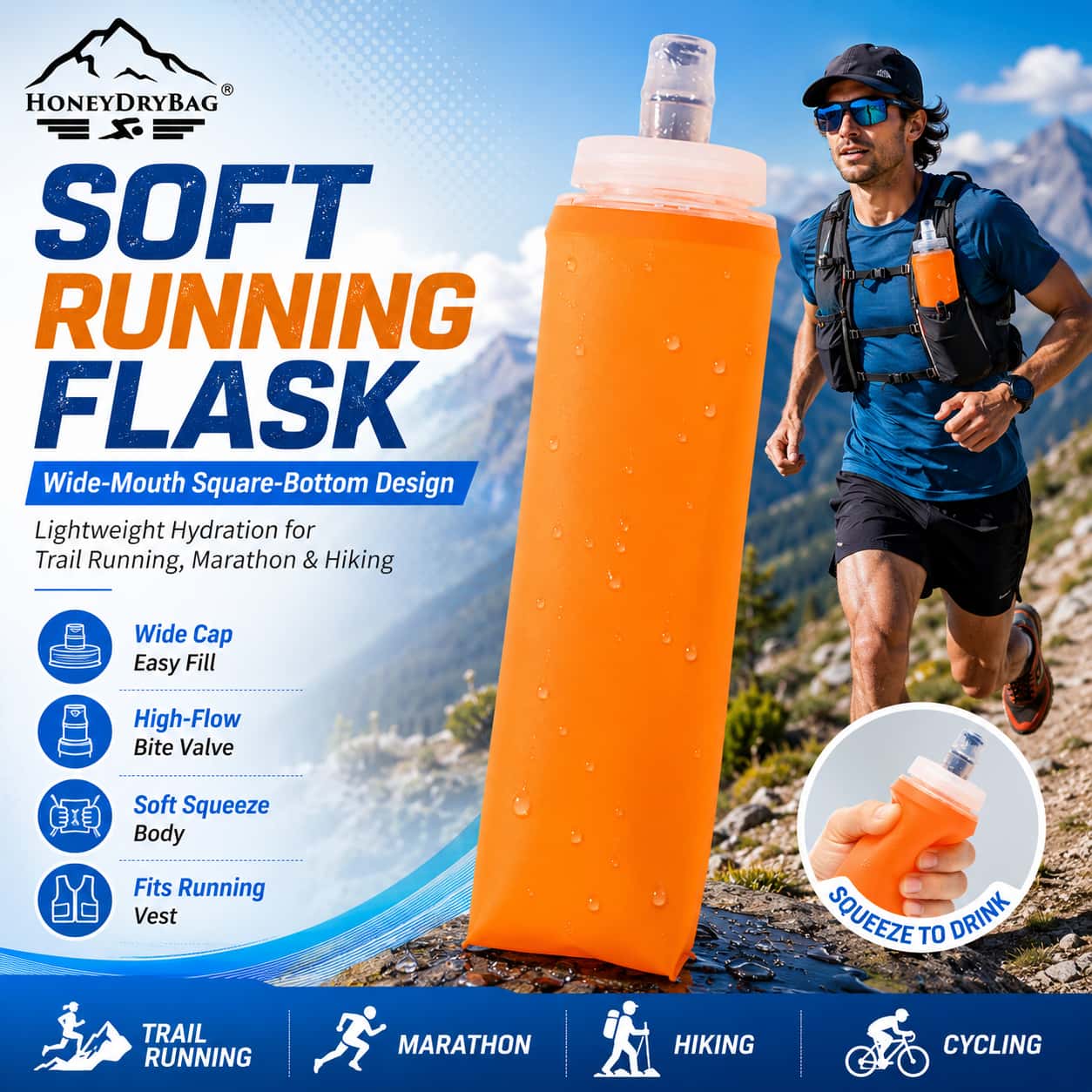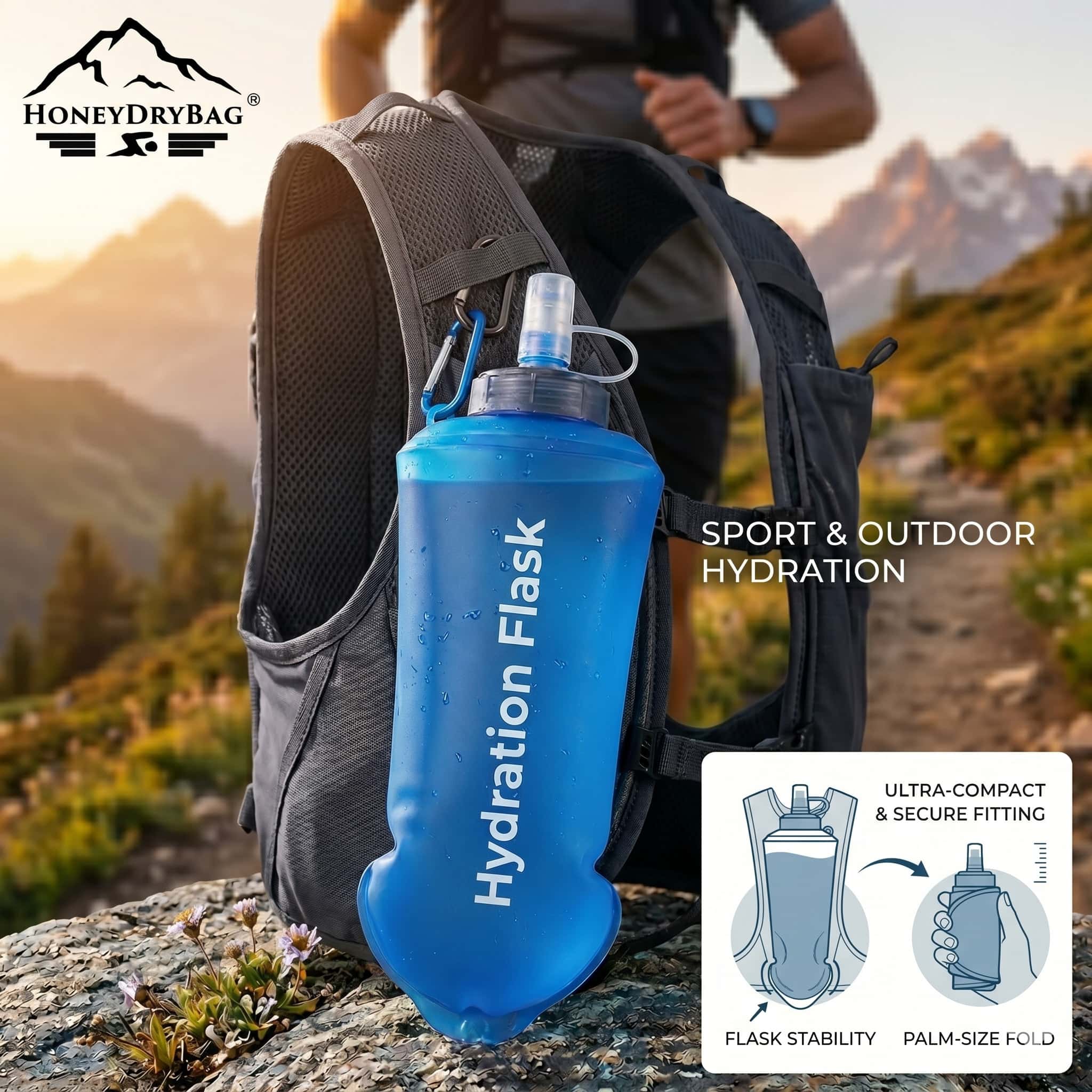
Quick answer: Soft flasks usually leak because of loose caps, damaged bite valves, seam problems, incorrect bottle sizing, or damage caused by storage and usage. Most leakage issues can be prevented by choosing the right flask size, using proper cleaning methods, and selecting a high-quality TPU soft flask designed for running.
Soft Flask Leakage Problems at a Glance
| Problem | Why It Happens | Quick Fix |
|---|---|---|
| Cap leaking | Cap is not tightened correctly or seal is damaged | Check the cap seal and tighten properly |
| Bite valve leaking | Valve wears out or becomes damaged | Replace valve or choose a reliable valve design |
| Seam leakage | Welding area is damaged from stress | Choose reinforced TPU welding construction |
| Small holes in flask | Bottle rubs against sharp objects | Match flask size with vest pocket |
| Leakage after freezing | Material becomes stressed at low temperatures | Avoid freezing filled soft flasks |
| Water leaking during squeezing | Bottle is over-compressed | Drink with controlled pressure |
Why Does My Soft Flask Leak?
Soft flasks are designed for active movement, but like any running equipment, they can develop problems over time.
The most common causes of leakage include:
- Damaged valves
- Loose caps
- Poor storage
- Incorrect usage
- Material damage
- Poor compatibility with hydration gear
Understanding the cause helps runners choose the right solution instead of replacing bottles unnecessarily.
1. The Soft Flask Cap Is Not Sealing Properly
The cap is one of the most common areas where leaks happen.
Possible causes include:
- Cap not fully tightened
- Damaged silicone seal
- Dirt around the opening
- Cross-threading during closing
A small gap in the seal can allow water to escape, especially when the bottle is squeezed inside a running vest.
Fix:
Before each run:
- Check the cap threads.
- Make sure the seal area is clean.
- Tighten the cap evenly.
- Test the bottle upside down before running.
2. The Bite Valve Is Leaking
Many runners prefer bite valves because they allow drinking without stopping.
However, the valve is also a moving component that can wear over time.
Common valve problems:
- Valve does not close completely
- Dirt blocks the seal
- Valve becomes damaged after long use
Fix:
Clean the valve regularly and replace worn components when necessary.
A well-designed running flask should provide easy drinking while maintaining a reliable seal.
3. Soft Flask Seams Are Damaged
TPU soft flasks are usually manufactured using advanced welding processes to create strong seams.
However, repeated stress can damage any flexible product.
Possible causes:
- Folding the bottle incorrectly
- Overstretching the flask
- Contact with sharp objects
- Using a bottle that does not fit the vest pocket
Fix:
Choose a flask size that matches your hydration vest.
A properly fitted soft flask for long-distance running reduces unnecessary movement and friction.
4. The Bottle Size Does Not Match Your Hydration Vest
A common mistake runners make is choosing a flask that is too large or too small for their vest.
An incorrect fit can cause:
- Excess movement
- Increased friction
- Pressure on seams
- Higher chance of damage
Choosing the correct capacity is important.
Many runners use:
- 250ml for short runs
- 350ml for daily training
- 500ml for marathon and trail running
You can learn more about how to choose the right soft flask size based on your running distance and hydration needs.
5. The Flask Is Stored Incorrectly
Soft flasks are flexible, but they still need proper care.
Avoid:
- Folding with sharp objects nearby
- Storing with dirt inside
- Leaving liquid residue for long periods
- Placing heavy items on the valve
Proper maintenance can significantly extend flask life.
6. Can Freezing Damage a Soft Flask?
Many runners store bottles in cold environments, but freezing a filled soft flask can create additional stress.
When water freezes:
- It expands
- Internal pressure increases
- Material stress increases
Fix:
If you need cold hydration, use chilled water or ice cubes with enough space for expansion instead of freezing a completely full flask.
7. Low-Quality Materials Can Cause Earlier Failure
Not all soft flasks are manufactured with the same material quality.
Important factors include:
- TPU material grade
- Welding quality
- Valve design
- Quality control process
For brands purchasing running bottles, working with an experienced TPU soft flask manufacturer helps ensure better durability and consistent production quality.
How Can I Prevent My Soft Flask From Leaking?
Follow these simple steps:
Before Running
- Check the cap
- Inspect the valve
- Confirm there are no visible damages
During Use
- Avoid sharp objects near the bottle
- Do not over-compress the flask
- Use the correct vest pocket size
After Running
- Rinse immediately
- Dry completely
- Store in a clean environment
Are Soft Flasks More Likely to Leak Than Hard Bottles?
Both soft and hard bottles can leak, but they usually fail in different areas.
| Bottle Type | Common Failure Point |
|---|---|
| Soft Flask | Valve, seams, punctures |
| Hard Bottle | Cap threads, cracks |
A quality soft flask designed for running can provide excellent durability while offering advantages such as flexibility, lighter weight, and better storage.
Which Running Hydration Option Has Fewer Problems?
The best hydration system depends on your running style.
| Running Type | Recommended Solution |
|---|---|
| Short runs | Small handheld bottle |
| Daily training | Soft flask |
| Marathon training | Soft flask + hydration vest |
| Trail running | Multiple soft flasks |
Many endurance runners choose a hands-free hydration solution because it reduces arm fatigue and allows more natural movement.
Conclusion
Soft flask leaks are usually caused by problems with seals, valves, sizing, or usage.
Choosing the correct bottle size, maintaining the valve system, and selecting a high-quality TPU soft flask can prevent most leakage issues.
For runners who need reliable hydration during training and races, a properly designed soft flask provides a lightweight and practical solution.