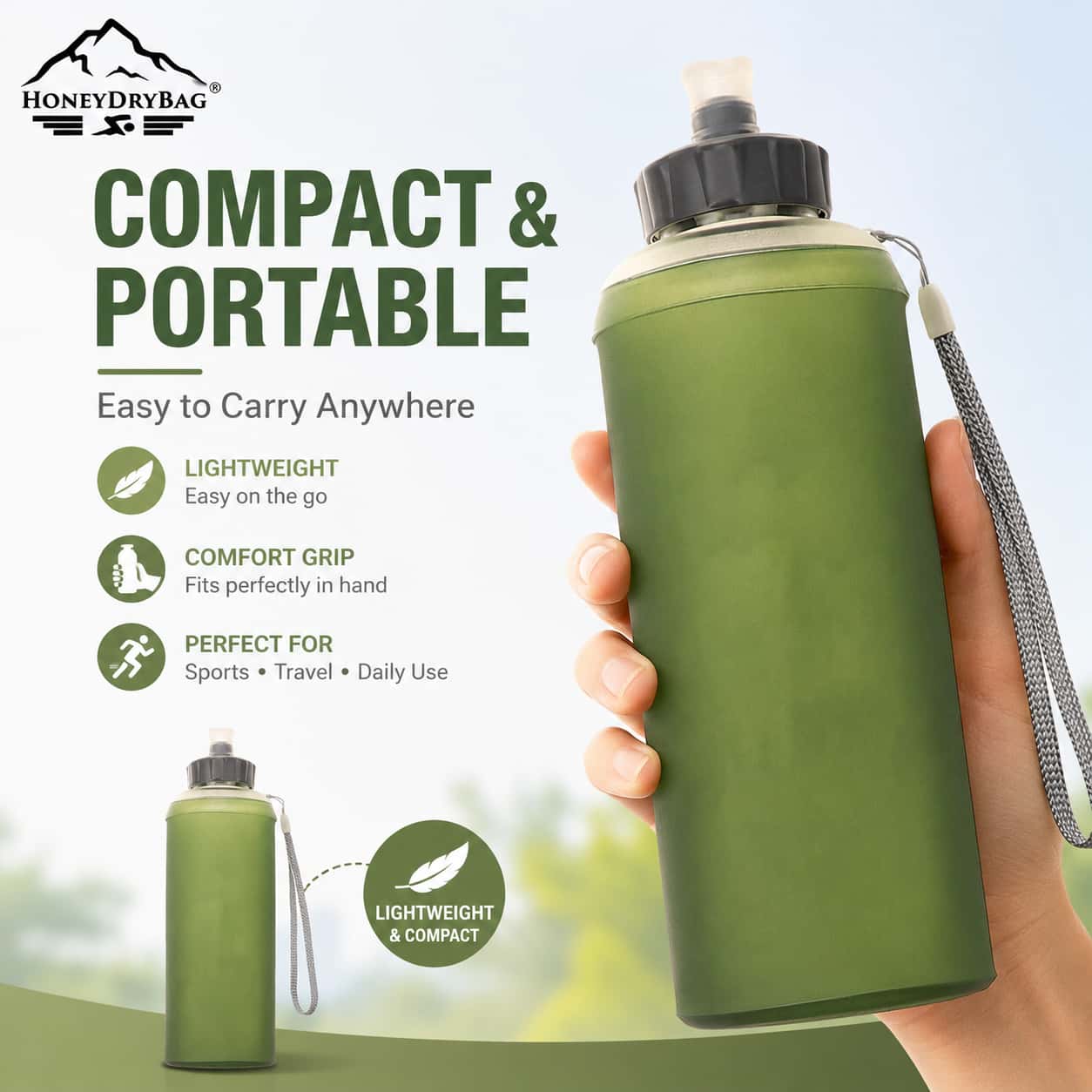
Quick answer: If a new soft flask tastes like plastic, wash the body, cap, and bite valve with warm water and mild dish soap, rinse every component, and let the parts dry before use. The taste may come from the flask, valve, packaging, or storage conditions. Stop using the product and contact the brand or supplier if a strong chemical smell or unpleasant taste remains after approved cleaning.
Taste can signal that something needs attention, but it is not a safety test. It cannot prove that a flask is unsafe, and the absence of an odor does not establish compliance with food-contact requirements.
Why Does My New Soft Flask Taste Like Plastic?
Runners describe the first-use taste as plastic-like, rubber-like, chemical, or simply “new.” Those descriptions do not identify a particular substance. They point to several places worth checking: the flexible body, cap, bite valve, packaging, and storage history.
Timing provides a useful clue. If water tastes unusual from the first fill, investigate the new product and its packaging. If the problem develops after sports drink, gel, or damp storage, residue in the flask or valve is a more likely place to start.
Use the care instructions for the specific hydration product. An initial wash may resolve the problem; a taste that persists should not be hidden by repeatedly trying stronger household treatments.
What Causes Plastic Taste in a Soft Flask?
The source may be the flask body, another drink-contact component, packaging, storage, or residue left after use. The material name alone does not identify the cause.
1. Manufacturing and Product Components
A soft flask is a multi-part drinking system. Its body may be TPU, while the bite valve, silicone sheath, seals, printing, and other components use different materials or processes. Describing the product as a “TPU soft flask” does not identify every surface that contacts the drink or affects its taste.
Material descriptions are useful, but labels such as “food-grade” and “BPA-free” do not replace documentation for the finished product and its intended use. BPA-free addresses BPA; it is not a complete assessment of every component or substance.
2. Material and Component Quality
TPU is widely used because it supports flexible, lightweight, collapsible designs. It does not by itself predict whether water will have a plastic taste. Formulation, processing, valve and seal materials, printing, and finished-product construction may all affect the sensory result.
Brands comparing materials should evaluate finished samples under consistent conditions rather than relying on a material label alone.
3. Packaging, Storage, and Drink Residue
A product kept closed in packaging may have a more noticeable odor when first opened. Washing and airing it may reduce that odor.
When the taste develops after use, check the cap and bite valve as well as the main compartment. Sports drinks, electrolyte mixes, and nutrition products can leave residue, while liquid may remain in narrow valve channels after the interior looks empty.
How Do You Remove Plastic Taste From a Soft Flask?
Before the first run, follow the care instructions supplied with the product.
Method 1: Wash the Flask and Bite Valve
- Add warm—not boiling—water and a small amount of mild dish soap
- Close the flask and shake it so the solution reaches the interior
- Push some of the soapy water through the bite valve
- Wash removable parts separately only when they are designed to come apart
- Rinse the body, cap, and valve until no soap remains
This routine addresses the main compartment and the drinking path without assuming that every model tolerates the same temperature or cleaning agent.
Method 2: Follow Approved Deeper-Cleaning Instructions
If the taste remains after washing, check whether the manufacturer approves a cleaning tablet, soaking solution, dishwasher cycle, or another method for that model. Baking soda, vinegar, bleach, boiling water, and dishwasher heat are not universal solutions because TPU bodies, seals, valves, and printed surfaces differ.
When care instructions are unavailable, contact the supplier before using a stronger treatment. Continued soaking is not a substitute for identifying the responsible component.
Method 3: Air-Dry Every Component
Keep the opening unobstructed after rinsing and dry permitted removable parts separately. Reassemble everything only when the body, cap, and valve are dry. Closing the flask while it is damp can create another odor and make it difficult to tell whether the original taste has gone.
Is a Plastic Taste From a Soft Flask Dangerous?
A plastic taste in water cannot by itself determine whether a soft flask is safe. Food-contact safety depends on the actual materials, finished construction, manufacturing controls, intended beverage, contact conditions, and the requirements of the market where the product is sold.
Stop using the flask and contact the brand or supplier when:
- A strong chemical smell or unpleasant taste remains after approved cleaning
- The taste becomes stronger with repeated use
- The body, cap, bite valve, or seal becomes sticky, cracked, discolored, or damaged
- The product's intended food-contact use or relevant documentation cannot be confirmed
A test report and a sensory complaint answer different questions. A report may show that a submitted sample met a stated test scope, but a taste test cannot establish compliance, and paperwork should not be used to dismiss a recurring user problem.
What Certifications Should You Look For?
“BPA-free,” “FDA,” “LFGB,” and “SGS” are not interchangeable certifications. BPA-free is a limited substance claim. FDA and European food-contact requirements are regulatory frameworks. SGS may be the laboratory or certification provider, but its name alone does not show what was tested.
Commercial buyers should confirm that a document identifies the actual sample, target-market requirements, relevant drink-contact components, test conditions, laboratory, date, and result. Its scope should match the intended beverage and use.
For the United States, the relevant question is whether the food-contact substances have an appropriate regulatory status for their intended use—not whether the bottle is loosely described as “FDA approved.” For the EU market, the product must meet applicable food-contact rules, including Regulation (EC) No 1935/2004.
Our guide to BPA-free, FDA, LFGB, and SGS soft flask documentation explains these distinctions in more detail.
Does TPU Taste Better Than Other Bottle Materials?
TPU offers practical advantages for a running soft flask, including flexibility, low weight, and collapsibility. Those design benefits do not establish that every TPU formulation or finished flask will have the same taste, odor, durability, or food-contact status.
The complete hydration system matters: flask body, bite valve, seals, processing, packaging, storage, and cleaning can all affect the result.
How Can Brands Avoid Customer Complaints About Taste and Odor?
Brands sourcing custom soft flasks should combine document review with finished-sample evaluation. Define the target market and intended conditions of use, then confirm that supplied reports match the actual sample and cover relevant drink-contact components.
Samples should also be filled with the intended drink and assessed under consistent storage and cleaning conditions before bulk approval. Documentation cannot predict every customer's perception, while a good-tasting sample cannot prove compliance.
For OEM buyers, supplier control is part of product control. Our TPU soft flask manufacturing guide for brands and buyers explains the wider sourcing process.
How to Store a Soft Flask to Prevent Odor
After each use:
- Empty the flask completely
- Rinse away sports drink or nutrition residue
- Flush the bite valve
- Leave the opening unobstructed until every component is dry
- Store the flask in a dry place with airflow
Do not leave drinks inside overnight or close a damp flask in a running vest or drawer. If an odor returns soon after cleaning, check the cap and valve before assuming the flexible body is the source.
Final Thoughts
If a new soft flask tastes like plastic, begin with the approved cleaning routine and include every drink-contact component. If a strong taste remains, stop using it and contact the brand or supplier. Commercial buyers should also compare the finished sample with documents that match the intended market and use.