Quick answer: Runners run into six recurring problems with water bottles: sloshing that throws off pace, hand numbness from a sustained grip, uneven running form from carrying weight on one side, caps that leak or wear out, trouble drinking without breaking stride, and chafing from belts or vests. Each one has a specific, practical fix — covered problem-by-problem below.
Running Water Bottle Problems at a Glance
| Problem | Why It Happens | Quick Fix |
|---|---|---|
| Water sloshing | Empty air space in a partially full bottle shifts with each stride | Use a soft flask, or fill the bottle closer to full |
| Hand numbness | Sustained grip pressure compresses nerves in the palm | Use a strap-style handheld; switch hands every mile |
| Uneven running form | One-sided weight shortens or twists arm swing | Alternate hands regularly, or switch to a belt/vest |
| Leaking or worn-out bottles | Cap threads wear down; soft flasks puncture in tight pockets | Choose reinforced caps; match flask size to vest pocket |
| Trouble drinking on the move | Open-top bottles cause choking or spilling | Use a bite valve or push-pull spout |
| Belt/vest chafing | Poor fit causes bouncing and rubbing | Adjust straps snugly; test gear before race day |
Why Does Water Slosh Around in a Running Bottle?
A partially full bottle has empty space inside it, and that space lets water shift with every stride. The shifting weight can pull your hand off-rhythm and distract you from pace and breathing.
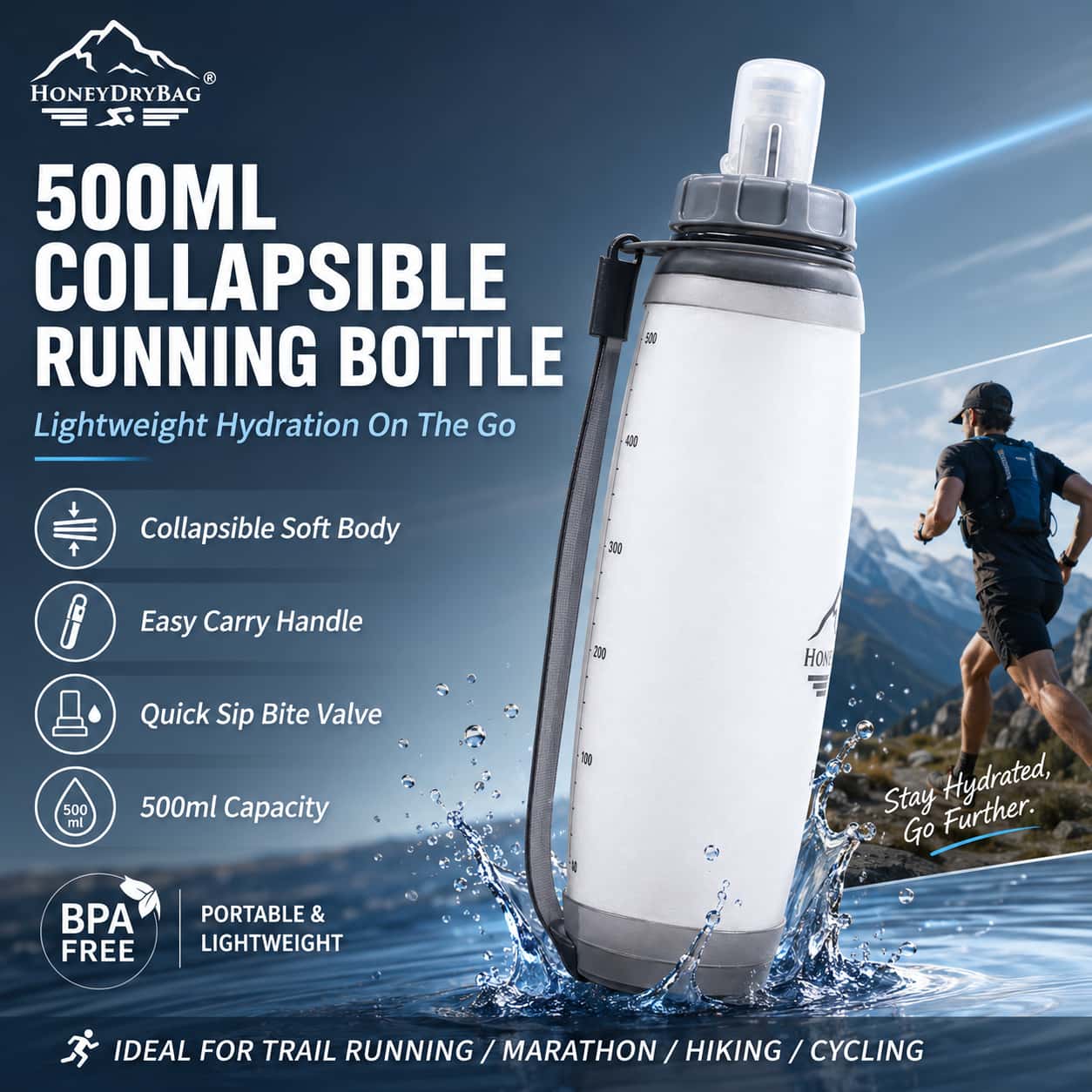
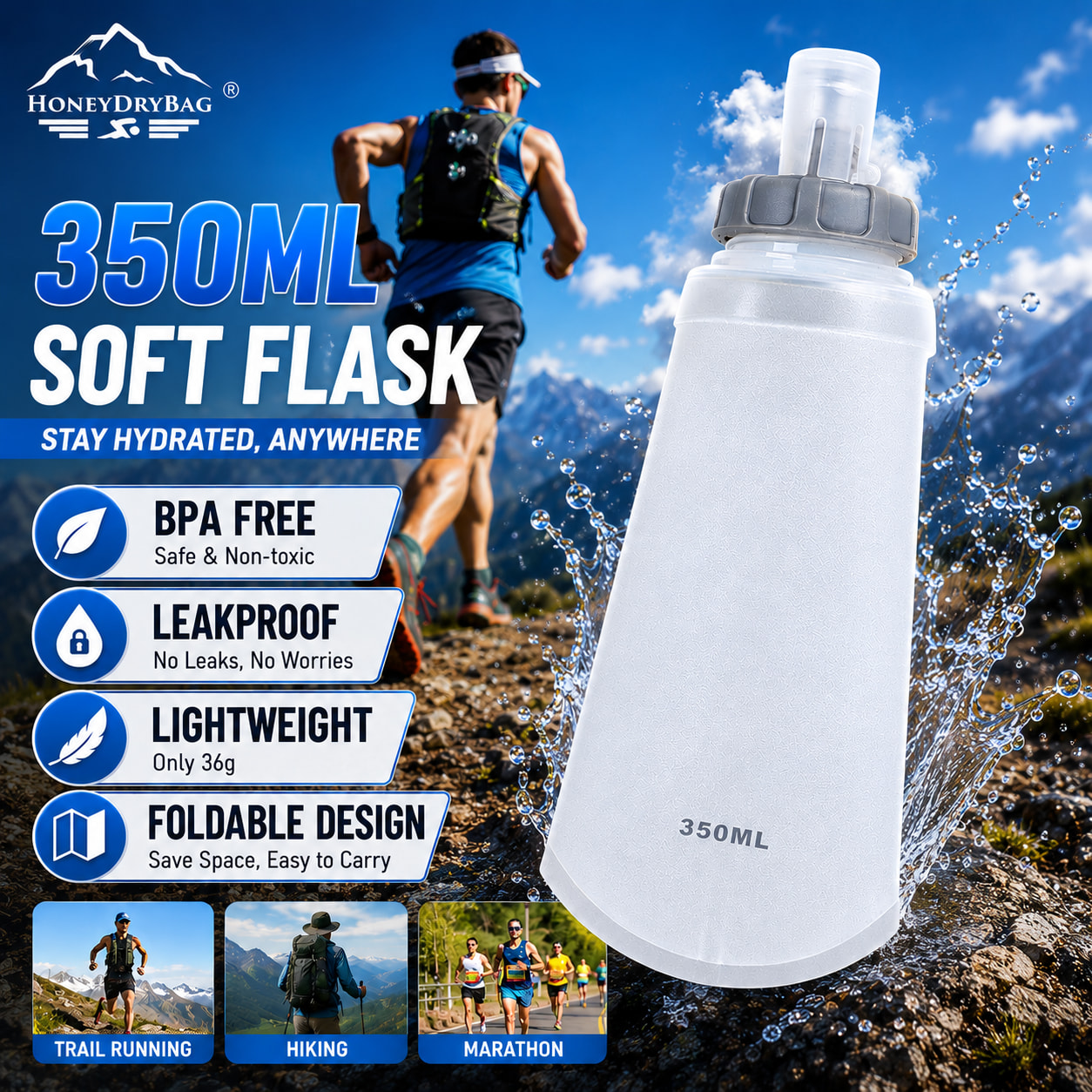
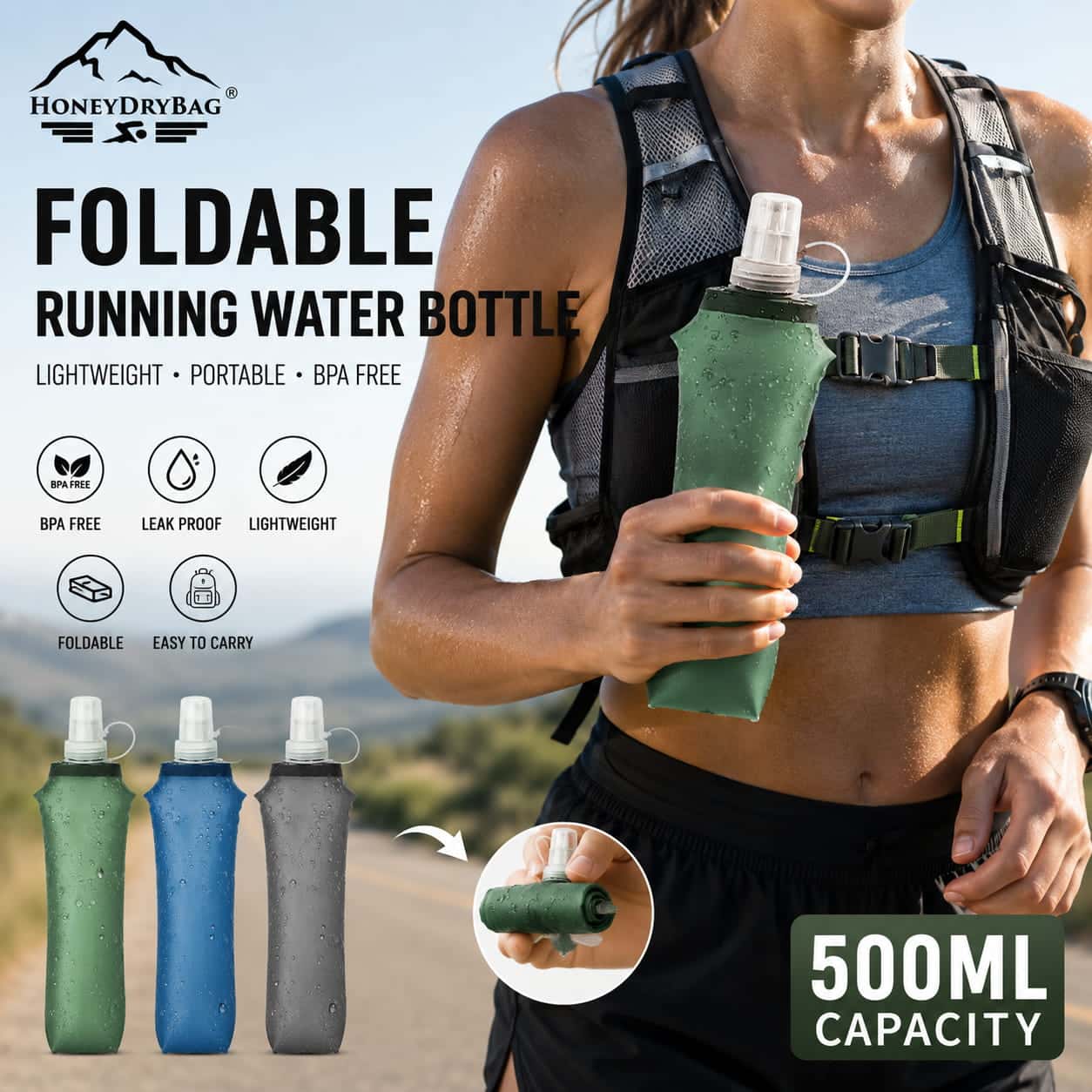
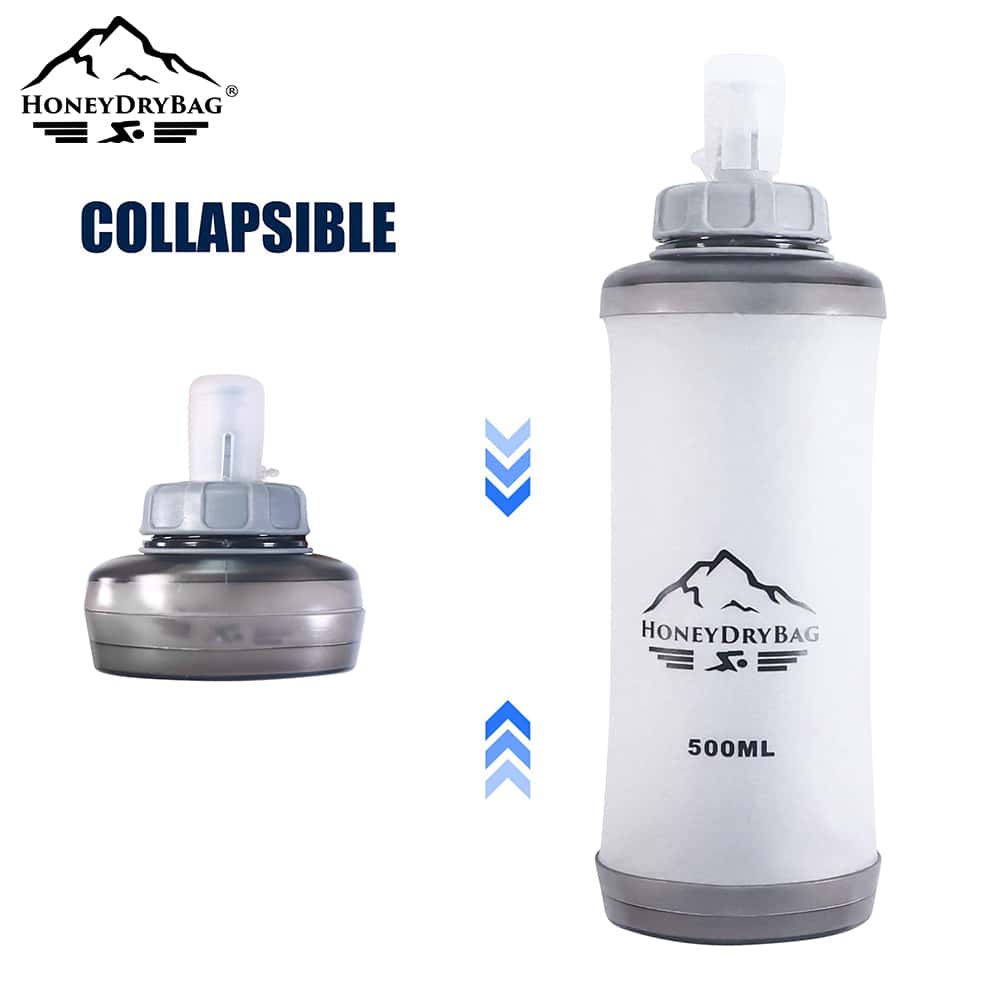
Fix: Soft flasks collapse as you drink, so there's little to no air pocket left to slosh. With a hard-sided bottle, filling it closer to full — or choosing a smaller capacity — reduces the effect.
Why Do My Hands Go Numb When I Hold a Water Bottle While Running?
Gripping a bottle for 30–40 minutes puts sustained pressure on the nerves running through your palm and fingers, which is why tingling or numbness shows up on longer runs. The repetitive load can also strain the tendons in your wrist and forearm over time.
Fix: Use a handheld bottle with an adjustable strap that holds the bottle against your palm, so your hand doesn't need to stay clenched. Switching hands every mile also gives each side recovery time.
Does Carrying a Water Bottle Change Your Running Form?
Yes. Holding weight in one hand for an entire run can shorten or twist your arm swing without you noticing, and doing this repeatedly over weeks of training can contribute to posture imbalances.
Fix: Alternate hands on a set interval, such as every 10–15 minutes. For runs over an hour, a waist belt or vest distributes weight more evenly across the body than a handheld bottle does.
Why Do Running Water Bottles Leak or Wear Out So Fast?
Cap threads on handheld bottles are a common failure point — they can wear down or crack after only a handful of uses, causing leaks in your hand or pocket. Soft flasks are also prone to small punctures, especially in tightly packed vest pockets.
Fix: Choose bottles with simple, reinforced cap designs rather than ones with several moving parts. If you're using a vest, match the flask's shape and size to the vest's pocket dimensions to reduce friction and movement.
How Do You Drink From a Bottle Without Stopping?
Tilting your head back to sip from an open-top bottle while running usually causes choking, spilling, or a forced walk break — none of which help mid-workout.
Fix: A bite valve or push-pull spout allows small, controlled sips without changing your stride or breathing. It's a minor design detail that makes a noticeable difference over a long run.
Why Do Hydration Belts and Vests Cause Chafing?
Bouncing bottles and straps that dig into the skin usually come down to poor fit rather than the gear itself, and the problem gets worse as the distance — and sweat — increases.
Fix: A belt should sit snugly at the waist without needing to be cinched painfully tight, and vest straps should be adjusted so bottles don't shift at faster paces. Test any new hydration setup on a shorter run before race day.
Which Hydration Method Should You Use?
| Run Duration | Recommended Setup | Why |
|---|---|---|
| Under 60 minutes | Handheld bottle | Simple, minimal gear, no fit issues to manage |
| 60–120 minutes | Waist belt | Distributes weight more evenly than a handheld |
| Over 2 hours or off-road | Hydration vest | Carries more volume, keeps weight close to the body |
Across all three setups, the biggest quality differentiator isn't duration — it's execution: how cleanly the flask collapses, how well the cap seals, and how the straps sit against your body. HoneyDryBag's soft flasks and running vests are built around solving exactly the failure points covered above.