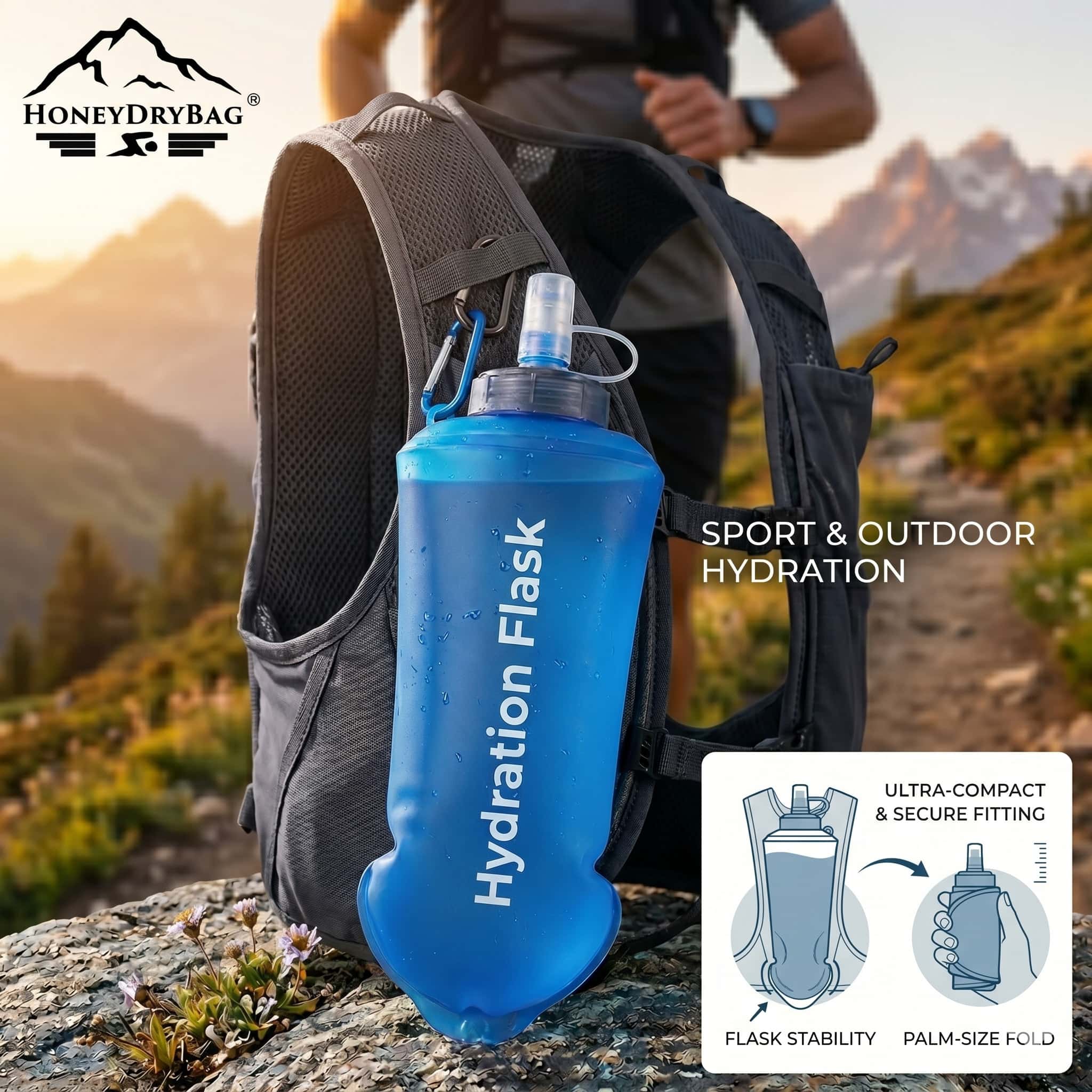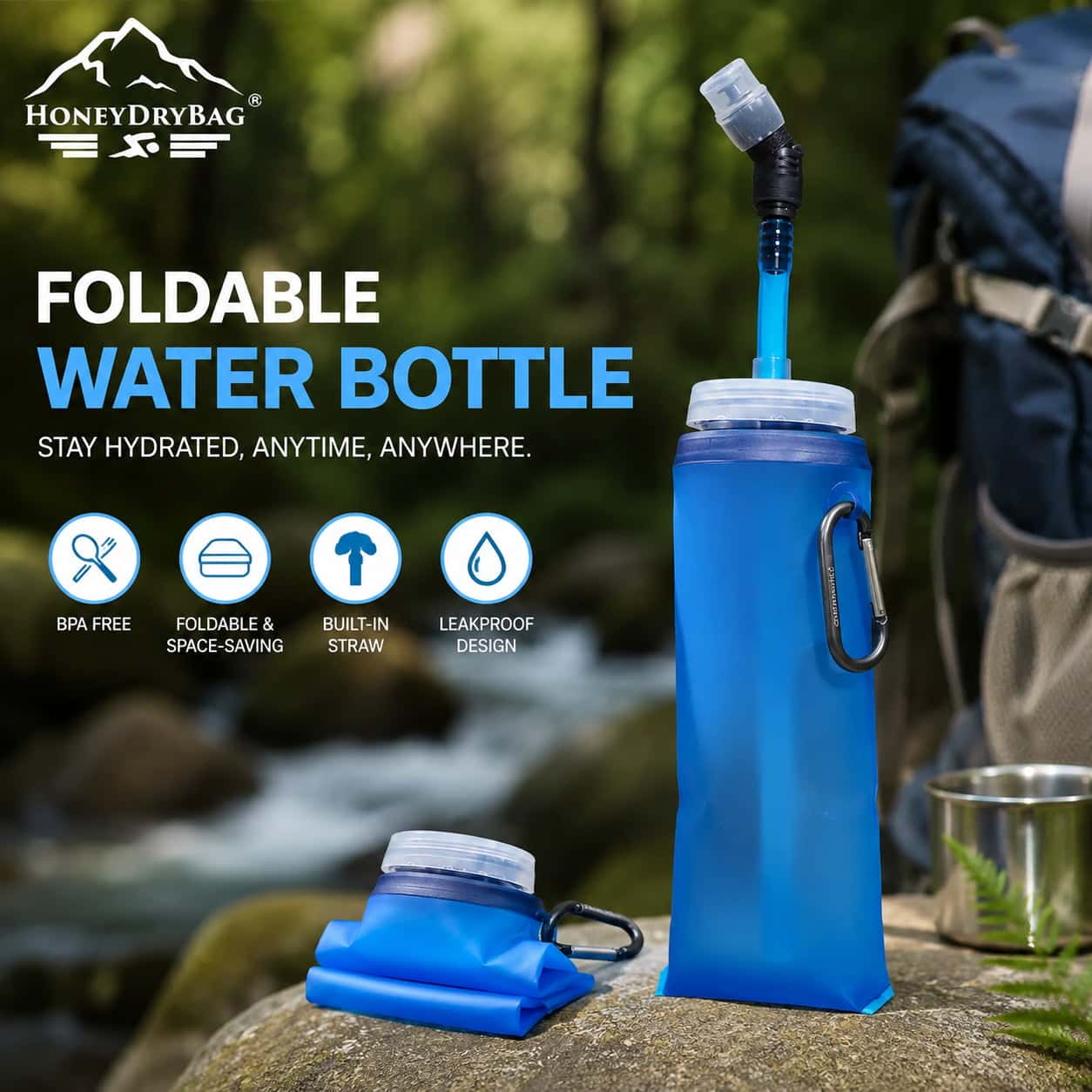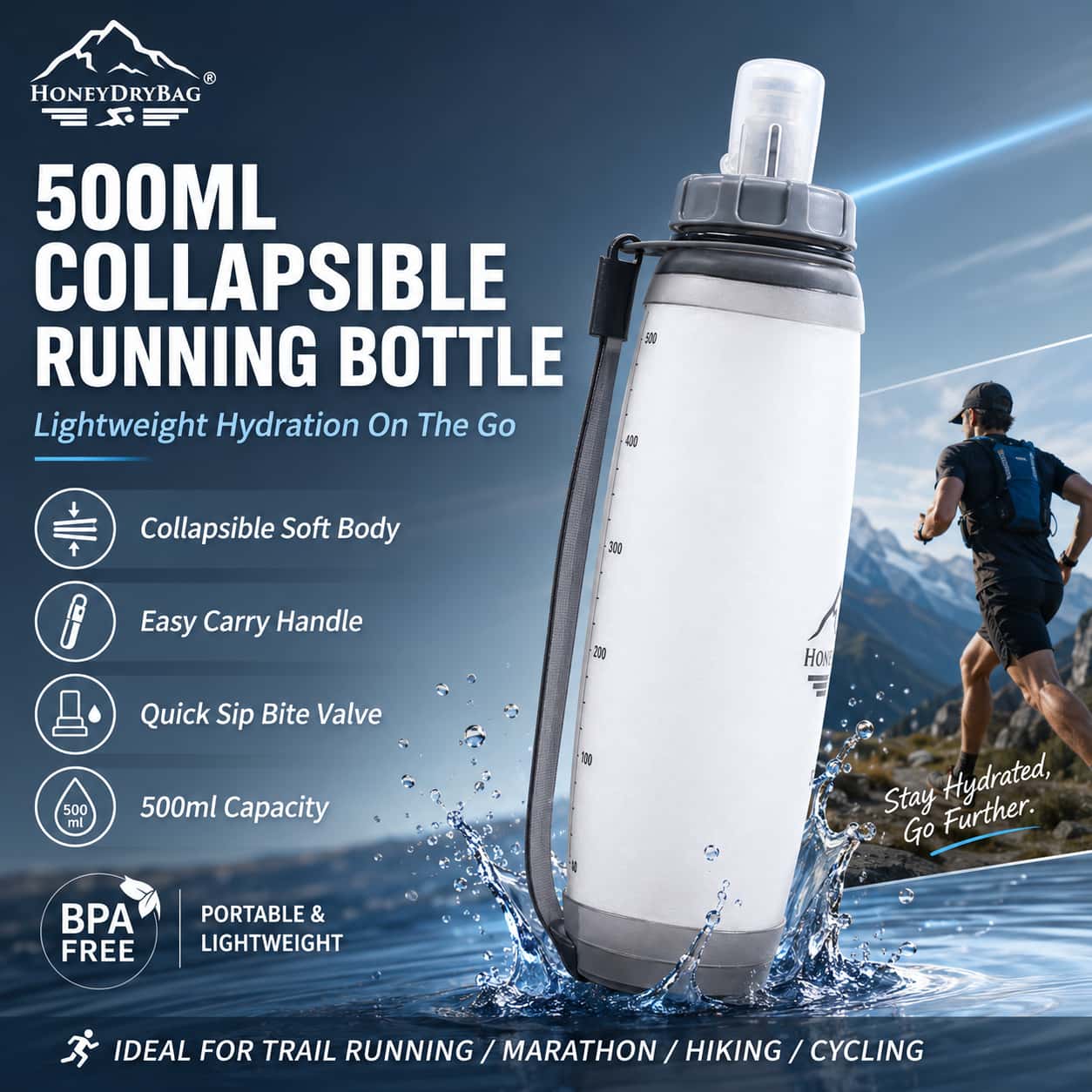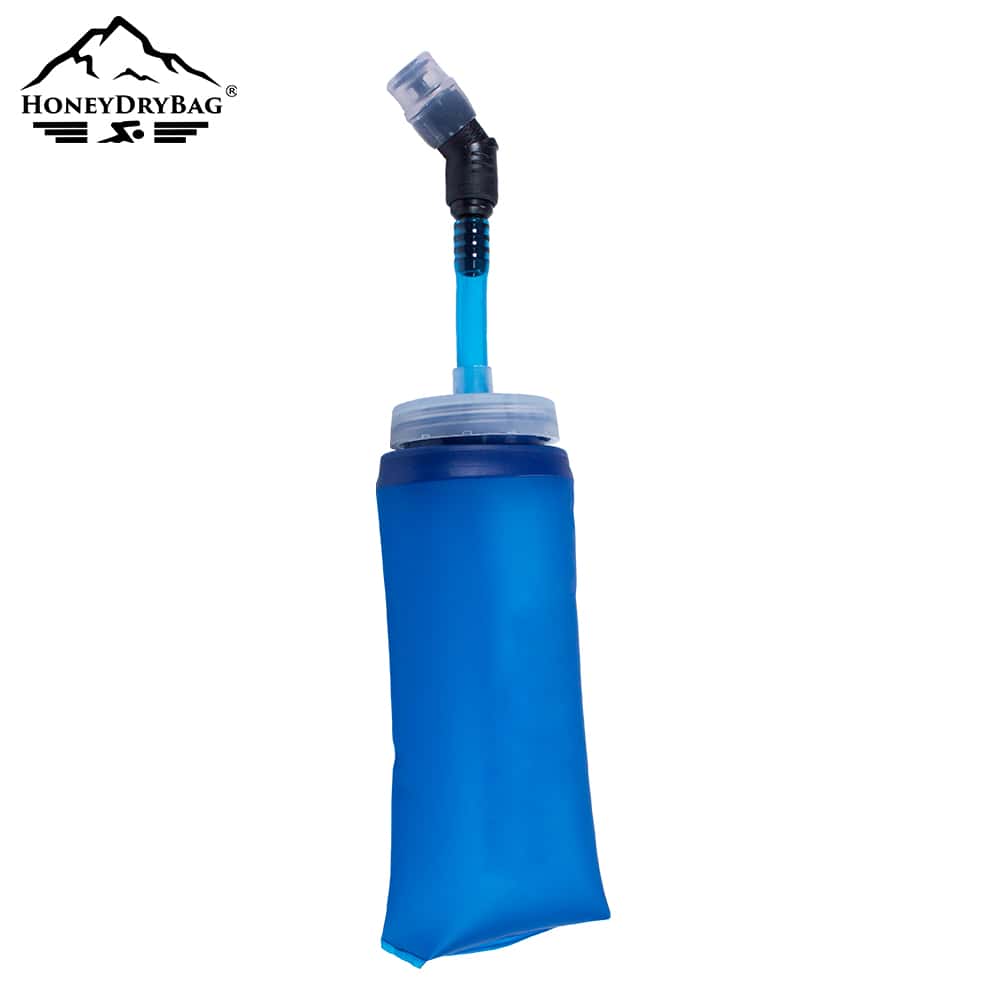
Quick answer: TPU soft flasks are generally produced through a sequence of material selection, body design, film preparation, joining or welding, neck and drinking-component assembly, and finished-product inspection. The exact manufacturing method depends on the TPU film, bottle structure, equipment and production requirements.
A running soft flask may look simple from the outside, but several manufacturing decisions influence its finished shape, flexibility, sealing performance and compatibility with a hydration vest.
For brands sourcing custom hydration products, understanding these stages helps explain why two soft flasks with similar capacities can have different specifications and performance characteristics.
This article describes a general TPU soft flask manufacturing workflow, rather than claiming that every manufacturer uses the same machinery or production settings.
We also explain how physical sample inspection connects manufacturing decisions to the finished product.
What Materials Are Used to Make a Soft Flask?
The flexible body of many running soft flasks uses thermoplastic polyurethane (TPU).
TPU is a family of thermoplastic materials that can be processed into flexible films suitable for certain hydration-product designs.
However, the complete soft flask may contain additional components, including:
- TPU film for the flexible body
- A neck or opening component
- A cap
- A drinking nozzle
- A bite valve
- An optional straw
- Optional carrying accessories
The materials used in these components can differ.
For example, our R50021 product specification lists a TPU body, silicone nozzle and PP cap.
Material selection should therefore consider the complete assembly, not just the flask body.
For more background on TPU material characteristics and food-contact considerations, read What Is TPU in a Water Bottle? Material, Safety, and Soft Flask Uses.
Step 1: Define the Soft Flask Design
Manufacturing begins with the intended product specification.
Before film is prepared or components are assembled, the product design needs to establish what the finished soft flask should achieve.
Important design requirements may include:
- Nominal liquid capacity
- Filled length and width
- Body profile
- Neck position
- Drinking valve configuration
- Finished weight target
- Running vest compatibility
- Logo and color requirements
For example, a 350ml soft flask with a straw may require a different overall configuration from a standard 500ml flask.
The R50021 350ml soft flask and R50020 500ml soft flask illustrate different existing product options.
The design stage is especially important when a brand wants the flask to fit a particular running vest.
Capacity alone does not determine the finished shape.
Step 2: Select the TPU Film
TPU film selection influences how the bottle body behaves during manufacturing and use.
Depending on the formulation and construction, relevant characteristics may include:
- Film thickness
- Flexibility
- Surface appearance
- Mechanical strength
- Weldability
- Repeated bending behavior
- Suitability for the intended liquid-contact application
A film that works well for one product design should not automatically be assumed suitable for every soft flask.
For example, changes in film thickness or formulation may affect how a material responds during joining and how the finished bottle feels when squeezed.
For drinking-water products, buyers should also confirm that the selected materials and finished liquid-contact components meet the applicable requirements for the intended market and use conditions.
The description "TPU" alone is not proof of food-contact compliance.
Step 3: Prepare and Cut the Film
After selecting the material and confirming the body design, the film needs to be prepared for the selected production method.
For a soft flask made from joined film sections, the general preparation stage can involve:
- Reviewing the body pattern
- Preparing the film
- Cutting the required shapes
- Checking alignment
- Preparing the joining areas
The required shapes depend on the product design.
A longer, narrower running flask may require a different pattern from a wider bottle with the same nominal capacity.
Cutting accuracy matters because differences in shape or alignment can affect the finished dimensions and the areas where the material will be joined.
The exact cutting method and equipment vary by manufacturer and product.
Step 4: Join the TPU Film to Form the Flask Body
One of the most important stages in many film-based soft flask designs is joining the flexible material to form a liquid-holding body.
TPU films can be joined using several industrial methods, depending on the material and application.
These may include:
- Heat sealing
- High-frequency welding
- Impulse welding
- Other compatible thermoplastic joining methods
The correct method depends on the selected film, product construction and manufacturing equipment.
Heat Sealing
Heat sealing uses controlled heat and pressure to join compatible thermoplastic film surfaces.
The material is heated in the intended joining area, allowing the surfaces to bond.
The joined area then cools.
High-Frequency Welding
High-frequency welding uses electromagnetic energy to heat suitable materials in the joining area.
Pressure is applied as part of the joining process.
This method can be used for certain TPU film applications, but suitability depends on the specific material and product design.
Impulse Welding
Impulse welding uses a heating element that is energized during the sealing cycle.
The heating and cooling sequence can be controlled according to the equipment and material requirements.
Why Welding Method Selection Matters
Different joining methods do not automatically produce identical results.
The manufacturer needs to consider the material, seam geometry, tooling and validated process settings.
For B2B buyers, the important question is not simply which machine is used.
It is whether the selected manufacturing process produces a finished product that meets the agreed specifications and acceptance criteria.
For a technical overview of TPU film joining methods, see Covestro's guide to welding thermoplastic films.
Step 5: Form and Inspect the Body Seams
The joined areas are important because they help maintain the liquid-containing structure of the flask.
Depending on the product, relevant areas may include:
- Side seams
- Bottom seams
- Curved joining areas
- Transitions near the neck
- Other structural connections
A seam should be evaluated according to the product's intended design and agreed inspection requirements.
Potential concerns may include:
- Incomplete joining
- Irregular seam appearance
- Material damage
- Poor alignment
- Leakage at a joined area
Not every visual variation automatically means a seam has failed.
However, visible irregularities may justify closer inspection or functional testing.
This is one reason the finished product should be evaluated rather than relying only on the manufacturing method described in a specification.
Step 6: Install the Neck and Drinking Components
A soft flask body alone is not a complete hydration product.
The neck, cap and drinking components must work together to provide a usable bottle.
Depending on the design, assembly may involve:
- Neck or opening component
- Cap
- Bite valve
- Nozzle
- Straw
- Other accessories
The connection between the flexible body and the neck is particularly important because the materials and geometry may differ from those of the main body.
The selected connection method must be appropriate for the actual component design.
The cap and valve also need to fit the intended configuration.
For example, a soft flask designed for a running vest may require a drinking point that is accessible while the bottle remains in the pocket.
A straw configuration may change that drinking position.
See the R50021 soft flask with straw for an example of this product type.
Step 7: Apply Custom Printing and Branding
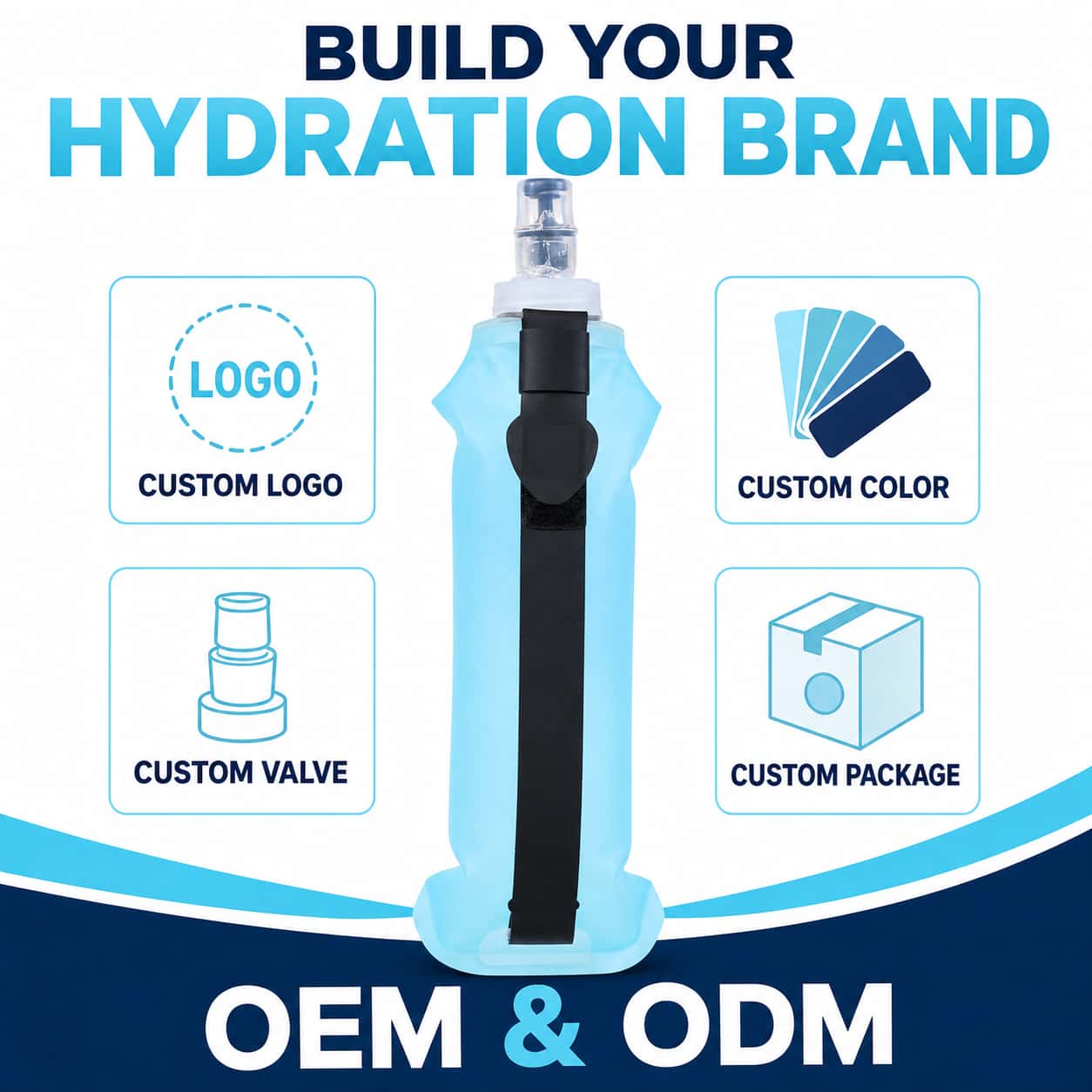
For OEM and private-label projects, branding is another part of product development.
Customization may involve:
- Logo printing
- Print position
- Print color
- Product color
- Packaging design
The appropriate printing process and production sequence depend on the material, artwork and selected product configuration.
Buyers should confirm whether their requested artwork is suitable for the chosen product.
Important considerations include:
- Logo dimensions
- Print placement
- Color appearance
- Adhesion
- Resistance to the intended handling conditions
A printed sample is useful because artwork displayed on a digital rendering may not accurately represent the finished result.
Step 8: Check the Finished Soft Flask
After the relevant manufacturing and assembly stages, the finished product can be evaluated against the agreed specifications.
Inspection requirements vary by project.
For custom soft flasks, practical checks may include:
Dimensions
Compare the finished product with the approved specification.
Weight
Measure the finished configuration, including the relevant components.
Printing
Check the logo's appearance, position and adhesion.
Material and Construction
Inspect the flexible body and relevant connection areas.
Leakage
Fill the flask and perform the agreed leakage inspection method.
Drinking Components
Check the cap, nozzle, valve or straw according to the product requirements.
These checks help connect the original design specification with the actual finished sample.
What Do Real Soft Flask Inspection Records Show?
At Honey Dry Bag, we have published selected examples from actual customer sample inspections.
These records provide useful evidence about finished-product evaluation.
For example, our 500ml Soft Flask Sample Inspection: Weight, Size, Printing and Leak Test documents a sample weighing approximately 74g and measuring approximately 22 × 8cm.
The report also describes printing, material and construction checks, together with water leakage testing.
Another example is Custom Soft Flask Sample Testing Before Bulk Production: A Real OEM Case.
That case documents how a customized sample was evaluated before customer approval.
These reports show examples of actual inspection work.
They do not document every upstream manufacturing operation, and they should not be treated as proof that every production batch has identical results.
Why Can Two Soft Flasks Have Different Weights?
Two soft flasks can have the same nominal capacity but different finished weights.
This may result from differences in:
- Body dimensions
- Film construction
- Neck design
- Cap design
- Valve configuration
- Straw or accessory components
For buyers, this means the capacity label should not be the only comparison point.
A 500ml soft flask should be evaluated using its complete finished specification.
The same principle applies to product dimensions.
Two 500ml flasks may fit differently in the same running vest pocket.
How Does Manufacturing Affect Running Vest Compatibility?
A soft flask is often used as part of a larger hydration system.
For running applications, the finished flask must work with the intended vest or carrying equipment.
Relevant characteristics include:
- Filled body width
- Filled body length
- Neck height
- Valve position
- Body flexibility
- Shape when partially empty
A bottle that fits well when completely full may behave differently after the user drinks some of its contents.
For brands developing a running vest and soft flask together, testing the physical combination is more useful than relying only on nominal capacity.
OEM Soft Flask Manufacturing: What Should Buyers Prepare?
For a custom soft flask project, the buyer should provide a clear product brief.
Useful information includes:
| Requirement | Information to Confirm |
|---|---|
| Application | Running, trail running or other use |
| Capacity | Required liquid volume |
| Dimensions | Target size or vest pocket constraints |
| Materials | Required material specifications |
| Drinking system | Cap, bite valve or straw |
| Branding | Logo, color and packaging |
| Quantity | Estimated order volume |
| Target market | Intended country or region of sale |
| Sample approval | Required inspection criteria |
A clear product brief helps the supplier evaluate whether an existing model is suitable or whether additional development is needed.
For a broader overview of model selection and customization, read our TPU Soft Flask Manufacturer Guide.
Common Manufacturing-Related Questions for Buyers
When evaluating a supplier, buyers may want to ask:
What TPU film is specified?
The answer should identify the material requirements relevant to the project.
How is the flask body joined?
The supplier should be able to explain the joining method applicable to the selected product.
How are the neck and drinking components connected?
This helps clarify the finished product construction.
Which dimensions can be changed?
Changes to dimensions or body geometry may require additional product development.
How are custom logos evaluated?
Ask about sample printing and agreed inspection criteria.
How is leakage checked?
The inspection method should be appropriate for the intended product and agreed acceptance requirements.
What is needed before bulk production?
Confirm the sample, final specifications, documentation and commercial requirements.
Final Thoughts
The soft flask manufacturing process involves more than making a flexible bottle body.
Material selection, body geometry, film joining, component assembly and inspection all influence the finished product.
For brands and OEM buyers, understanding these stages helps identify which specifications need to be confirmed before approving a sample.
It also helps explain why two soft flasks with similar capacities may have different dimensions, weights, drinking systems and construction details.
Honey Dry Bag focuses on TPU soft flasks for running, trail running and related outdoor hydration applications.
Our product range includes multiple capacities and configurations that buyers can compare when developing their own hydration products.
To discuss a custom project, contact us with your intended application, capacity, dimensions, estimated quantity and branding requirements.
We can discuss suitable existing models and the specifications that need to be confirmed during sample development.
Technical Reference
For further information on industrial TPU film joining methods:
Covestro — Welding: Multiple Methods for Different Materials
This external reference describes several methods for joining compatible thermoplastic films. It does not establish which specific process or equipment is used for every Honey Dry Bag product.