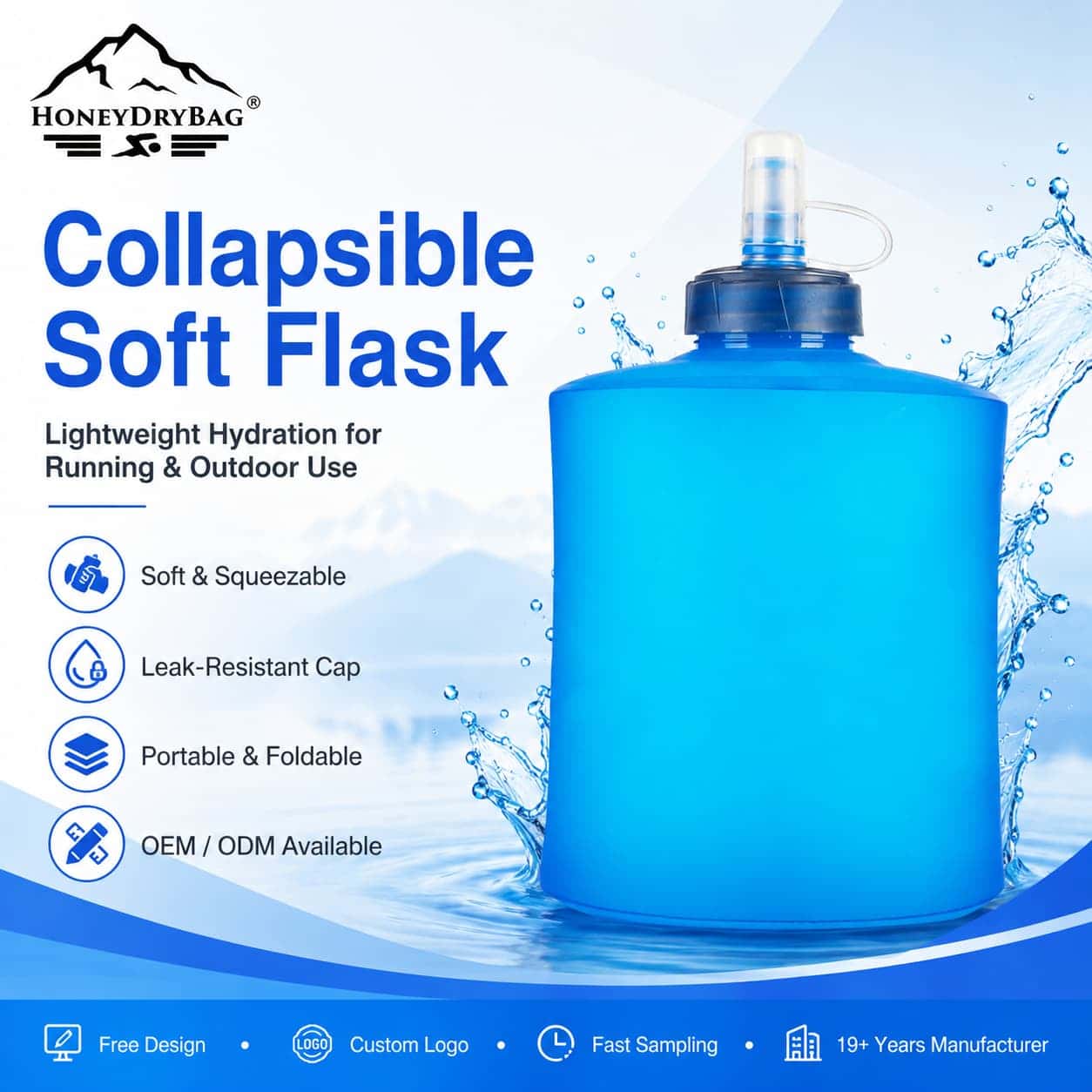
Quick answer: Choose a soft flask based on four factors: capacity matched to race distance (150–200ml for sprint/Olympic, 250ml+ for half/full-distance), BPA-free TPU or silicone material, a valve type suited to your drinking style (bite valve for control, flip-top for speed), and insulation if racing in heat.
Capacity: Match the Flask to the Race, Not the Other Way Around
| Race Distance | Recommended Capacity |
|---|---|
| Sprint / Olympic | 150–200ml |
| Half-distance (70.3) | 250ml, or 150ml + aid station refills |
| Full-distance (140.6) | 250–300ml, insulated recommended |
Buying the largest available flask isn't automatically better — extra unused capacity adds weight and sloshing that you'll feel on every stride.
Material: What to Check Before You Buy
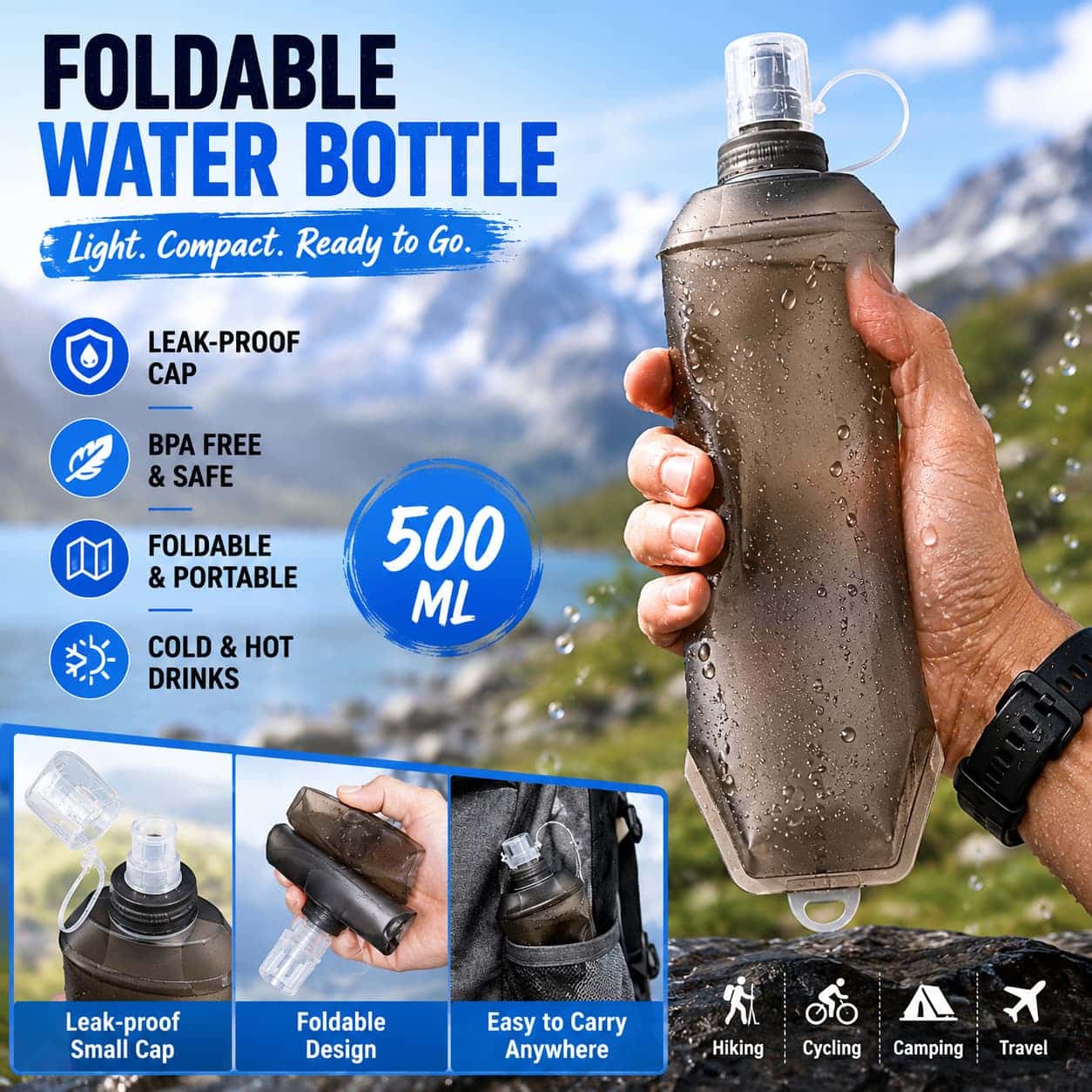
Confirm the flask is BPA-free and made from TPU or food-grade silicone. A semi-transparent or clear body is worth prioritizing, since it lets you check remaining fluid without stopping to squeeze the flask. Avoid flasks with a strong plastic smell that doesn't fade after an initial rinse — that can indicate lower-grade material.
Valve Type: Bite Valve vs. Flip-Top
This is the detail most buyers overlook, and it has the biggest effect on race-day experience.
- Bite valve: Best if you prioritize control and minimal spillage. Slightly more effort to clean.
- Flip-top spout: Best if you prioritize speed of drinking. More prone to leaking if the flask is squeezed in a pocket or belt.
Insulation: Do You Need It?
Insulated flasks are worth the extra cost for hot-weather races or courses with wide gaps between aid stations, where fluid has more time to warm before your next refill. For cooler races with frequent aid stations, a standard non-insulated flask is usually sufficient.
Ready to pick one? Browse our TPU soft flasks in race-ready sizes.