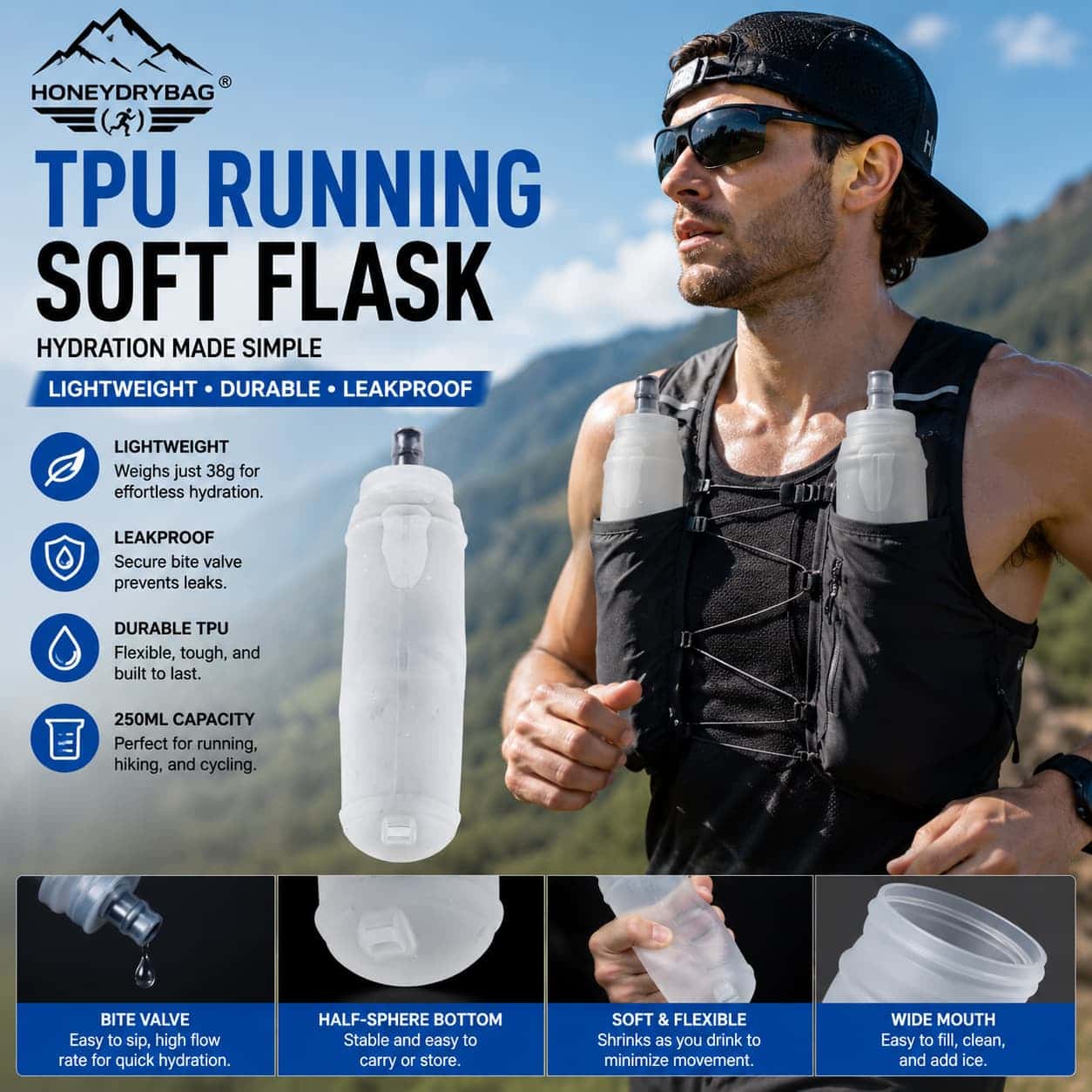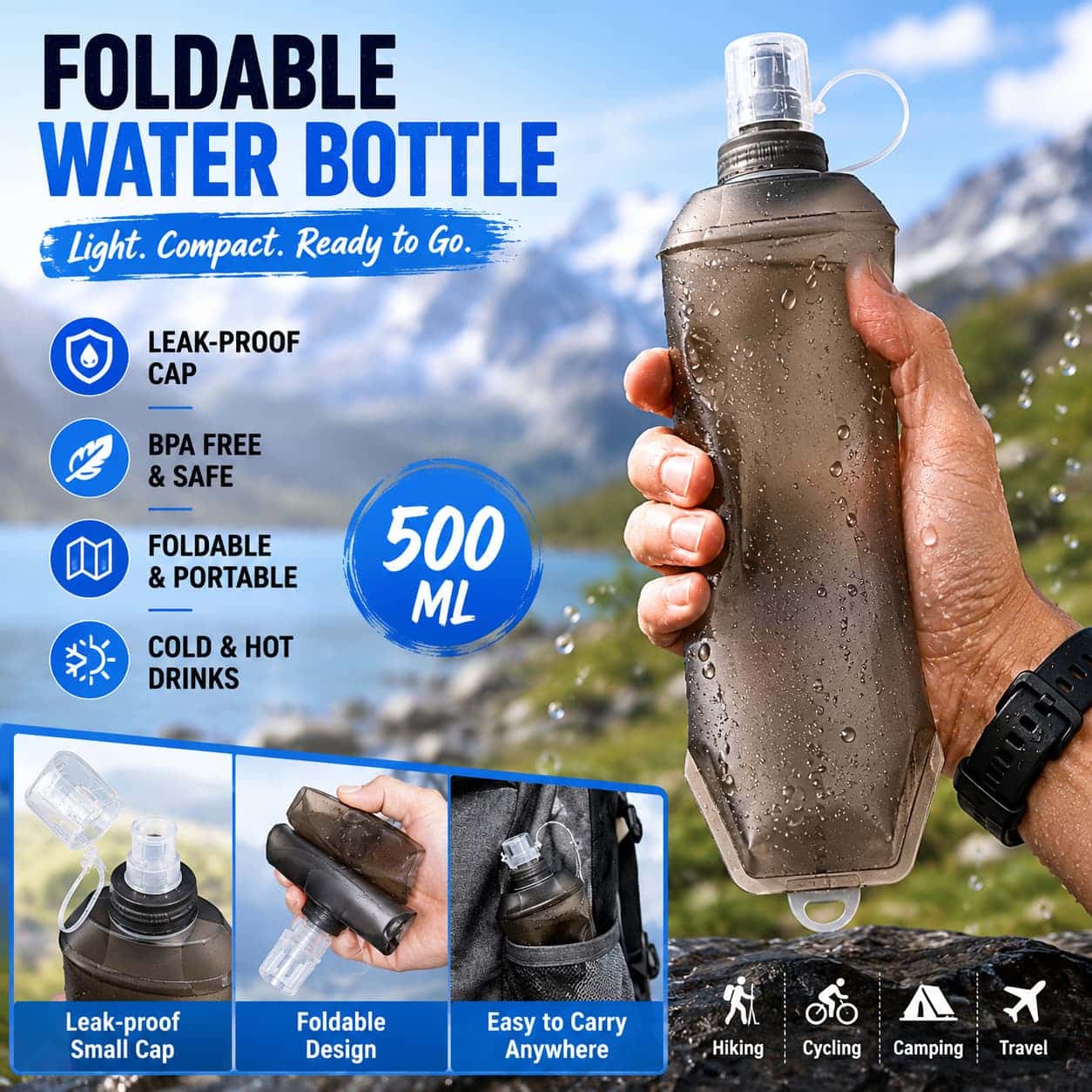
Quick answer: For the run leg of a triathlon, use a 150–200ml handheld soft flask for sprint/Olympic distances, or 250ml+ (handheld or hydration belt) for half/full-distance races. Choose a BPA-free flask with a one-handed valve, and train with it before race day so your arm swing and running form adapt to the added weight.
What Size Hydration Bottle Do You Need for Triathlon Running?
Bottle capacity should match race distance, not personal preference alone.
| Race Distance | Run Leg Length | Recommended Capacity |
|---|---|---|
| Sprint / Olympic | 5–10K | 150–200ml |
| Half-distance (70.3) | 21K | 250ml+, or handheld + belt combo |
| Full-distance (140.6) | 42K | 250–300ml + belt for backup capacity |
Oversized bottles add weight and sloshing with every stride. Undersized bottles force frequent aid-station stops. Match capacity to your race distance and personal sweat rate.
Handheld Flask or Hydration Belt: Which Should You Choose?
Handheld soft flasks are lightweight, inexpensive, and easy to manage at aid stations. The tradeoff: your gripping hand and forearm can fatigue over longer distances, which may affect running form.
Hydration belts free both hands and are popular for longer races. They can bounce or shift if poorly fitted, so pre-race practice is essential.
There is no universally "better" option — the right choice depends on race distance, running form, and personal comfort.
Are Soft Flask Bottles Safe? What Material Should You Look For?
Look for BPA-free flasks made of TPU or food-grade silicone. Semi-transparent designs let you track remaining fluid at a glance. New bottles often carry a faint plastic smell; a rinse with mild baking soda solution before first use typically removes it.
Bite Valve vs. Flip-Top Spout: Which Valve Design Is Best?
Two valve types dominate race-ready bottles:
- Bite valve: one-handed drinking, minimal spillage, slightly harder to clean thoroughly.
- Flip-top spout: faster water delivery, but more prone to leaking if jostled.
Prioritize a valve that opens one-handed without breaking stride, and seals reliably to avoid leaks in a pocket or belt.
Can You Skip a Personal Bottle and Use Aid Station Cups Instead?
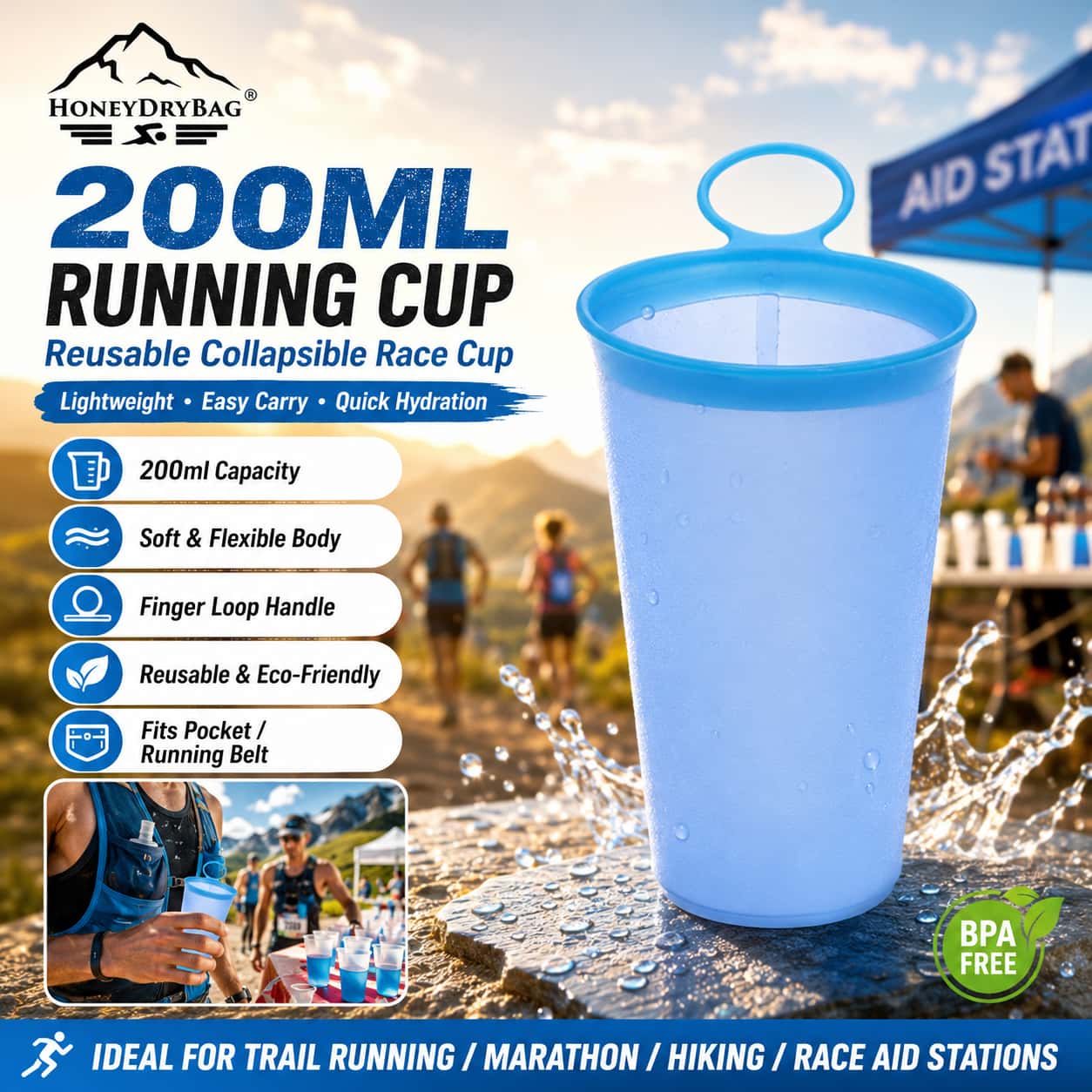
Yes. Many age-group triathletes forgo a personal bottle entirely, drinking from aid-station cups on the move or during a brief walking break. This is lighter and simpler, but requires practicing the technique of drinking while running without choking or losing pace.
Should You Train With Your Hydration Setup Before Race Day?
Yes — this step is frequently skipped and frequently regretted. A handheld bottle or belt changes arm swing and running posture. Complete at least two to three long training runs with your race-day hydration setup so your body adapts to the added weight and altered mechanics before race day.
How Should Hydration Bottles Be Adjusted for Hot or Cold Weather Races?
- Hot weather: use an insulated soft flask, or add ice at aid stations to keep fluid temperature down.
- Cold weather: check that valves don't stiffen or stick — a valve that's hard to open with cold hands mid-race is a common, avoidable problem.
If you're looking for a race-ready flask, see our TPU soft flasks built for triathlon run legs.