TPU Water Bottle for Brands: Design, Testing and OEM Sourcing Checklist
A TPU water bottle is a flexible hydration container that uses thermoplastic polyurethane in its construction. For sports and outdoor brands, TPU is especially relevant to collapsible water bottles, running soft flasks and other portable hydration products.
However, selecting a TPU water bottle for a commercial product line involves more than choosing a material and adding a logo.
Buyers need to consider the intended application, bottle dimensions, drinking components, food-contact requirements, customization options and the checks required before bulk production.
At Honey Dry Bag, we work with flexible hydration products and TPU soft flask models for running, trail running and outdoor applications.
This guide focuses on the practical decisions brands should make when evaluating a TPU water bottle project.
What Should Brands Look for in a TPU Water Bottle?
The first step is to define what the finished product needs to do.
A bottle intended for a running vest may require a narrow body and accessible bite valve. A flexible bottle intended for general outdoor use may need a different shape, cap or carrying arrangement.
Before contacting a supplier, identify:
- Intended use
- Target capacity
- Required dimensions
- Drinking system
- Material and component requirements
- Target market
- Branding requirements
- Expected order quantity
These decisions help determine whether an existing bottle model is suitable or whether additional product development is required.
TPU Water Bottle vs TPU Soft Flask
The terms TPU water bottle and TPU soft flask overlap, but they are not always interchangeable.
TPU water bottle is a broader description for a water container using TPU.
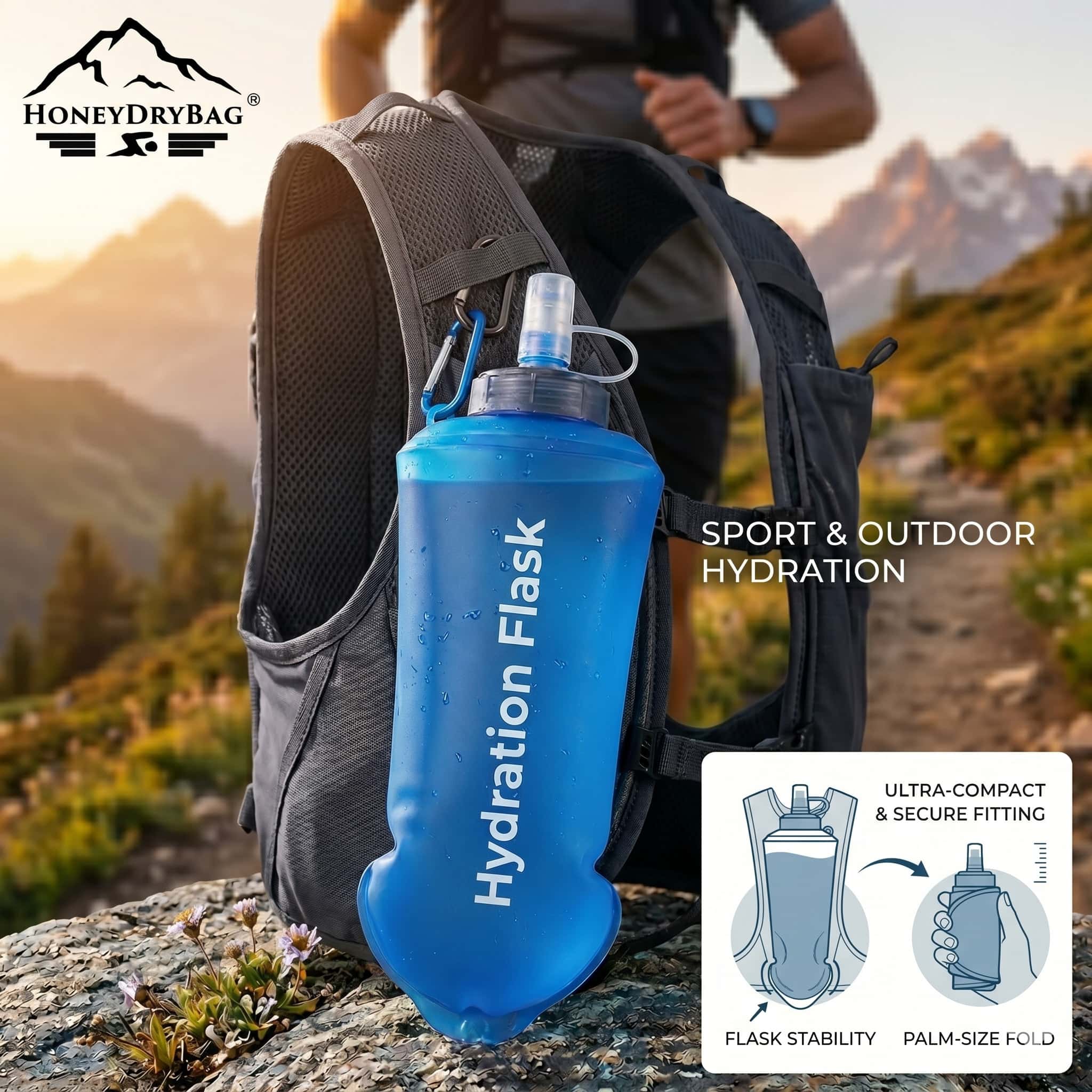
A TPU soft flask is a more specialized flexible hydration format, often designed for running and endurance sports.
A running soft flask may feature:
- Flexible TPU body
- Compact profile
- Bite valve
- Sports-oriented capacity
- Compatibility with running vest pockets
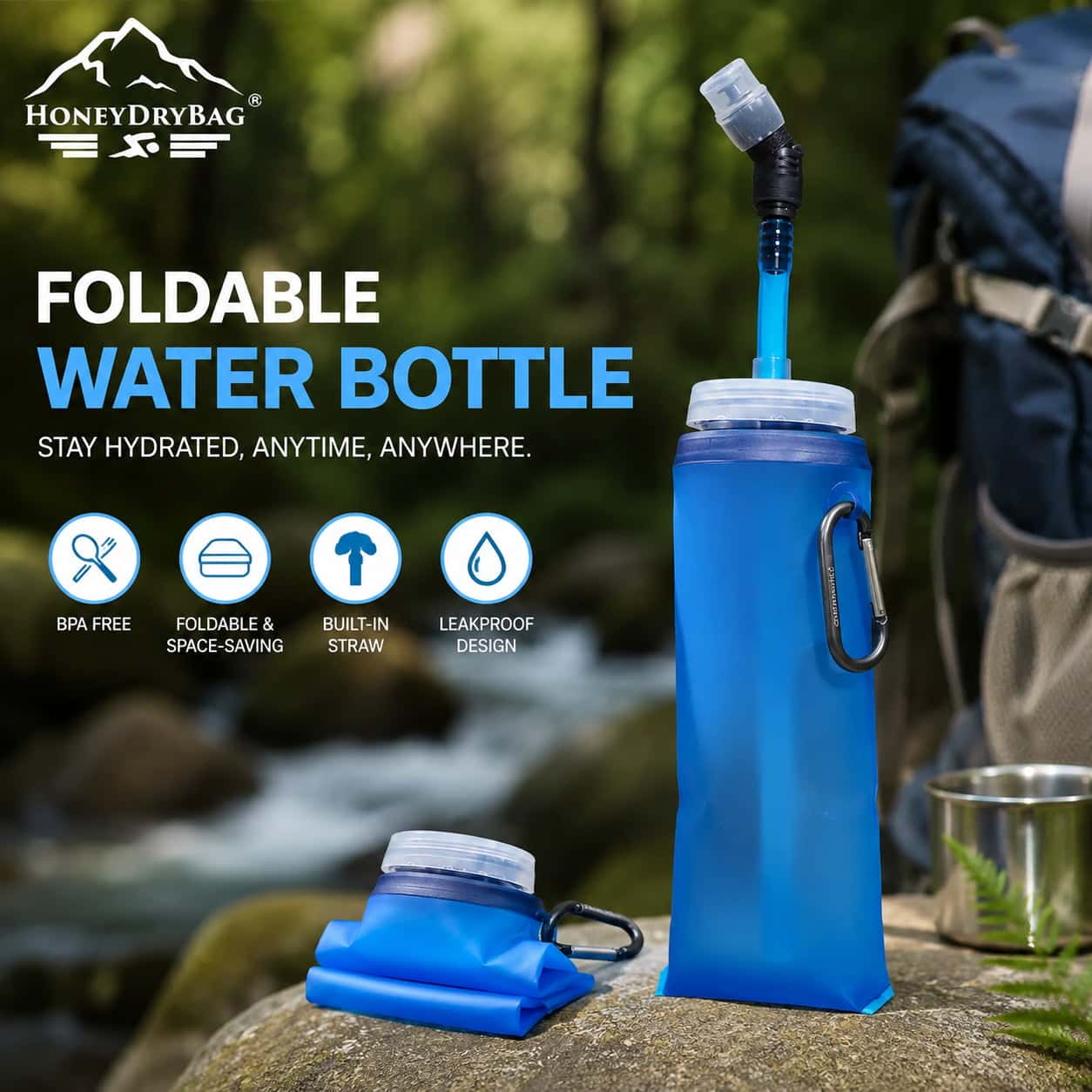
A general-purpose collapsible TPU water bottle may use a different body shape or drinking system.
For brands developing running equipment, the R50020 500ml TPU soft flask provides an example of a running-oriented flexible bottle.
For a broader comparison of bottle formats, see our guide to foldable TPU running water bottles.
1. Confirm the TPU Material Specification
TPU stands for thermoplastic polyurethane.
It is a family of materials rather than one universal formulation.
Different TPU grades can have different physical characteristics and intended applications.
For a water bottle project, buyers should confirm:
- The specified TPU grade
- Intended liquid-contact application
- Material supplier documentation
- Relevant food-contact requirements
- Intended temperature conditions
- Finished product construction
A supplier describing a product as TPU does not, by itself, establish that the complete bottle meets the food-contact requirements of every market.
The finished bottle may contain additional materials in the cap, nozzle, valve or other components.
Those components also need to be considered.
For a detailed explanation, read What Is TPU in a Water Bottle? Material, Safety, and Soft Flask Uses.
2. Choose the Right Bottle Capacity
Capacity influences the intended application, dimensions and carrying arrangement.
For flexible running hydration products, available capacities may include:
| Capacity | Potential Application |
|---|---|
| 200ml | Compact running hydration |
| 250ml | Smaller running and racing setups |
| 350ml | Intermediate-capacity hydration |
| 500ml | Running vest hydration |
| 550ml | Alternative running and outdoor configurations |
| 750ml | Larger-capacity portable hydration |
| 1L | Higher-capacity outdoor applications |
These are potential applications rather than fixed rules. The correct capacity depends on the user's needs and the carrying system.
For example, our R50021 350ml TPU soft flask uses a straw configuration.
Our R50020 500ml soft flask represents a different capacity and bottle format.
Brands should compare actual dimensions and drinking configurations rather than choosing solely by the capacity label.
3. Evaluate Bottle Shape and Dimensions
Two TPU water bottles with the same nominal capacity may have different shapes.
For a flexible running bottle, important measurements can include:
- Overall length
- Body width
- Filled thickness
- Neck dimensions
- Cap dimensions
- Valve position
This matters particularly when the bottle must fit an existing running vest or carrying system.
For example, a bottle that is too short may place its drinking valve below the most accessible position.
A bottle that is too wide may be difficult to insert into a pocket.
Buyers should test the actual bottle with the intended carrying equipment whenever compatibility is a project requirement.
4. Compare Caps, Bite Valves and Straws
The drinking system is another important part of TPU water bottle development.
Standard Cap
A conventional cap may be appropriate for certain general-purpose hydration applications.
The opening should be evaluated for filling, cleaning and the intended drinking method.
Bite Valve
A bite valve is commonly used with running soft flasks.
Depending on the design, it allows the user to drink by applying suction or pressure while opening the valve.
The valve should be evaluated for usability, closure and leakage under the intended conditions.
Straw Configuration
A straw can position the drinking point higher than the bottle body.
This can be useful when a soft flask sits lower in a running vest pocket.
For example, the R50021 soft flask with straw illustrates this type of configuration.
When comparing suppliers, buyers should confirm which drinking components are included in the quoted product.
5. Food-Contact Requirements for TPU Water Bottles
Material compliance is an important purchasing consideration for products intended to hold drinking water.
However, the phrase "food-grade TPU" should not be treated as a complete substitute for product-specific documentation.
Buyers should first identify the market in which the finished bottle will be sold.
Depending on the market and product, relevant documentation and testing may need to address applicable food-contact requirements.
For example:
- United States: applicable FDA food-contact requirements
- European Union: applicable EU food-contact legislation
- Other markets: relevant local requirements
Buyers should confirm the specific requirements with qualified testing providers or regulatory specialists.
They should also ask whether the supplied documentation covers the actual finished product configuration.
A material document for the TPU body may not automatically cover the cap, nozzle or other liquid-contact components.
Do not assume that a bottle is compliant in every market solely because the material is described as TPU.
6. Custom TPU Water Bottle Options
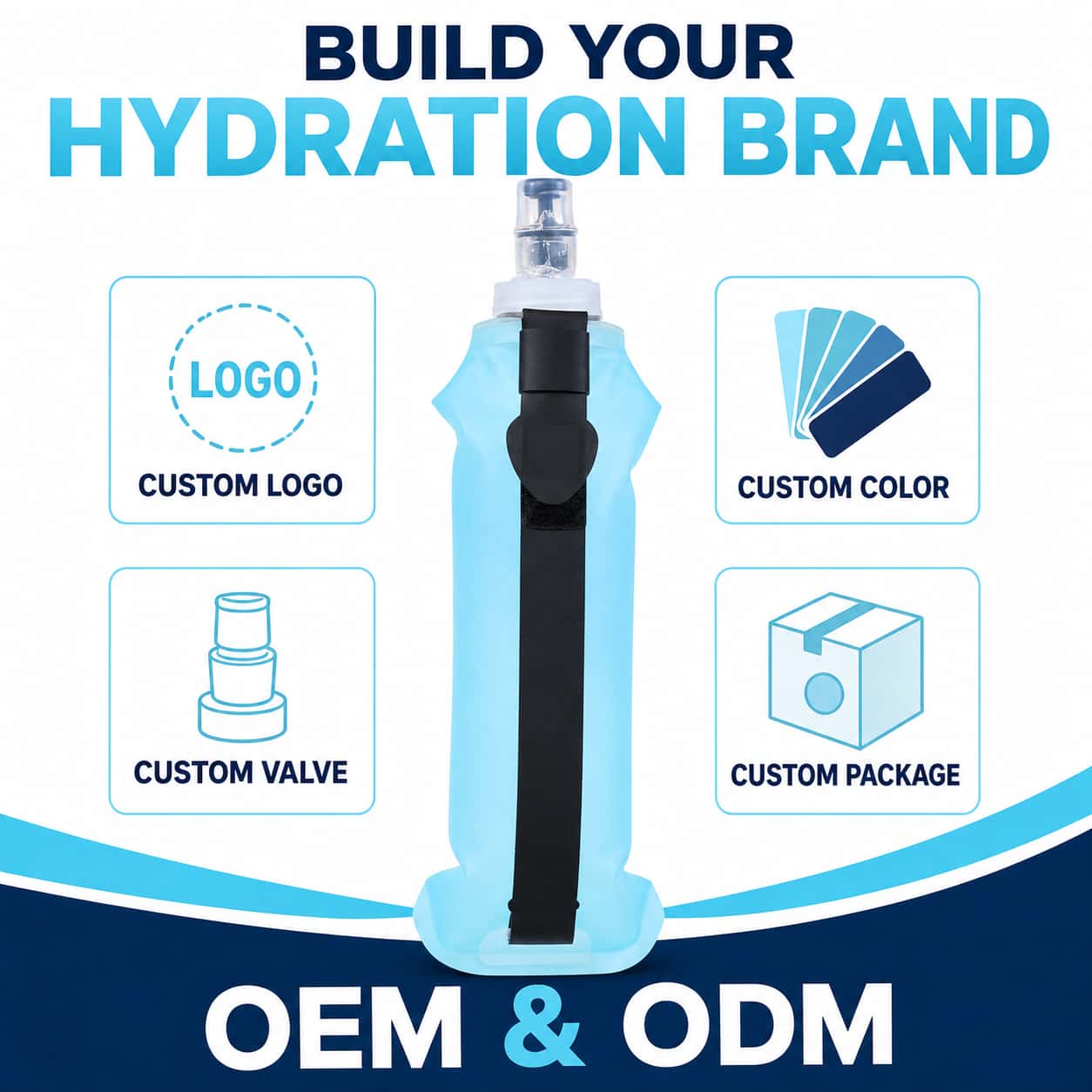
A custom TPU water bottle project may involve several different types of customization.
Depending on the selected product and project requirements, these may include:
Logo printing
The buyer may require a particular logo size, placement or print color.
Product color
The finished product may need to match a brand's existing equipment range.
Capacity
Different product models may offer different capacities.
Body shape
A specific carrying system may require different dimensions or construction.
Cap and valve
The drinking system should match the intended application.
Packaging
Retail brands and distributors may have specific packaging requirements.
Not every customization can be applied to every existing model.
Changes to the body structure or components may require additional evaluation, sampling or tooling.
For this reason, buyers should distinguish between branding an existing product and developing a substantially modified design.
7. Why Sample Testing Matters
A product photograph cannot confirm every important characteristic of a finished TPU water bottle.
Physical samples allow buyers to inspect the actual product before approving a larger order.
Depending on the project, sample inspection may include:
- Weight measurement
- Dimension measurement
- Printing inspection
- Material and construction inspection
- Cap and valve checks
- Water leakage testing
For example, our published 500ml soft flask sample inspection documents checks involving product weight, dimensions, printing and leakage.
We have also published a real OEM soft flask sample testing case illustrating how an individual custom sample was evaluated.
These reports document specific inspected samples.
They do not establish that every future product or production batch will have identical results.
Instead, they provide practical examples of the checks buyers can discuss with a supplier.
8. Common Issues to Check During Sampling
Before approving a TPU water bottle, buyers should look for issues that may affect the finished product.
Leakage
Check the bottle body, cap connection and drinking components using an agreed inspection method.
Incorrect Dimensions
Compare the physical sample with the approved specification.
Printing Problems
Review logo position, print appearance and adhesion according to the agreed acceptance criteria.
Component Compatibility
Confirm that the cap, valve and other components fit and operate as intended.
Odor or Taste Concerns
Evaluate any unusual odor or taste complaints using appropriate investigation and testing.
Odor alone should not be treated as proof of either safety or noncompliance.
Running Vest Compatibility
If the bottle is designed for a particular running vest, test the bottle and vest together.
These checks help buyers identify problems before committing to larger production quantities.
9. Questions to Ask a TPU Water Bottle Manufacturer
When evaluating a TPU water bottle manufacturer or supplier, consider asking the following questions:
- Which existing bottle models are available?
- What TPU material specification is used?
- What materials are used in the cap and drinking components?
- Which capacities and dimensions are available?
- What customization options are supported?
- What is the minimum order quantity for the selected configuration?
- Can a physical sample be provided?
- Which sample inspection checks are available?
- What documentation is available for the intended market?
- What specifications must be confirmed before bulk production?
The answers should be assessed against your own project requirements.
A supplier with a suitable existing model may be a better fit for one project, while another project may require more extensive product development.
10. Prepare a TPU Water Bottle RFQ
A clear request for quotation can make supplier communication more efficient.
When contacting a manufacturer, include:
| Requirement | Information to Provide |
|---|---|
| Product type | TPU water bottle or running soft flask |
| Application | Running, trail running, outdoor hydration or other use |
| Capacity | Required volume |
| Dimensions | Target measurements or carrying-system constraints |
| Drinking system | Cap, bite valve or straw |
| Branding | Logo, color and packaging |
| Target market | Country or region of sale |
| Quantity | Estimated order volume |
| Testing | Required documentation and sample checks |
| Timeline | Target sampling and delivery schedule |
If you already have a reference product or drawing, explain which characteristics are essential and which can be adjusted.
This helps the supplier evaluate whether an existing model is appropriate.
11. Existing TPU Soft Flask Models for Brand Projects
Honey Dry Bag currently focuses on TPU soft flasks and related flexible hydration products.
Our existing range includes different capacities, body shapes and drinking configurations.
For example:
- R50020 — 500ml TPU running soft flask
- R50021 — 350ml TPU soft flask with straw
- R50030 — 500ml TPU soft flask
- R50028 — 550ml TPU soft flask
These models provide starting points for comparing different product configurations.
For a wider discussion of capacities, valves and OEM options, buyers can also explore our soft flask products through the Farhview homepage.
12. From Product Selection to Sample Approval
A practical TPU water bottle sourcing process can follow several stages.
Stage 1: Define the application
Clarify who will use the product and how it will be carried.
Stage 2: Select a starting configuration
Compare existing bottle capacities, shapes and drinking components.
Stage 3: Confirm customization requirements
Discuss printing, color, packaging and any requested structural changes.
Stage 4: Review material and compliance requirements
Identify the documentation and testing appropriate for the intended market.
Stage 5: Evaluate a physical sample
Check dimensions, appearance, functionality and other agreed acceptance criteria.
Stage 6: Confirm the production specification
Record the approved requirements before proceeding with bulk production.
This approach helps reduce uncertainty between the initial quotation and the finished product.
Final Thoughts
Choosing a TPU water bottle for a brand requires more than selecting a flexible material.
The intended application should guide decisions about capacity, dimensions, body construction, drinking components and customization.
For B2B buyers, material documentation and physical sample evaluation are also important parts of the sourcing process.
A running soft flask, a general-purpose collapsible bottle and a larger outdoor hydration container may all use flexible materials, but they can require different product configurations.
Honey Dry Bag focuses on TPU soft flask products for running, trail running and outdoor hydration applications.
If you are developing a custom TPU water bottle or running soft flask, contact our team with your intended application, target capacity, estimated quantity and customization requirements.
We can discuss suitable existing models and the next steps for evaluating your project.