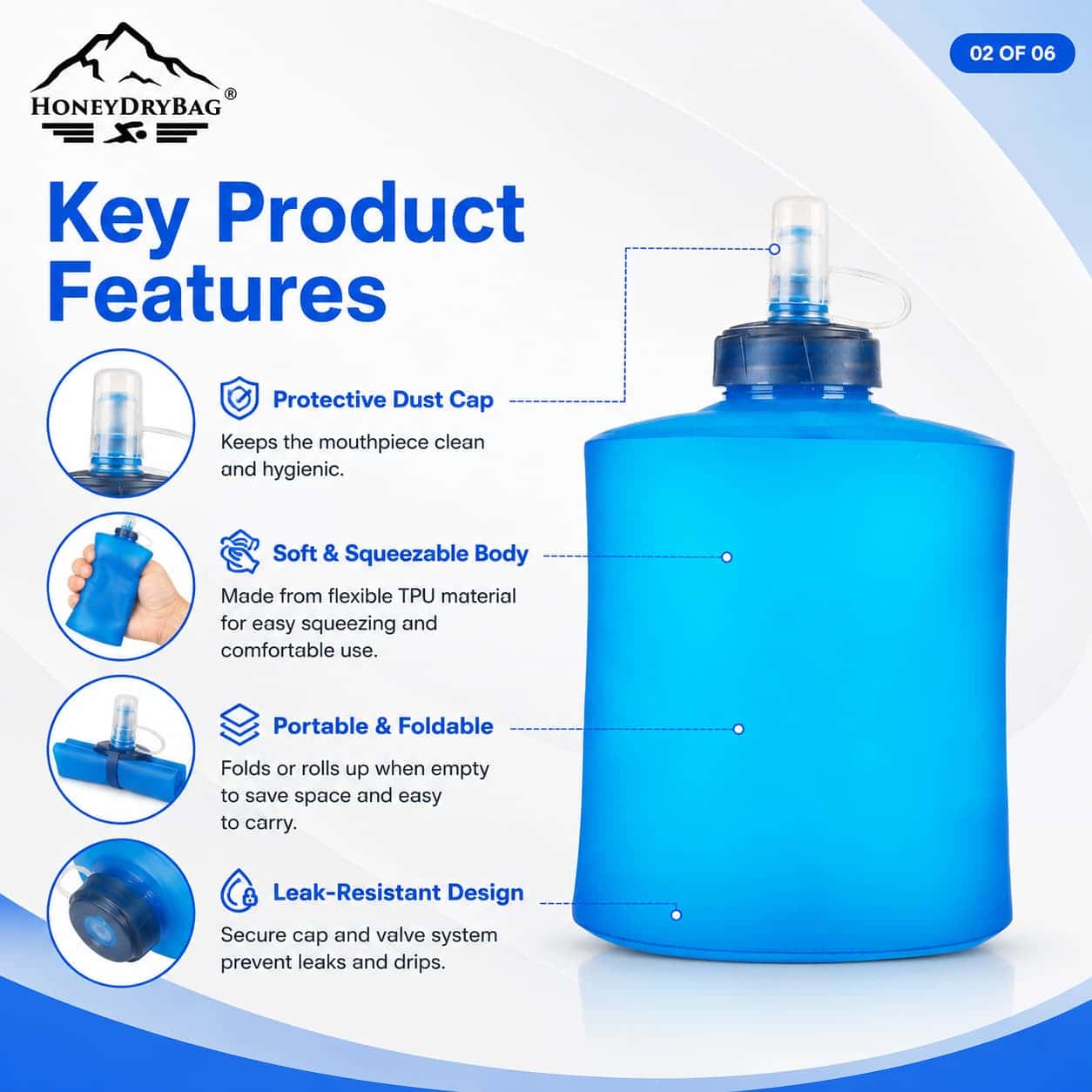
Quick answer: As a starting baseline, target 400–800ml of fluid and 60–90g of carbohydrate per hour during the run leg, adjusting upward for heat and heavier sweat rates. Use your personal sweat-rate test (pre/post-run body weight) to fine-tune the fluid number, and match your flask capacity to how often you're willing to refill.
Step 1: Estimate Your Hourly Fluid Target
| Condition | Fluid Target (per hour) |
|---|---|
| Cool weather, light sweater | ~400–500ml |
| Moderate heat, average sweater | ~500–650ml |
| Hot weather, heavy sweater | ~650–800ml |
Step 2: Test Your Personal Sweat Rate
Weigh yourself immediately before and after a one-hour training run, without drinking during it, in conditions similar to race day. Each kilogram lost roughly equals 1,000ml of sweat. This gives you a more accurate number than any generic table, since sweat rate varies significantly between individuals.
Step 3: Set Your Carbohydrate Target
A common range is 60–90g of carbohydrate per hour for efforts over 90 minutes, delivered through gels, chews, or a carbohydrate drink mix — the specific source matters less than hitting a consistent hourly total.
Step 4: Match Flask Capacity to Your Refill Rhythm
Divide your target hourly fluid intake by your flask's capacity to estimate how often you'll need to refill.
| Flask Size | Target: 600ml/hour |
|---|---|
| 150ml flask | Refill roughly every 15 minutes |
| 200ml flask | Refill roughly every 20 minutes |
| 300ml flask | Refill roughly every 30 minutes |
If aid stations on your course are spaced far apart, a larger flask reduces how often you need a station to be within reach. See our flask size options.
Pre-Race Hydration Gear Checklist
- Flask capacity matches race distance and refill tolerance
- Flask tested in at least 2–3 training runs, no rubbing or bounce issues
- Valve type confirmed to open one-handed at race pace
- Electrolyte/carb mix tested in training, no GI issues
- Sweat-rate test completed to confirm personal fluid target
- Backup plan confirmed for aid-station-only fluid if flask is lost or damaged