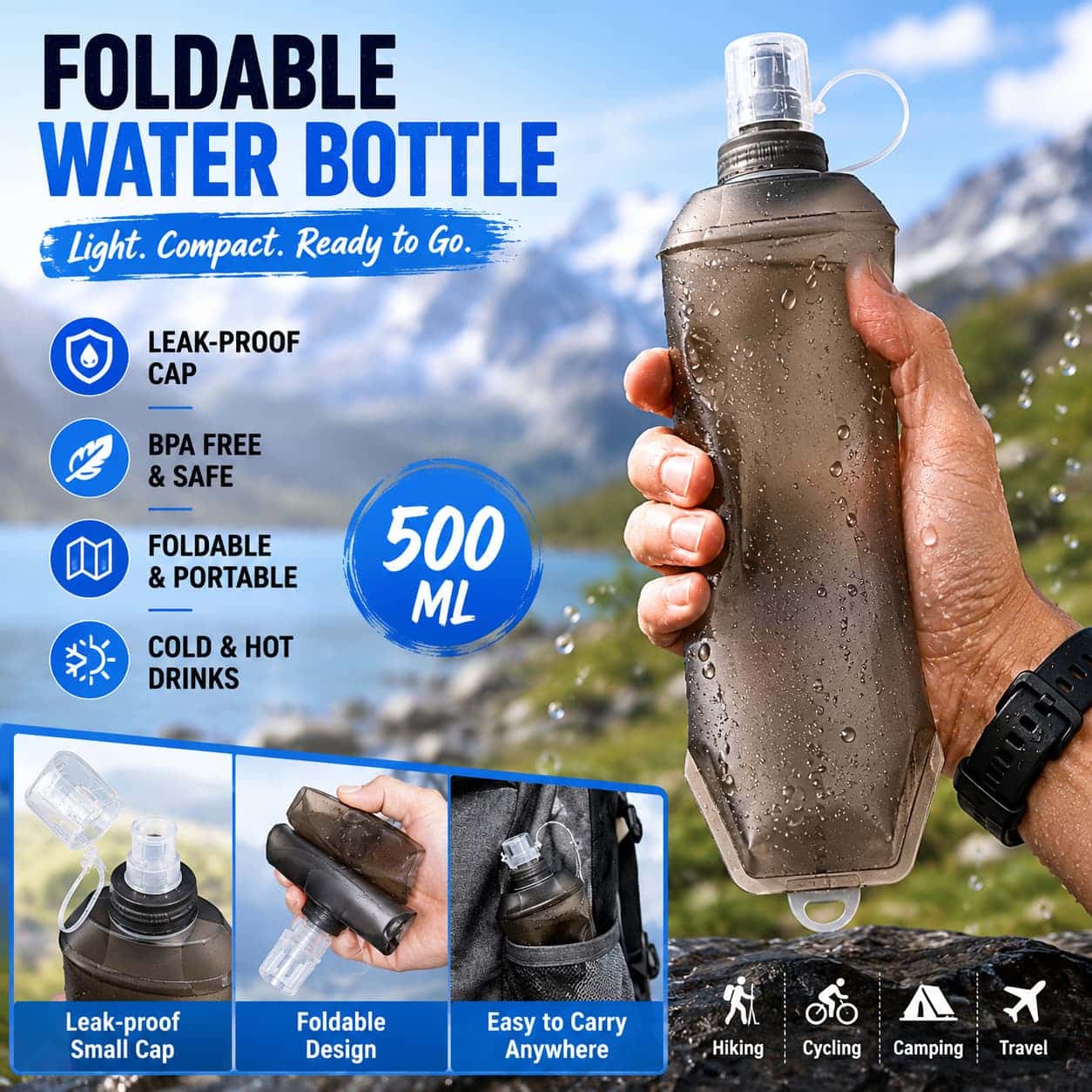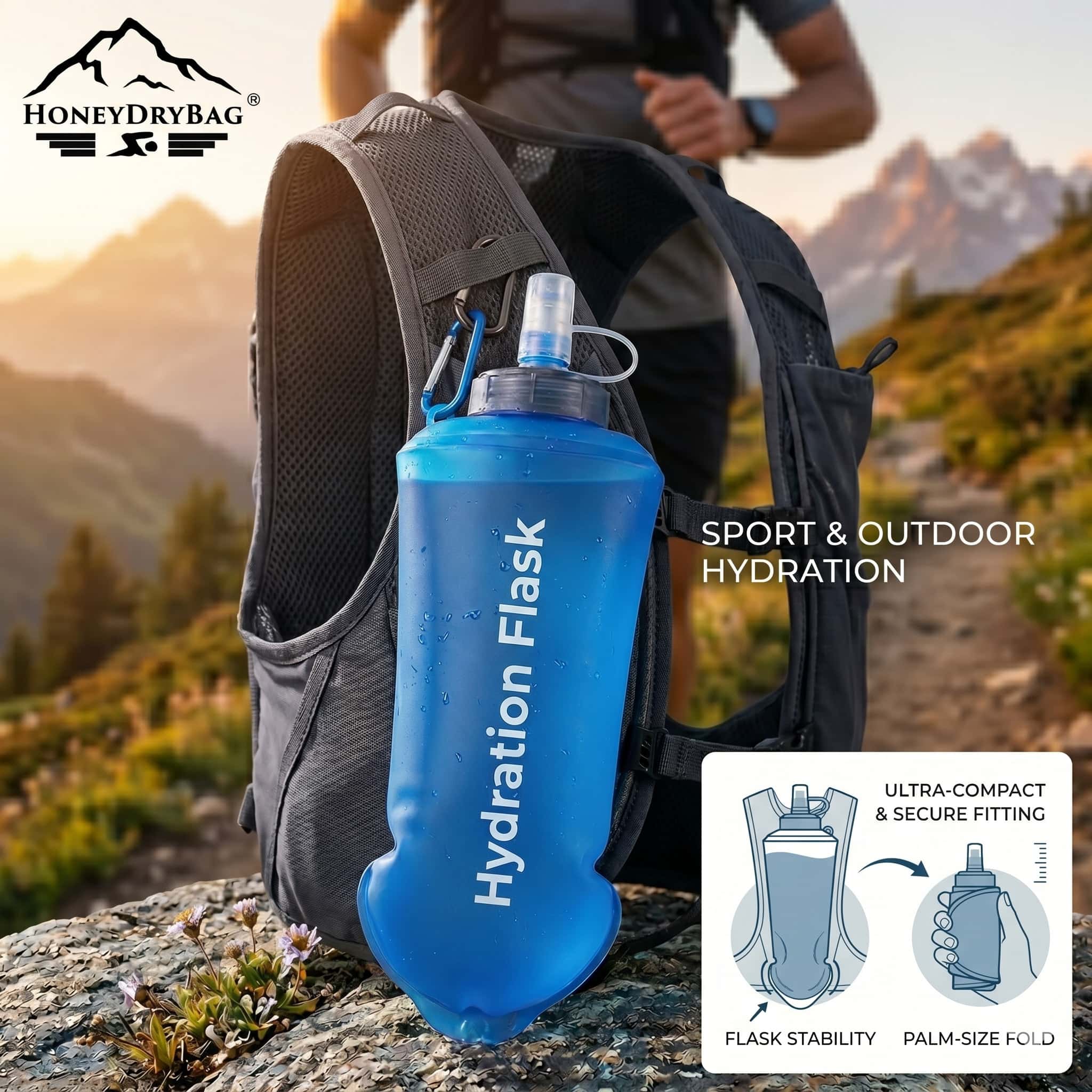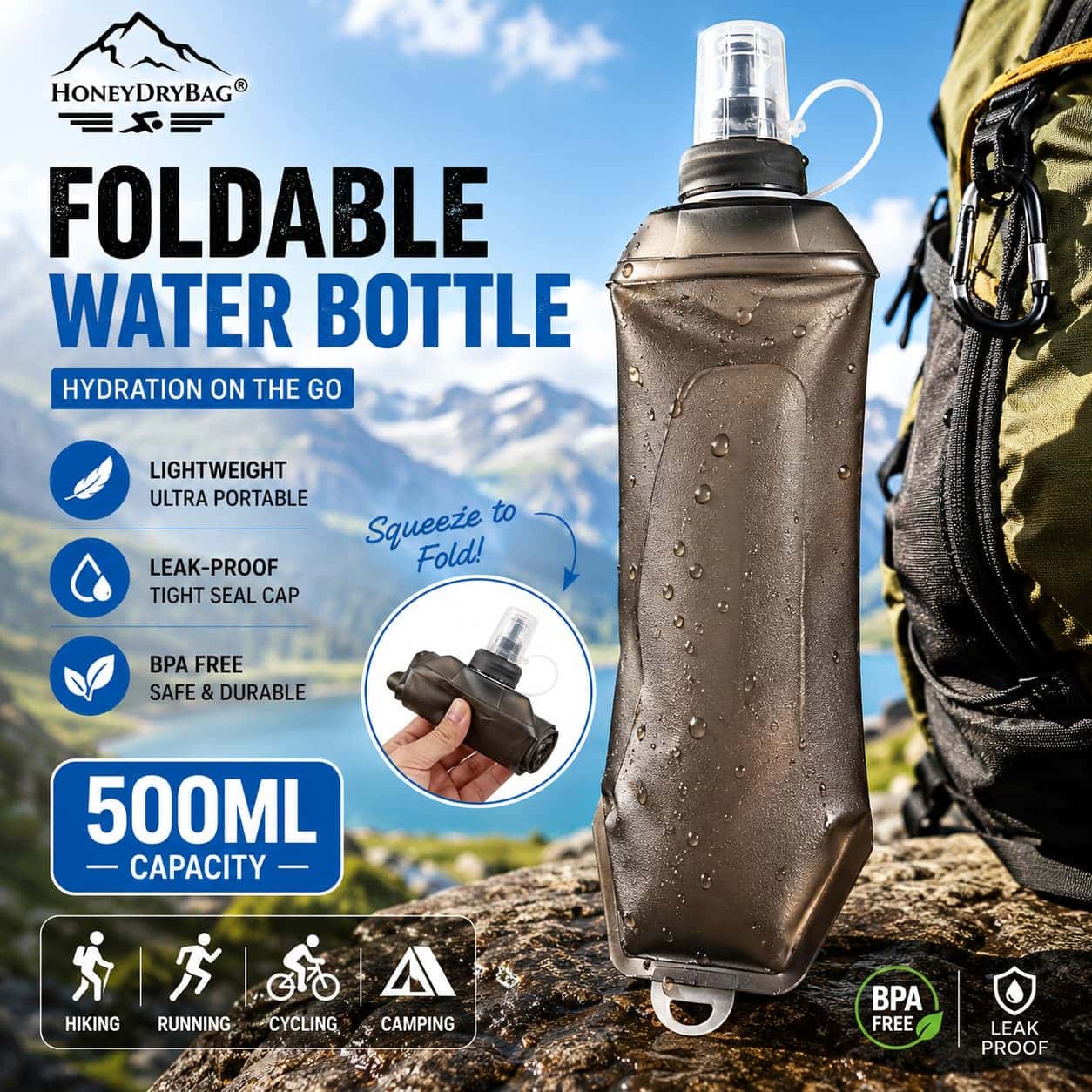
Quick answer: A soft flask usually sinks in a running vest pocket because the bottle loses structure as the liquid level drops. The flexible body shortens, the shoulder folds, or the base slides deeper into the pocket, so the bite valve no longer sits high enough to drink from comfortably. This is a flask-and-pocket compatibility issue, not just a capacity issue.
The problem is related to, but not exactly the same as, a soft flask that is hard to put back in a vest. Reinsertion problems happen after the bottle is removed. Sinking happens while the flask is already inside the pocket. In both cases, the cause is usually the same design system: flask height, body width, shoulder support, cap position, pocket depth, stretch fabric, and retention features must work together.
What Does “Soft Flask Sinking” Look Like?
A soft flask has sunk too low when the runner can no longer reach the bite valve easily, the cap drops below the pocket edge, or the upper body of the flask folds instead of staying upright. Some runners notice it only after the flask is half empty. Others notice it as soon as they start moving, especially if the vest pocket is deep or the flask is shorter than the pocket was designed for.
Common signs include:
- The bite valve sits too low to drink without using a hand.
- The cap disappears below the top of the pocket.
- The flask leans outward or inward instead of standing upright.
- The bottle slides lower after every few minutes of running.
- A retaining loop no longer holds the neck in place.
- The runner has to pull the flask upward repeatedly.
If the runner must remove the bottle every time to drink, the problem is no longer only about convenience. It affects pacing, hydration behavior, and the perceived quality of both the flask and the vest.
Why a Half-Empty Soft Flask Sinks More Easily
Liquid gives a full soft flask temporary structure. When the flask is full, the body is longer, the shoulder is firmer, and the base stays expanded. The pocket can hold the bottle in a predictable position.
After the runner drinks, the structure changes. The walls become softer, the base may curl, and the flask may shorten. If the pocket is deep or the fabric has strong downward tension, the bottle can settle below its intended position. Pushing down on the cap or bite valve can make the shoulder buckle instead of keeping the bottle upright.
This is the same trade-off that makes soft flasks comfortable. A flexible bottle collapses as it empties, reduces bulk, and feels better against the body than a rigid bottle. But that flexibility also means the vest pocket must support the bottle at different fill levels, not only when it is full.
Pocket Depth and Flask Height Must Match
The most common compatibility problem is a pocket that is deeper than the usable height of the flask. A 500 ml soft flask may be tall enough for one vest but too short for another. Two products with the same capacity can have different filled length, neck height, shoulder shape, and cap size.
A deep pocket is useful when the brand wants secure storage, but it can hide the bite valve if the flask collapses. A shallow pocket gives easier access, but it may not hold the bottle securely during faster running or downhill movement.
For product design, the relevant measurement is not only total flask length. Buyers should also record:
- Filled length from base to bite valve
- Maximum filled width
- Shoulder height and stiffness
- Neck length
- Cap diameter
- Bite valve height above the pocket edge
- Pocket opening width
- Usable pocket depth
- Elastic loop position
A flask that looks correct in a flat product photo may sit too low once it is loaded into stretch fabric and worn on a moving body.
Neck Support and Shoulder Shape Matter
The neck and shoulder area determine whether the top of the flask stays accessible as the bottle empties. If the transition from body to neck is too soft, the flask may fold just below the cap. The cap is still there, but it no longer transfers support to the lower body.
More shoulder support can help the bite valve stay higher, but it can also make the flask feel firmer against the chest. A completely soft shoulder may feel comfortable but sink more easily. A more structured shoulder may improve handling but add bulk or pressure. The best choice depends on the target vest pocket and how the runner drinks.
For OEM and ODM development, this is a sample-testing issue. Do not approve a flask based only on filled dimensions. Test it full, half full, nearly empty, and empty inside the actual pocket.
Elastic Loops Can Help, But Only If They Match the Cap
Many running vests use an elastic loop to hold the neck or cap of a front soft flask. The loop can prevent sinking, but only when it sits at the right height and grips the correct part of the bottle.
A loop that is too high may pull the bottle awkwardly. A loop that is too low may not stop the cap from dropping. A loop that is too tight can be hard to use while moving. A loop that is too loose may slide off the cap when the bottle compresses.
Cap shape matters here. A wide cap may give the loop something to catch. A narrow neck may pass through too easily. A tall bite valve may remain accessible even when the cap is lower, while a short valve can disappear below the pocket edge.
Bite Valve or Long Straw: Which Solves the Problem?
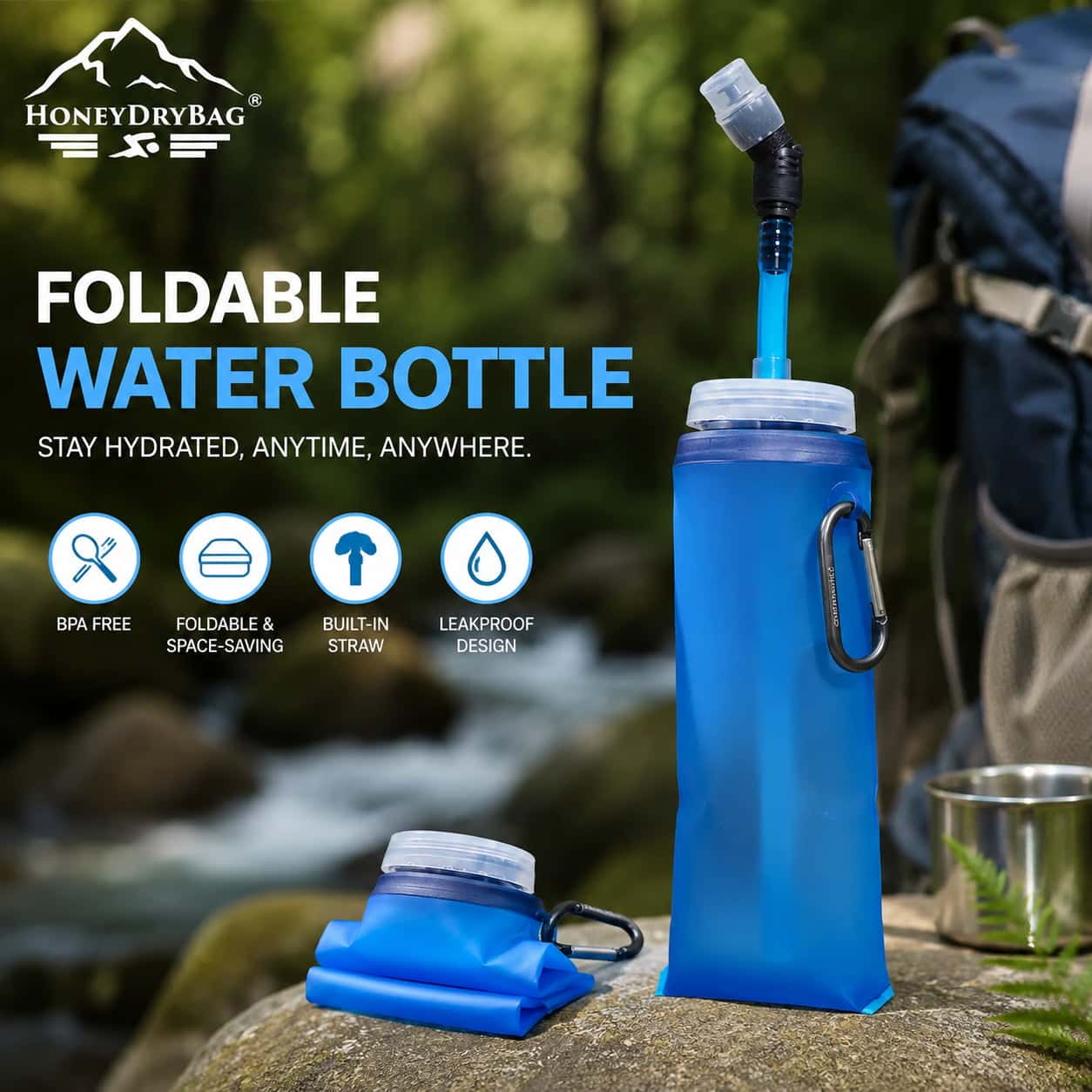
A long straw can help when the flask sits lower in the pocket because the runner can drink without lifting the bottle. It is useful for some vest designs, especially when the pocket is deep or the runner wants hands-free access.
A straw is not a universal fix. It adds another component to clean, may change the way the bottle moves, and can bounce or interfere with arm swing if the routing is poor. It also does not solve the underlying pocket support problem if the flask sinks, twists, or folds.
A standard bite valve works well when the flask sits high enough and the pocket holds it upright. It is simpler, lighter, and easier to pack. But if the valve drops below a comfortable drinking position after the bottle is half empty, the runner may need to pull the flask up repeatedly.
For B2B buyers, the decision should be tested as a system: flask height, valve type, optional straw, pocket depth, loop position, and user movement all affect the result.
How Runners Can Keep a Soft Flask From Sinking
Runners can try a few practical checks before replacing the flask or vest:
- Confirm the flask is seated with the base fully extended, not folded.
- Use the vest’s elastic loop if it is designed for the bottle neck or cap.
- Move heavy items, such as a phone or gels, away from pockets that press into the flask compartment.
- Adjust the chest straps so the pocket sits close to the body without over-compressing the bottle.
- Test whether a small amount of air helps the flask keep shape temporarily, then remove excess air if sloshing becomes a problem.
- If the vest supports it, try a longer straw or valve extension.
- Compare the filled height and cap position with the original flask designed for the vest.
If the bottle still sinks, the problem is probably compatibility. Choosing another bottle only because it is labeled 500 ml may repeat the same issue.
Compatibility Checklist for Brands and B2B Buyers
A soft flask should be tested inside the target vest pocket, not only measured on a table. A useful compatibility test should include several fill levels and real movement.
| Test item | Why it matters | What to record |
|---|---|---|
| Full flask position | Shows intended starting fit | Bite valve height, cap position, pocket tension |
| Half-full position | Reveals early sinking | Neck support, shoulder folding, access changes |
| Nearly empty position | Shows worst-case support | Whether the flask disappears, twists, or collapses |
| Elastic loop use | Tests retention | Loop height, grip, ease of use, cap compatibility |
| Bite valve access | Measures drinking convenience | Whether the runner can drink without pulling the flask up |
| Loaded vest test | Reproduces real use | Phone, gels, keys, and adjacent pocket pressure |
| Running movement | Reveals bounce and settling | Walking, easy running, downhill, and faster pace |
If one-handed drinking is a product requirement, define it before sample approval. The claim should be tested with the actual flask and vest combination, not with the bottle alone.
Soft Flask Features That Reduce Sinking Risk
No single feature guarantees compatibility, but several design choices can help:
- A filled height that matches the target pocket depth
- A shoulder profile that resists folding when half full
- A cap shape that works with elastic retaining loops
- A bite valve that remains accessible above the pocket edge
- A base that extends cleanly instead of curling during use
- Film thickness that balances comfort and handling
- Optional straw or valve extension for deeper vest pockets
The design should still remain comfortable. Adding too much structure can reduce sinking but create pressure points or make the bottle feel bulky. The goal is not to make a soft flask rigid. The goal is to keep the drinking point accessible as the flask changes shape.
For a broader view of material, valve, capacity, and custom options, see our complete B2B guide to foldable TPU running water bottles.
How This Differs From Reinsertion Problems
A sinking flask and a hard-to-reinsert flask are related but separate problems.
A sinking flask stays in the pocket but drops too low during use. The key issue is retention and drinking access. A hard-to-reinsert flask is removed from the pocket and then folds, catches, or buckles when the runner tries to put it back. The key issue is insertion control.
Both problems should be tested together. If a flask sinks while running and is also difficult to reinsert after drinking, the bottle and vest pocket are probably not well matched. For the reinsertion side of the problem, see our guide on soft flask and running vest pocket compatibility.
Questions to Ask a Soft Flask Manufacturer
Before approving samples, ask:
- What is the filled length from base to bite valve?
- What is the maximum filled width and tolerance?
- How does the flask behave when half full and nearly empty?
- Does the shoulder area resist folding below the cap?
- Which vest pocket depths and loop positions have been tested?
- Can the cap shape work with an elastic retaining loop?
- Is a long straw or valve extension available?
- Does changing film thickness affect sinking or handling?
- Can production samples be tested in the buyer’s target running vest?
These questions turn a user complaint into measurable product requirements.
Final Takeaway
A soft flask sinks in a running vest pocket when the flexible bottle loses support as it empties and the pocket does not hold the neck, cap, or shoulder in the right position. Flask height, pocket depth, shoulder support, cap shape, elastic loops, bite valve height, and nearby gear all affect whether the bottle remains easy to drink from.
Runners should compare actual flask shape and pocket fit rather than relying on capacity alone. Brands should test soft flasks in the intended vest pocket when full, half full, nearly empty, and empty before approving production.
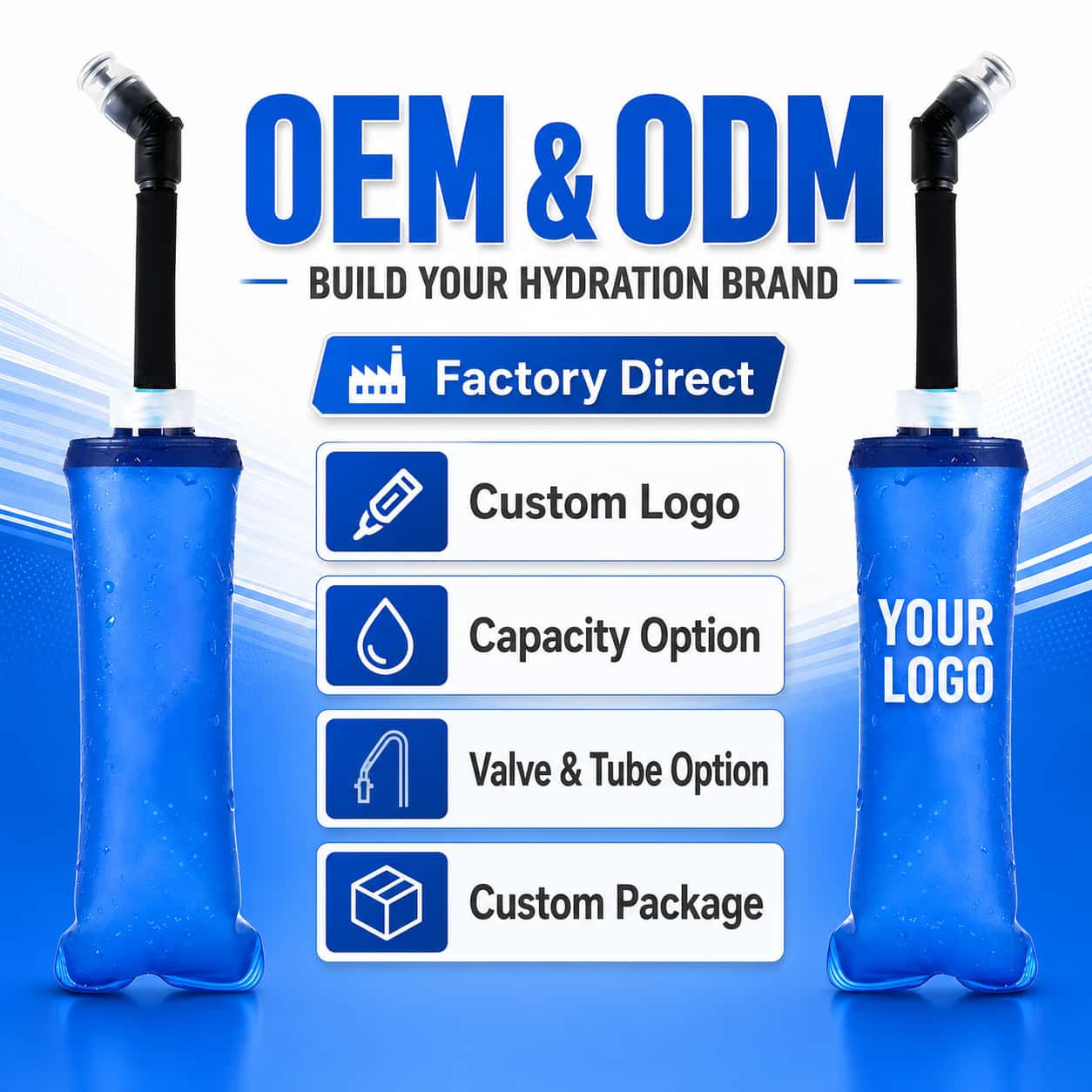
Honey Dry Bag works with running, triathlon, and outdoor brands on OEM and ODM TPU soft flasks, running vest compatibility, valve options, straw extensions, custom logo, capacity, color, and packaging solutions. Contact us to discuss sample development and compatibility testing for your hydration product line.