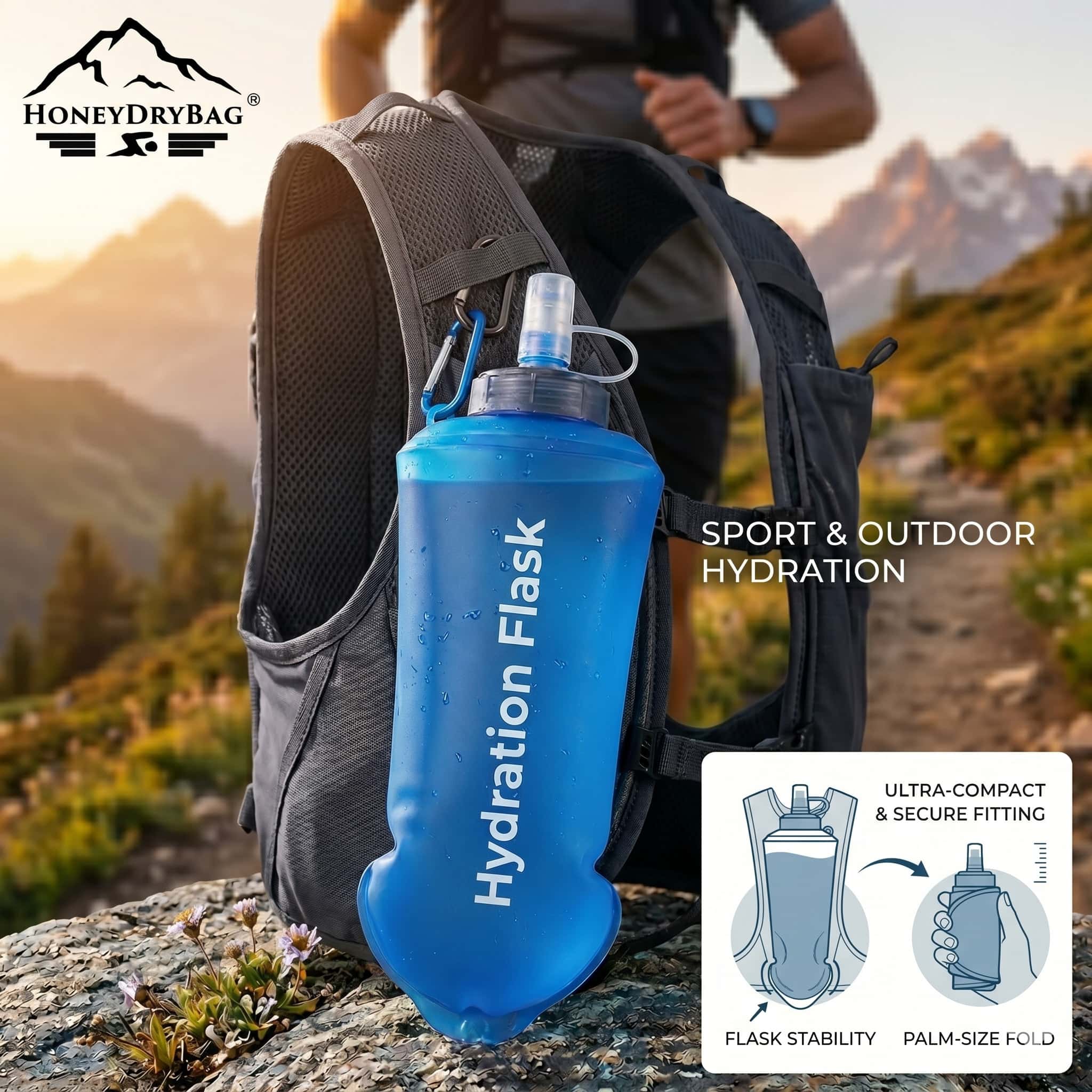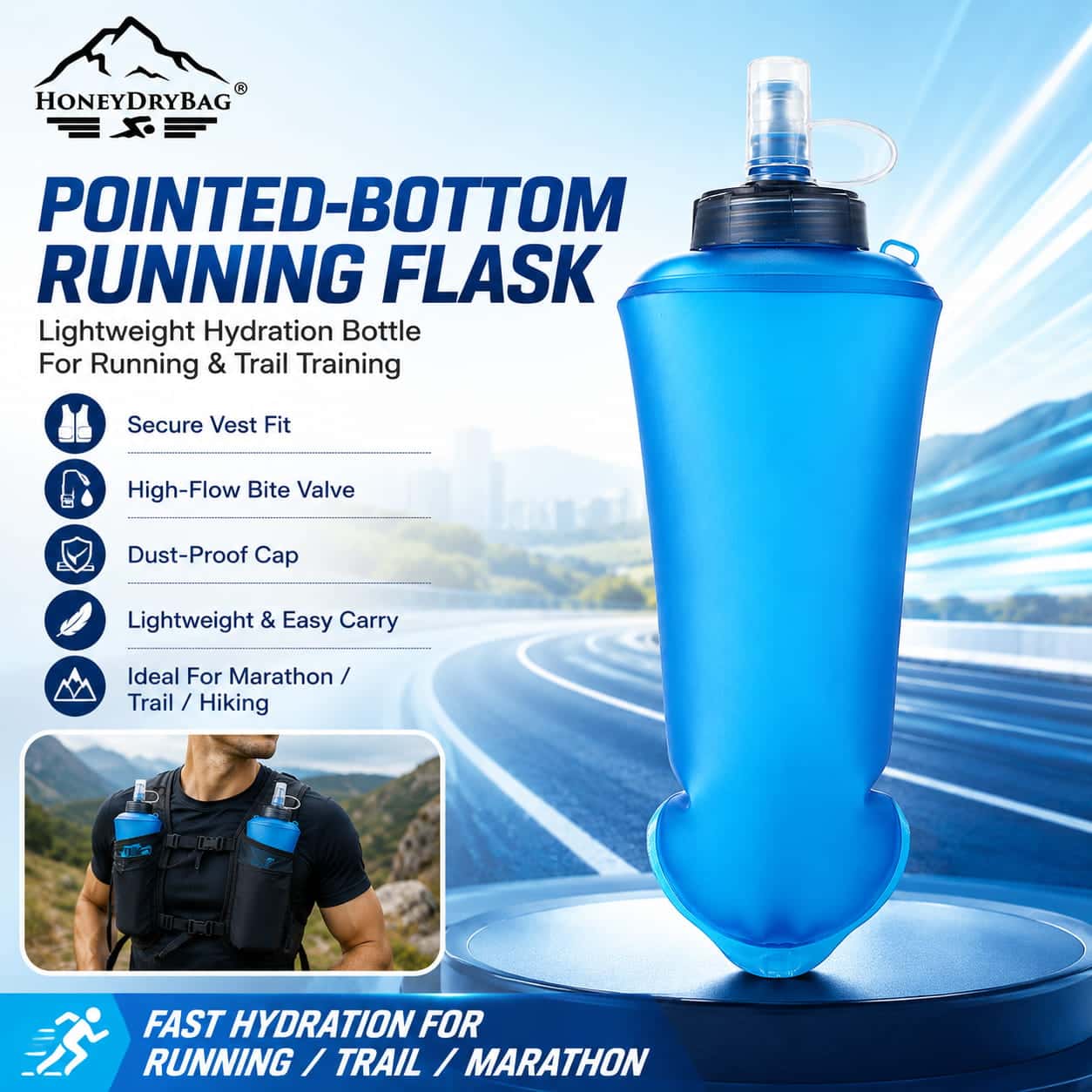
Quick answer: A soft flask is often hard to put back in a running vest because its flexible body loses support as the liquid level drops. If the vest pocket is tight, the flask is wider than the opening, or the base folds during insertion, pushing on the cap compresses the flask instead of sliding it into the pocket.
This is usually a running vest flask compatibility issue rather than proof that either product is defective. Capacity alone does not determine fit: two 500 ml soft flasks can have different widths, lengths, shoulder profiles, and base shapes.
Why Is a Full Soft Flask Easier to Insert?
Liquid helps a full flask hold its intended shape. The body resists buckling, the base stays extended, and the neck remains more closely aligned with the rest of the flask.
After the runner drinks, that support decreases. The sidewalls may touch, the base can curl, and the shoulder may bend when pressure is applied to the cap. A partially empty soft flask therefore behaves less like a bottle and more like a flexible pouch.
That change is part of the same design trade-off that makes a soft flask comfortable and packable. Flexibility helps the flask conform to the body and collapse as it empties, but it also makes reinsertion more dependent on the pocket and the way the runner handles it.
What Makes a Soft Flask Hard to Put Back in a Vest Pocket?
The Flask Is Too Wide for the Pocket Opening
Nominal capacity does not define external shape. One 500 ml flask may be tall and narrow, while another is shorter and wider.
A tall, narrow shape often suits a deep chest pocket. A shorter, wider design may work better in a broad vest pocket or running belt. If the widest part of the flask is close to the width of the pocket opening, stretch fabric presses against the body and creates friction. A full flask may still pass through, while a half-empty flask catches and folds at the edge.
The Base Folds During Insertion
A fully flexible base is soft against the body and packs down easily. In a close-fitting soft flask vest pocket, however, the base can bend backward before it passes the opening.
A shaped or supported base may guide the flask more consistently, but added structure can increase weight, tooling requirements, or contact pressure against the runner. The better choice depends on the target vest and how often users expect to remove and replace the flask while moving.
The Neck-to-Body Area Collapses
The neck and cap are usually the firmest places to hold. If the body immediately below the neck is very flexible, pressure on the cap can make the shoulder buckle instead of transferring force toward the base.
More shoulder support can improve control, but too much structure may make the upper flask feel bulky in the vest. Insertability and body comfort need to be evaluated together.
The Pocket Is Tight or High-Friction
Running-vest pockets must hold a soft flask securely enough to limit movement, but the same compression that improves retention can make reinsertion difficult.
Fit can change with:
- Pocket width and usable depth
- Opening shape
- Fabric stretch direction and tension
- Internal seams
- Elastic retaining loops
- Items stored in overlapping or adjacent pockets
This is why a flask that works in one running vest may perform differently in another.
The Flask and Pocket Have Different Profiles
A straight flask may bind in a pocket that narrows toward the bottom. A tapered flask may enter easily but sit too low or move if the upper pocket is broad.
The cap and shoulder also matter. A wide cap can catch on elastic, while a narrow shoulder may give the pocket too little surface to support as the flask empties.
Other Gear Reduces the Available Space
A phone, gel packet, gloves, or keys can press into the flask compartment from an adjacent pocket. A vest that accepts the flask when empty may become much tighter once it carries a realistic race load.
Before replacing the flask or vest, test the pocket with the same equipment arrangement used during a run.
How Can Runners Reinsert a Soft Flask More Easily?
First, open the pocket with one hand and guide the base past the opening before pushing down. Pressing only on the bite valve or cap usually makes a partially empty flask fold sooner.
These adjustments can also help:
- Hold the rigid neck and the shoulder directly below it.
- Straighten a curled base before reinsertion.
- Move a phone or nutrition packet that is pressing into the flask pocket.
- Check that an internal seam or retaining loop is not catching the cap.
- If the valve design permits it, leave enough air in the flask to restore its shape temporarily, then remove excess air after the flask is secured to reduce liquid movement.
If the problem occurs repeatedly, compare the replacement flask with the original bottle's filled dimensions and shape. Choosing another product only because it is labelled 500 ml may reproduce the same problem.
Soft or Supported Base: Which Design Fits the Use Case?
| Base design | Main advantage | Main limitation | More suitable when |
|---|---|---|---|
| Fully soft base | Comfortable and highly packable | Can curl or fold at a tight opening | The flask normally remains in the pocket |
| Shaped welded base | Helps align the lower body with some pocket profiles | Fit depends on the exact base and pocket shape | The target vest has a deep, compatible pocket |
| Partially supported base | Easier to guide and handle when partly empty | Adds structure and may create a firmer contact point | Users refill or remove the flask frequently |
| Full-length support | Maintains shape during handling | Adds weight and bulk | A specific vest or handheld system is designed around it |
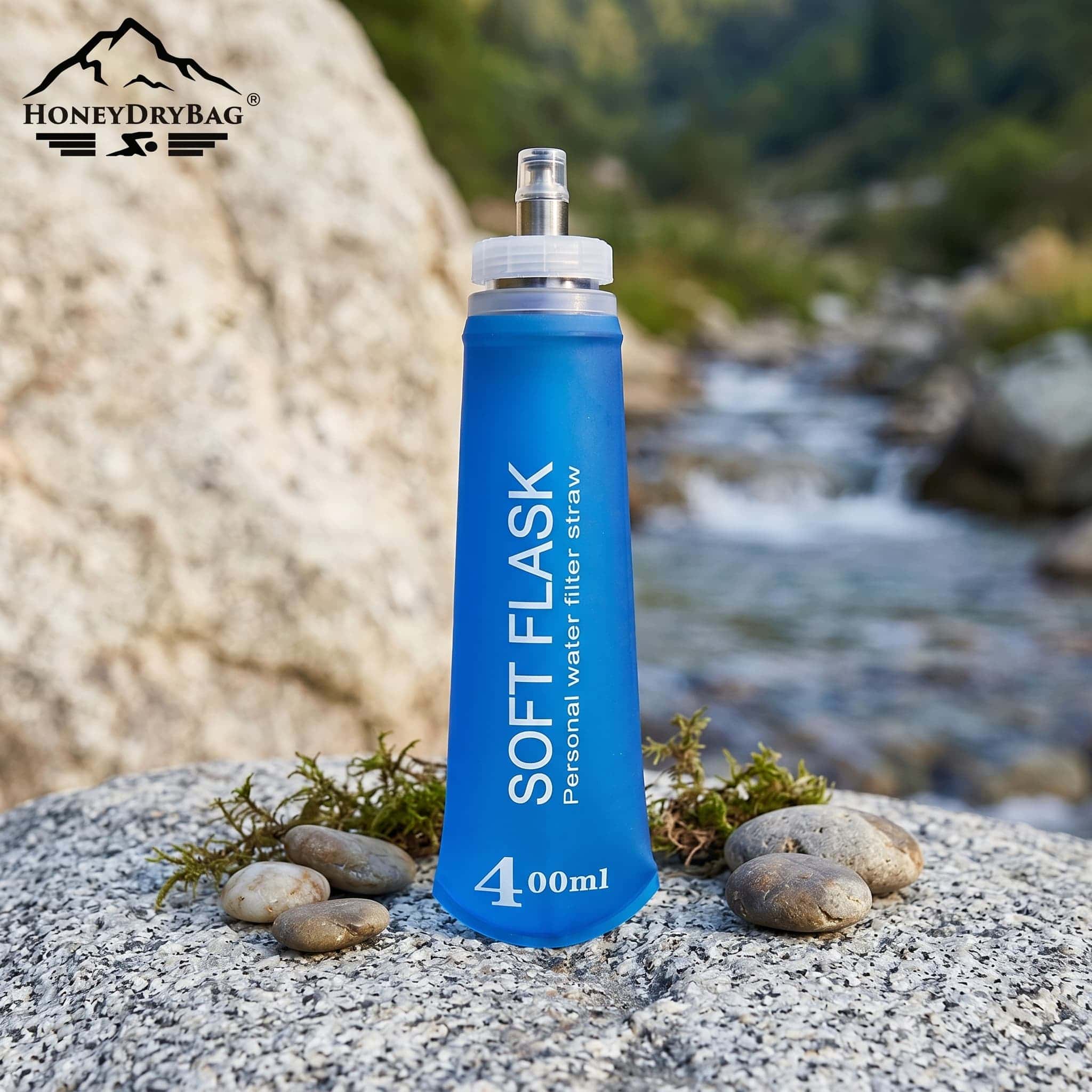
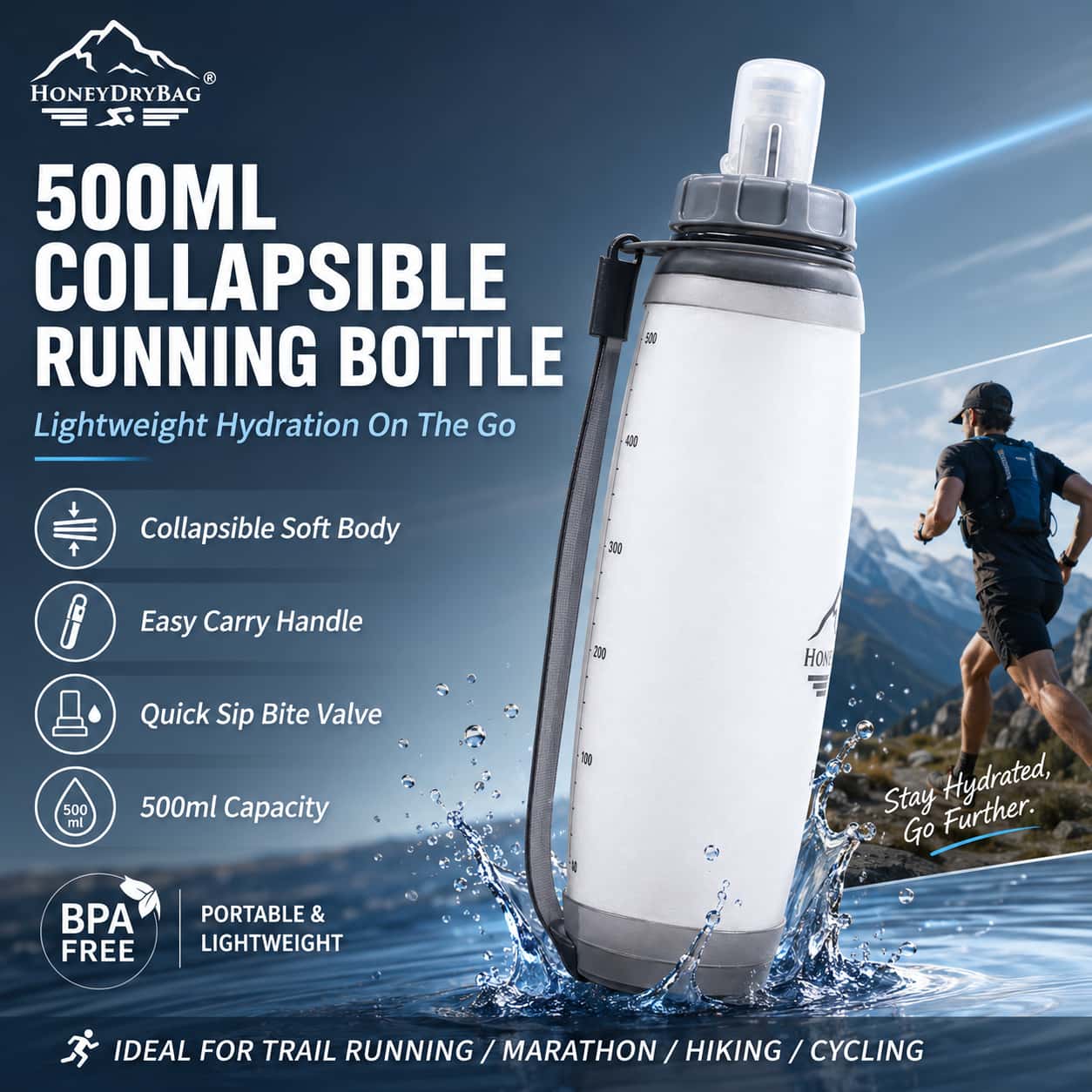
No base construction is universally best. A catalog image can show the general shape, but it cannot establish whether the flask will work with a particular vest pocket.
How Should B2B Buyers Test Running Vest Flask Compatibility?
For a custom running soft flask, compatibility should be defined as a flask-and-vest requirement rather than a capacity requirement. A useful specification records the filled flask dimensions, the target pocket dimensions, the expected equipment load, and acceptable handling at different fill levels.
If material, capacity, valve, and customization requirements have not yet been fixed, start with our complete B2B guide to foldable TPU running water bottles before defining the vest-specific compatibility test.
Record the Finished Flask Dimensions
Measure and approve:
- Filled length
- Maximum filled width
- Neck and cap dimensions
- Shoulder profile
- Base shape
Where fit is critical, include tolerances rather than relying on a single nominal measurement.
Define the Target Pocket
Provide the target vest or a representative pocket specification. Record the opening width, usable depth, stretch direction, retaining features, and any seams or overlapping storage that reduce usable space.
If the flask is intended as a replacement product, describe the vest shapes or pocket range it is meant to fit. Avoid a universal compatibility claim unless testing supports it.
Test More Than a Full Flask
Run the compatibility check when the flask is:
- Full
- Partly full
- Nearly empty
- Empty
A flask that enters the pocket only when full has not been evaluated for the point in a run when reinsertion is most difficult.
Reproduce Real Use
A practical reinsertion test should:
- Fill the flask and place it in the target running vest.
- Load adjacent pockets with the equipment users normally carry.
- Remove the flask and reduce the liquid level.
- Reinsert it while standing, walking, and, where safe, moving at an easy running pace.
- Repeat with users who have different hand sizes and handling techniques.
- Record folding, snagging, hand changes, and whether the flask reaches its intended position.
If one-handed replacement is a product requirement, define it before testing. Do not use an easy one-handed operation claim based only on the flask; the complete flask-and-vest combination must support it.
Recheck Retention After Reinsertion
Easy insertion is not enough. Confirm that the neck works with the intended elastic loop or retainer, the bite valve remains accessible, and the flask does not sink or move excessively as it empties.
Questions to Ask a Soft Flask Manufacturer
Before approving samples, ask:
- What are the filled length, maximum width, and manufacturing tolerances?
- Is the base fully flexible, shaped, partially supported, or fully supported?
- How does the neck-to-body transition behave when the flask is half full?
- Which running-vest pocket profiles have been evaluated?
- Can samples be tested in the buyer's target vest?
- Can the body dimensions or shape be adjusted for a defined pocket?
- Does a change in film thickness alter fit or handling?
- Can production samples be checked against an approved compatibility specification?
Final Takeaway
A soft flask that is hard to put back in a running vest usually exposes a mismatch between the flexible bottle, the pocket opening, and the loaded carrying system. Flask width, base construction, neck support, pocket tension, and nearby equipment all affect reinsertion.
Runners should compare actual shape and dimensions rather than capacity alone. Brands should test the intended flask inside the target vest when full, partly full, and nearly empty before approving production.
Honey Dry Bag works with running and outdoor brands on OEM and ODM soft flask projects. Contact us to discuss target dimensions, valve options, branding, sample development, and the compatibility requirements for your hydration product line.