Quick answer: TPU can be safe to drink from when the specific TPU formulation and the finished bottle are suitable for food contact and tested for the intended market and use conditions. Buyers should not judge a TPU bottle by the material name alone. They should check food-contact documentation, migration testing, additives, colorants, odor and taste control, and production consistency.
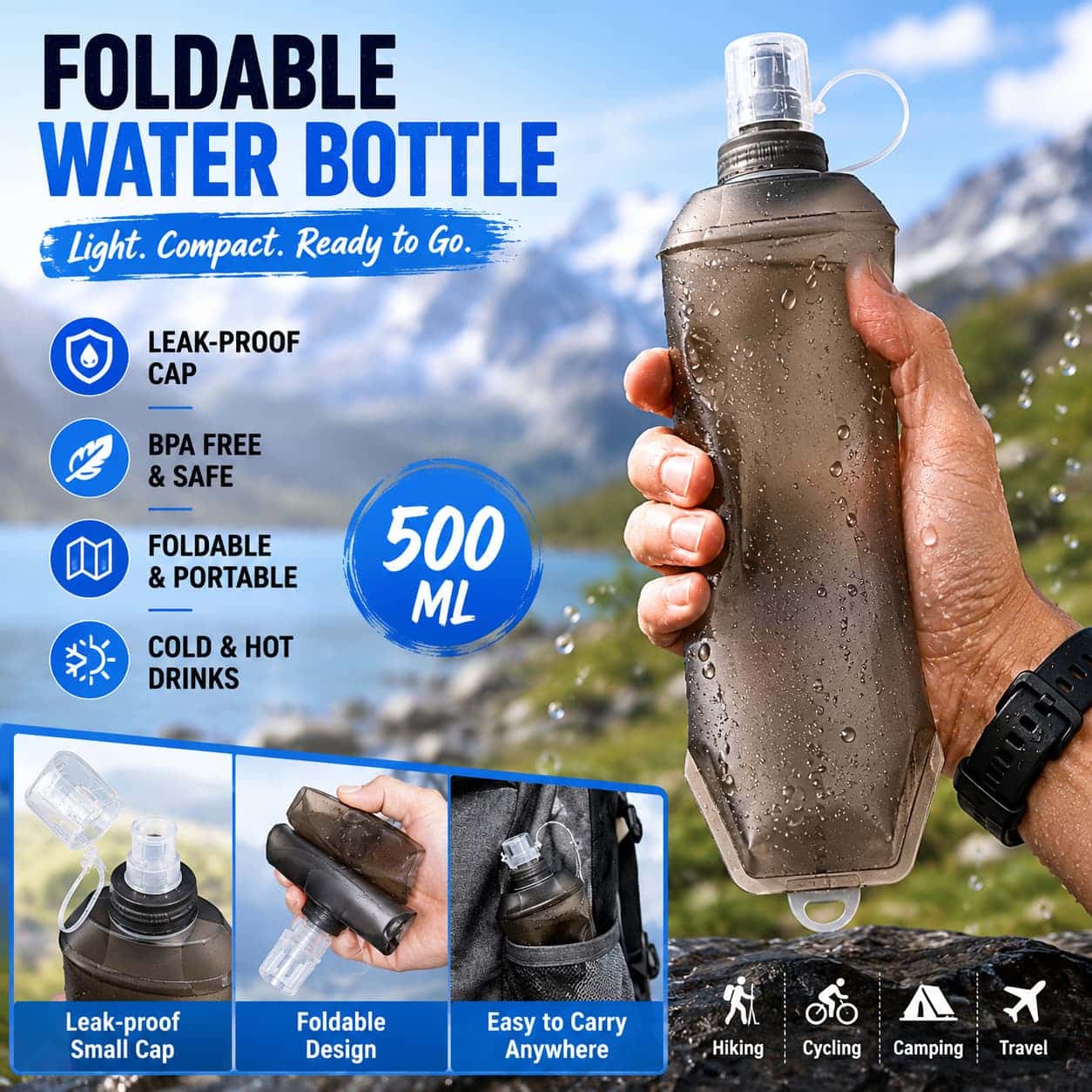
TPU, or thermoplastic polyurethane, is widely used in flexible sports hydration products because it can be soft, weldable, durable, and packable. That is why many running soft flasks, foldable water bottles, hydration reservoirs, and flexible drink containers use TPU film or TPU-related components.
However, "TPU" is a broad material family, not a single universal food-grade material. Different TPU grades, additives, colorants, coatings, valves, caps, printing inks, and manufacturing processes can create different compliance requirements. A bottle made with one TPU formulation may be suitable for drinking water, while another TPU material may be designed for industrial, footwear, adhesive, or non-food applications.
For brands, the practical question is not "Is all TPU safe?" The better question is: Is this finished TPU bottle suitable for the liquid, temperature, contact time, market, and user instructions we plan to sell it for?
What Is a TPU Bottle?
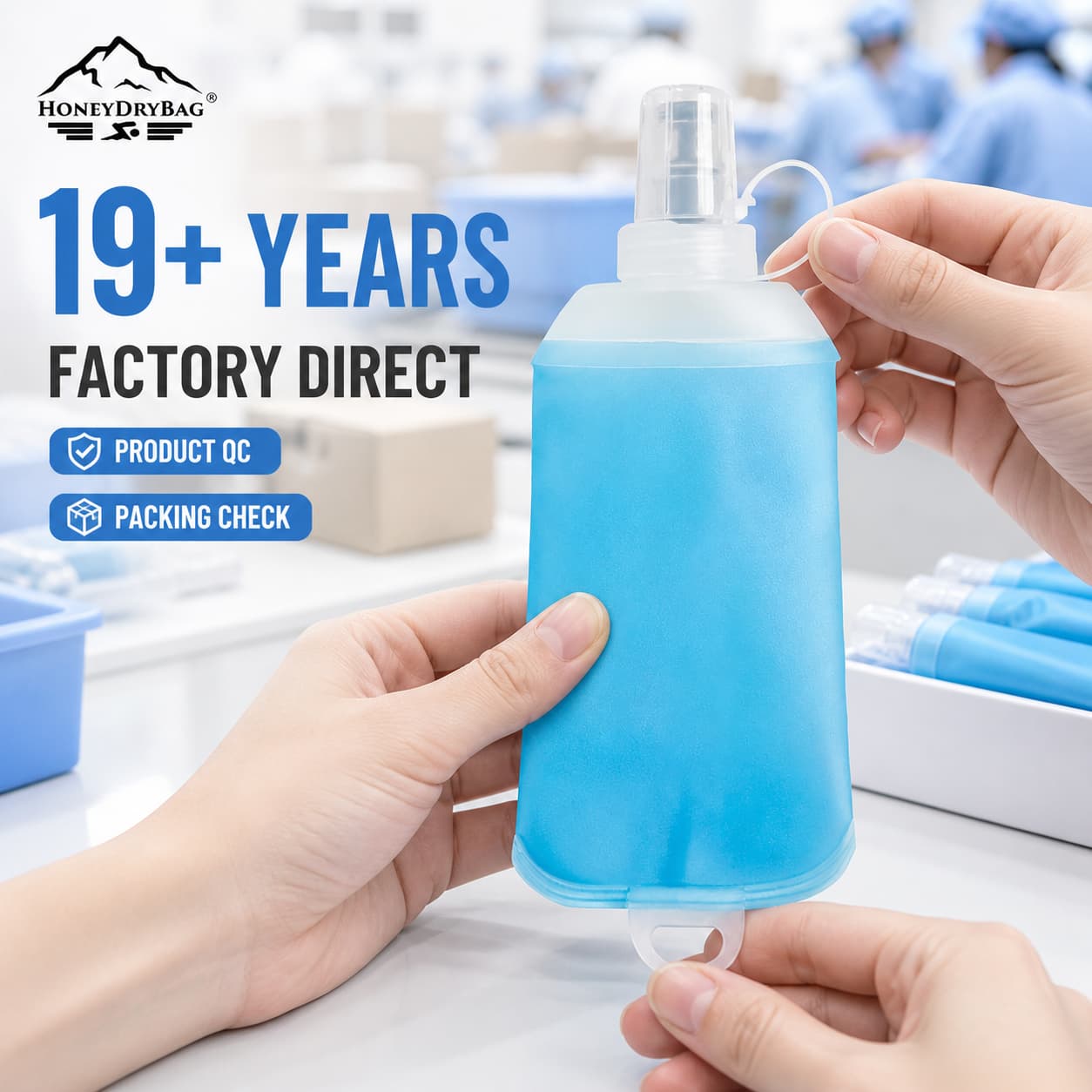
A TPU bottle usually means a flexible bottle or soft flask made from thermoplastic polyurethane film. In running and triathlon, it is often used as a foldable water bottle because the body can collapse as the user drinks. This helps reduce sloshing, saves space after use, and makes the bottle more comfortable in a belt, vest pocket, hand strap, or race bag.
Compared with rigid plastic bottles, a TPU soft flask is designed for flexibility. Compared with disposable pouches, it is usually designed for repeated use. That combination makes material selection, welding quality, valve design, cleaning, and compliance documentation especially important.
If you are still comparing TPU soft flasks with other foldable bottle types, start with our complete B2B guide to foldable TPU running water bottles.
Is TPU Itself Food Safe?
TPU should not be described as automatically food safe in every form. Food-contact suitability depends on the exact grade and the finished article.
For the U.S. market, food-contact substances that are food additives generally need to be authorized for their intended use. The U.S. FDA evaluates food-contact substances based on factors including their intended conditions of use, potential migration into food, and available safety information.
For the EU market, plastic materials and articles intended to contact food are regulated under specific food-contact rules, including Regulation (EU) No 10/2011. These rules address matters such as authorized substances, migration limits, and testing conditions related to intended use.
For B2B buyers, this means a supplier should not simply say "TPU is safe." A stronger answer is: "This TPU grade and finished bottle have been selected and tested for the specified food-contact application and target market."
Why the Finished Bottle Matters More Than the Material Name
A drinking bottle is not only a sheet of TPU film. It can include:
- TPU body film
- Welded seams
- Cap materials
- Bite valve or straw
- Colorants
- Printing ink
- Adhesives or coatings, if used
- Lubricants or processing aids
- Packaging and storage conditions
Each part can affect compliance, odor, taste, and user experience. A food-contact TPU film does not automatically prove that the entire bottle, cap, valve, and printing system are suitable for the buyer's market.
This is especially important for OEM and ODM projects. If a buyer changes the color, film thickness, cap, valve, logo printing method, or drink type, the compliance file may need to be reviewed again.
What Buyers Should Check Before Ordering TPU Soft Flasks in Bulk
If you are sourcing TPU soft flasks in bulk for a sports, running, or hydration brand, do not rely on a product photo or a short claim such as "food grade." Ask for relevant documentation and define the intended use clearly.
1. Target Market
Compliance requirements and supporting documentation can vary by target market. Buyers should define where the finished product will be sold before confirming testing and documentation requirements.
At minimum, clarify:
- Target sales market
- Intended user group
- Whether the bottle will contact only water or also sports drinks
- Whether it will be sold as a reusable bottle
2. Intended Liquid and Use Conditions
Testing should match realistic use. A soft flask for plain water may not have the same risk profile as a flask used with acidic drinks, electrolyte mixes, carbohydrate drinks, or flavored sports drinks.
Define:
- Liquid type
- Contact time
- Expected temperature
- Cleaning method
- Repeated-use expectations
- Whether freezing, hot filling, or dishwasher cleaning is intended
If freezing is part of the intended use case, buyers should confirm whether the selected material, valve system, and finished flask have been evaluated for freezing and repeated-use conditions before making product claims.
3. Migration Testing
Migration testing evaluates whether substances transfer from the material or article into food or food simulants under defined conditions. For plastic food-contact materials, both overall migration and specific migration can be relevant, depending on the market and material composition.
For buyers, the key point is simple: the test should match the intended use. A report for a different material, different supplier, different color, or different product structure may not be enough.
4. Additives and Colorants
Clear, blue, black, and custom-color TPU bottles may not have identical formulations. Colorants and additives can change documentation needs, especially for private-label projects.
Ask whether the test report covers:
- The exact TPU grade
- The exact color
- The exact cap and valve materials
- The final printed or unprinted product
- Any custom logo process
5. Odor and Taste Control
Some users search for "soft flask plastic taste" because new flexible bottles can sometimes carry a material, storage, or cleaning-related taste. This does not automatically mean the product is unsafe, but it does affect user trust.
Odor and taste can be influenced by raw material storage, film production, welding, packaging, warehouse conditions, first-use cleaning, and the liquid used in the bottle.
If plastic taste is your main issue, see our article on why a soft flask can taste like plastic.
6. Cleaning Instructions
A suitable food-contact material can still create a poor user experience if the bottle is not cleaned correctly. Sports drink, carbohydrate mix, or flavored electrolyte drink can leave residue around the cap, valve, and shoulder.
Brands should provide clear instructions for rinsing, washing, drying, and storage. If the bottle is not dishwasher-safe, do not imply that it is. If the bite valve should be removed for cleaning, show that clearly.
For cleaning-related guidance, see our article on how to clean a soft flask after sports drink mix.
Can TPU Bottles Be BPA-Free?
Many TPU soft flasks are marketed as BPA-free, but buyers should still ask for documentation instead of treating a BPA-free claim as a complete safety assessment.
BPA is only one possible consideration in food-contact materials. A broader review may include overall migration, specific migration, relevant restricted substances, odor, taste, and the suitability of caps, valves, colorants, and printing systems.
In other words, "BPA-free" can be useful information, but it should not replace appropriate food-contact compliance checking for the finished product and intended use.
Is TPU Better Than Silicone, PE, or Tritan?
There is no single best bottle material for every use case.
| Material | Common advantage | Common limitation |
|---|---|---|
| TPU | Flexible, weldable, collapsible, packable | Requires grade-specific food-contact review and careful cleaning |
| Silicone | Soft, heat-resistant in many applications | Can be heavier or less suitable for some welded soft-flask structures |
| PE / PP | Common, cost-effective, widely used in caps and bottles | Less elastic than TPU for collapsible flask bodies |
| Tritan or rigid copolyester | Clear and rigid bottle feel | Not collapsible like a soft flask |
For running, triathlon, and outdoor hydration, TPU is often chosen because flexibility is part of the product function. The buyer still needs to confirm the specific material and finished product requirements.
Questions to Ask a TPU Bottle Manufacturer
Before approving a TPU soft flask or placing a bulk order, ask:
- Which TPU grade is used for the bottle body?
- Is the material intended for food-contact applications?
- Which market does the compliance documentation cover?
- Does the report cover the finished bottle or only raw material?
- Are the cap, valve, straw, and printing included in the review?
- Does the test cover the exact color and customization method?
- What liquids and temperatures are included in the intended-use statement?
- Is the bottle suitable for sports drink, electrolyte mix, or only water?
- What cleaning method should be shown on the product page or packaging?
- What changes would require new testing or document review?
Red Flags When Sourcing TPU Soft Flasks
Be cautious if a supplier:
- Says "all TPU is food grade" without supporting documentation
- Provides a test report for a different material or product
- Cannot identify the target market covered by the report
- Cannot explain whether the cap and valve are included
- Uses the same safety claim for every color and printing method without verification
- Makes broad claims such as safe for all drinks, all temperatures, and all cleaning methods
- Does not provide care instructions for repeated use
These red flags do not always mean the product is unsuitable, but they mean the buyer should request more information and verification before approving an order.
Final Takeaway
TPU can be a suitable material for soft flasks, foldable water bottles, and running hydration products, but food-contact suitability depends on the specific formulation, finished product design, intended liquid, use conditions, target market, and supporting compliance documentation.
For consumers, the practical advice is to buy from brands that provide clear care instructions and avoid using the bottle outside its stated limits. For B2B buyers, the practical advice is to treat food-contact compliance as a product specification, not a marketing slogan.
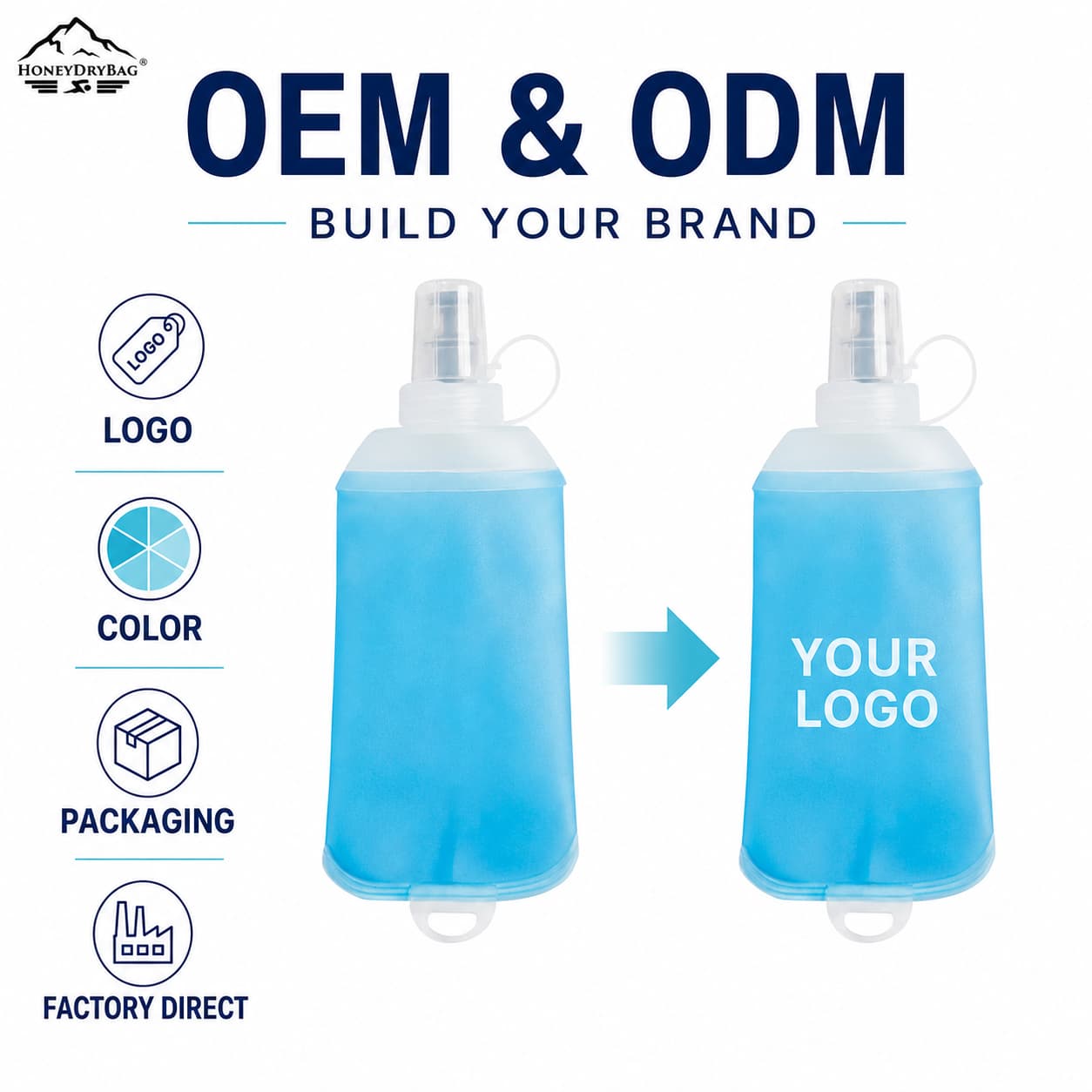
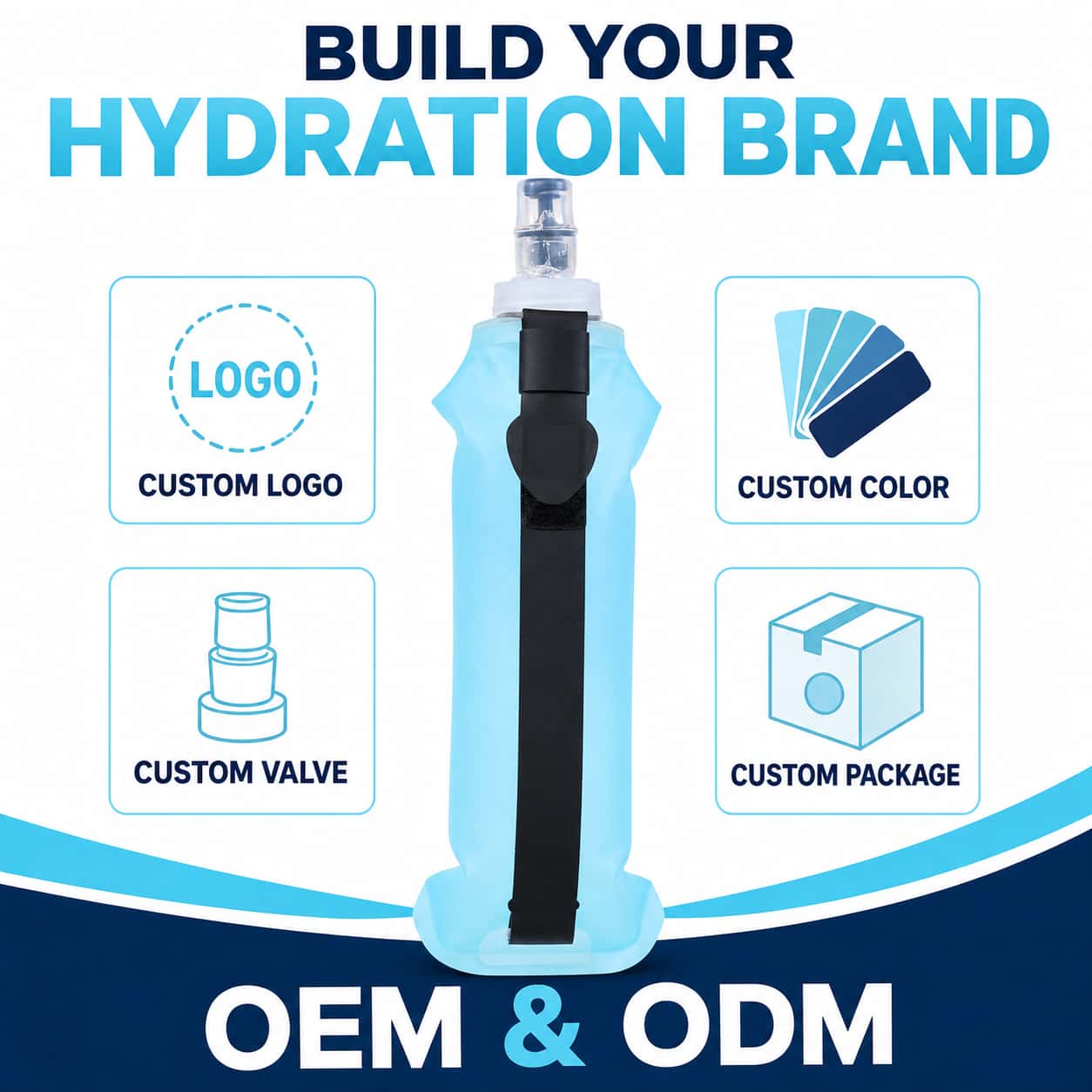
Honey Dry Bag works with running, triathlon, and outdoor brands on OEM and ODM TPU soft flask projects. Contact us to discuss material selection, bottle capacity, valve options, branding, packaging, sample development, and food-contact documentation requirements for your target market.