Jiaju Zhao Wins TOR330 in Record Time: What Ultra Trail Running Demands
On September 16, 2026, Chinese trail runner Jiaju Zhao won the TOR330 – Tor des Géants in Italy, finishing in 65 hours, 55 minutes and 22 seconds.
His performance set a new race record and made him the first Chinese and first Asian athlete to win the event.
The result has attracted attention beyond the trail running community. It also raises a practical question: what does it take to keep moving through mountainous terrain for almost 66 hours?
For runners preparing for their own trail adventures, the answer involves more than speed. Route planning, pacing, food, hydration, equipment and the ability to adapt to changing conditions all matter.
What Is the TOR330 – Tor des Géants?
TOR330 is an ultra-distance mountain trail race held in Italy's Aosta Valley.
Although the race category is called TOR330, the reported route distance for the 2026 edition was 336.1 km, with more than 24,000 metres of cumulative elevation gain.
Participants travel through demanding Alpine terrain, including steep climbs, technical descents and high mountain sections. The event has a 150-hour time limit.
Unlike a conventional road race, TOR330 requires participants to manage their effort and rest over an extended period. Weather, temperature, fatigue and access to aid stations can all influence decisions along the route.
Jiaju Zhao's Record-Breaking Victory
Zhao completed the 2026 race in 65:55:22, improving on the previous record of 66:08:22.
The victory also marked a return to the event. During his 2025 attempt, Zhao withdrew at approximately the 203.8 km aid station. He returned in 2026 and completed the course in record time.
His result highlights the distinctive demands of ultra-distance trail running, where athletes must manage prolonged physical effort alongside the practical challenges of travelling through mountainous terrain.
For recreational runners, an elite athlete's result can be inspiring without becoming a training or equipment prescription. A suitable pace, rest plan and hydration strategy depend on each runner's experience and the conditions of the event.
Why Hydration Matters in Long-Distance Trail Running
Hydration planning becomes more complicated as a trail run gets longer.
A mountain route may include exposed climbs, cooler high-altitude sections and warmer valleys. The distance between reliable water sources may also vary.
Runners therefore need to consider:
- The distance and expected travel time between aid stations.
- Weather conditions and changes in temperature.
- The amount of fluid they can comfortably carry.
- Their individual hydration needs and experience during training.
- How easily they can access their drinking equipment while moving.
There is no single drinking schedule or fluid volume that suits every runner. Fluid needs vary, and excessive drinking can also be harmful.
For a long event, runners should plan their hydration setup around the specific route and practise using it during training.
How Soft Flasks Fit Into a Trail Running Setup
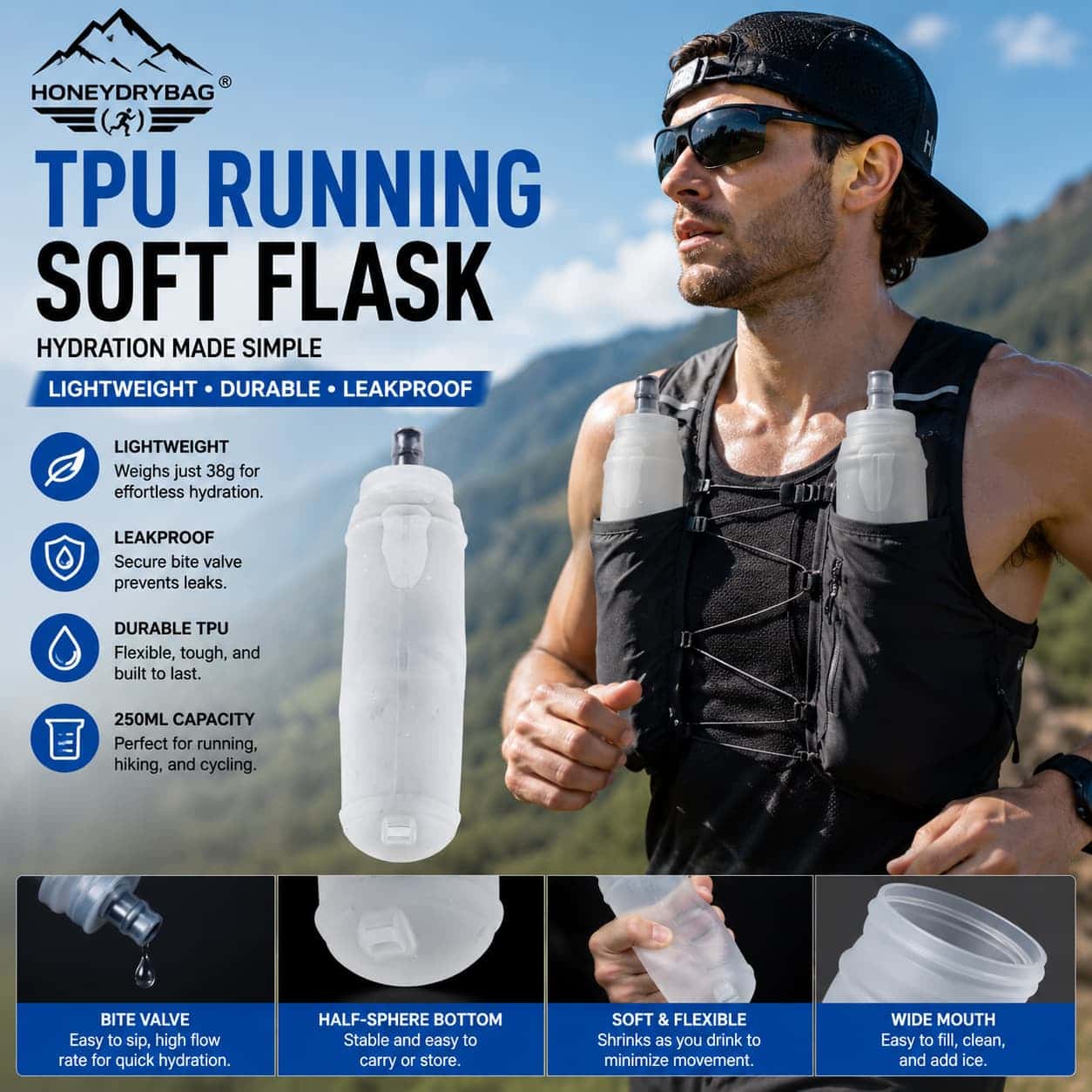
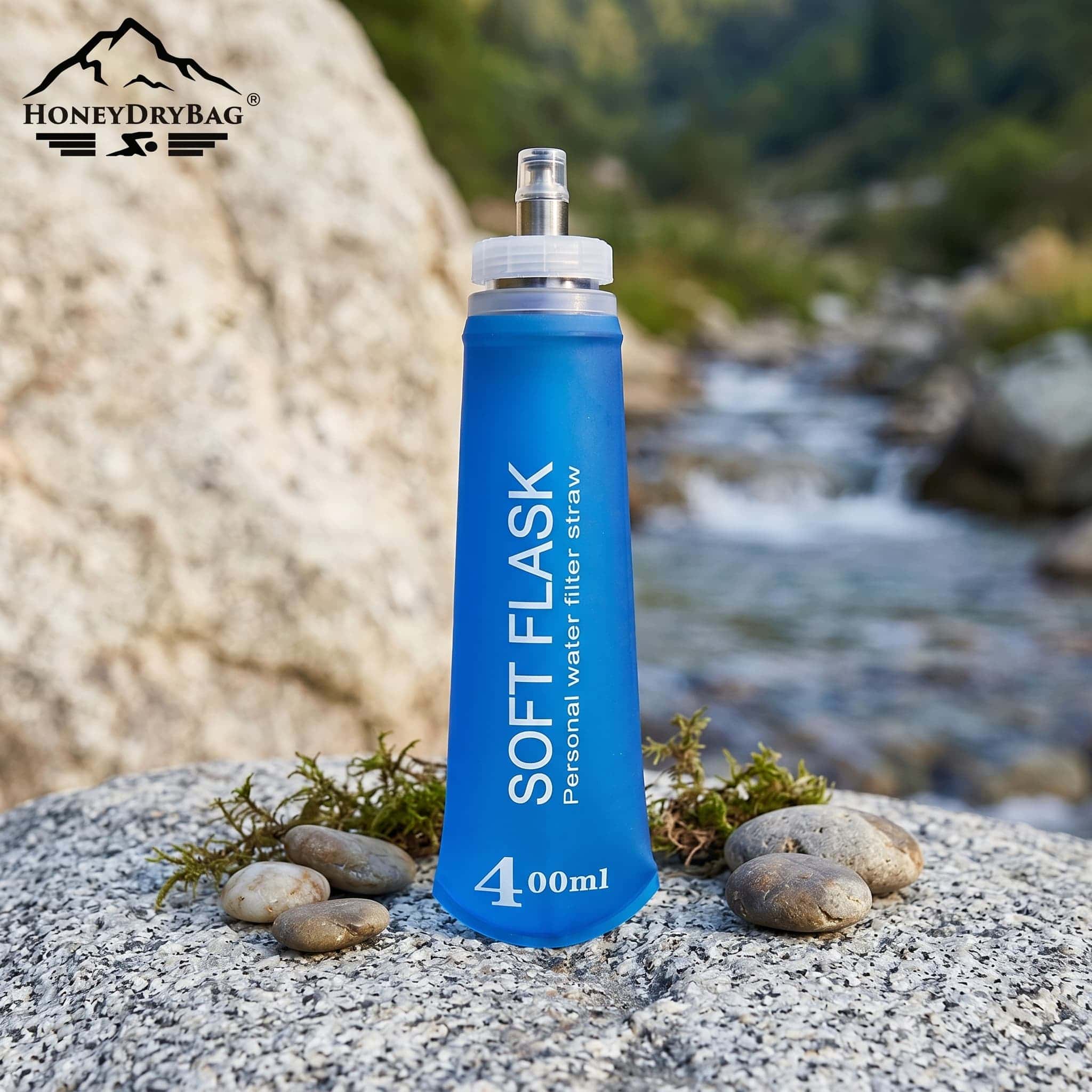
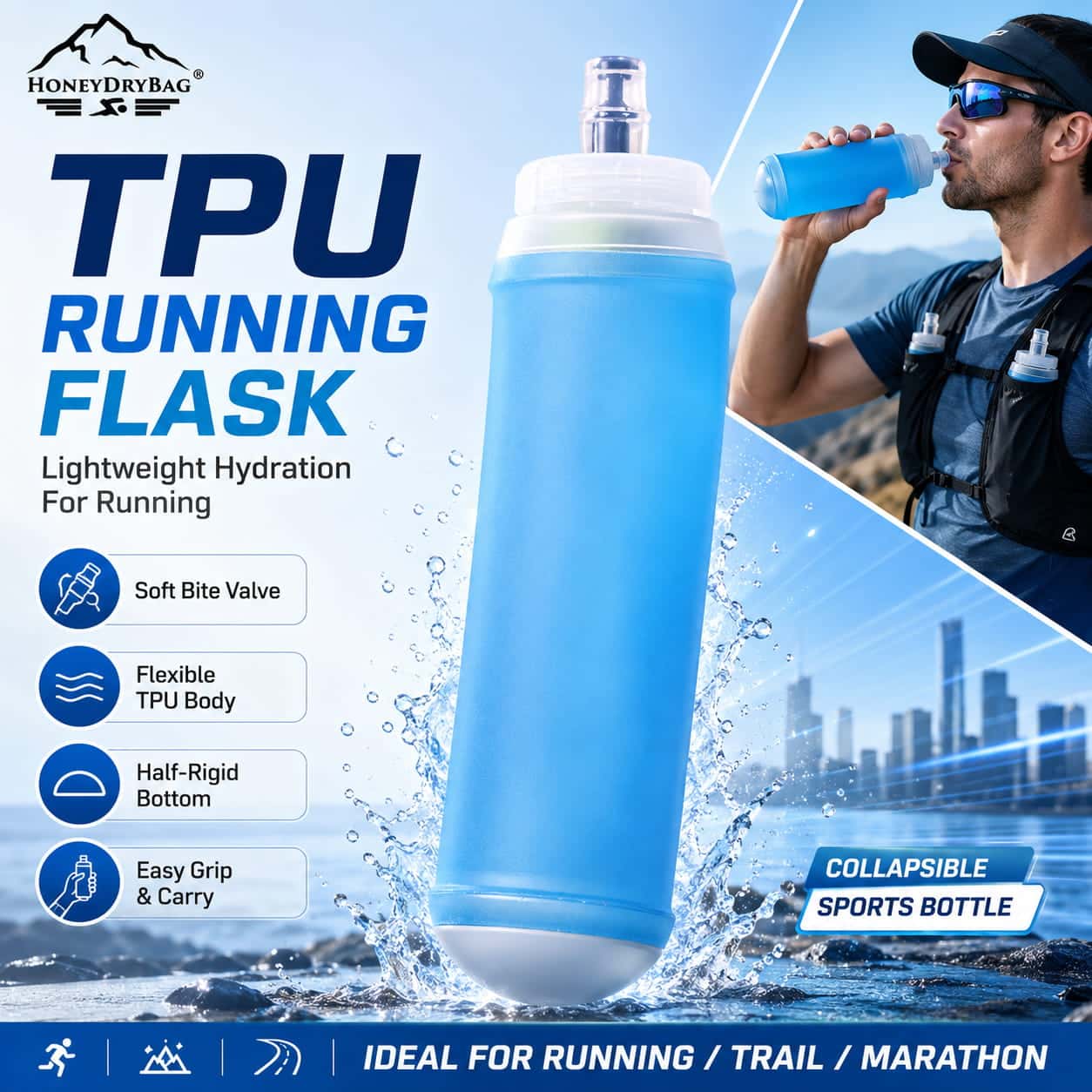
A soft flask is a flexible drinking container that can be carried in a compatible running vest pocket or handheld holder.
Unlike a rigid bottle, a soft flask becomes less full and can be compressed as liquid is consumed.
This design offers several practical possibilities for trail running.
Accessible Drinking
A soft flask positioned in the front pocket of a running vest may allow a runner to drink without removing the vest.
However, accessibility depends on the flask's dimensions, the pocket design and the position of its drinking valve.
Flexible Storage
An empty or partially filled soft flask can take up less space than a rigid bottle of similar capacity.
This may be useful when runners need to adjust their equipment between aid stations.
Different Capacity Options
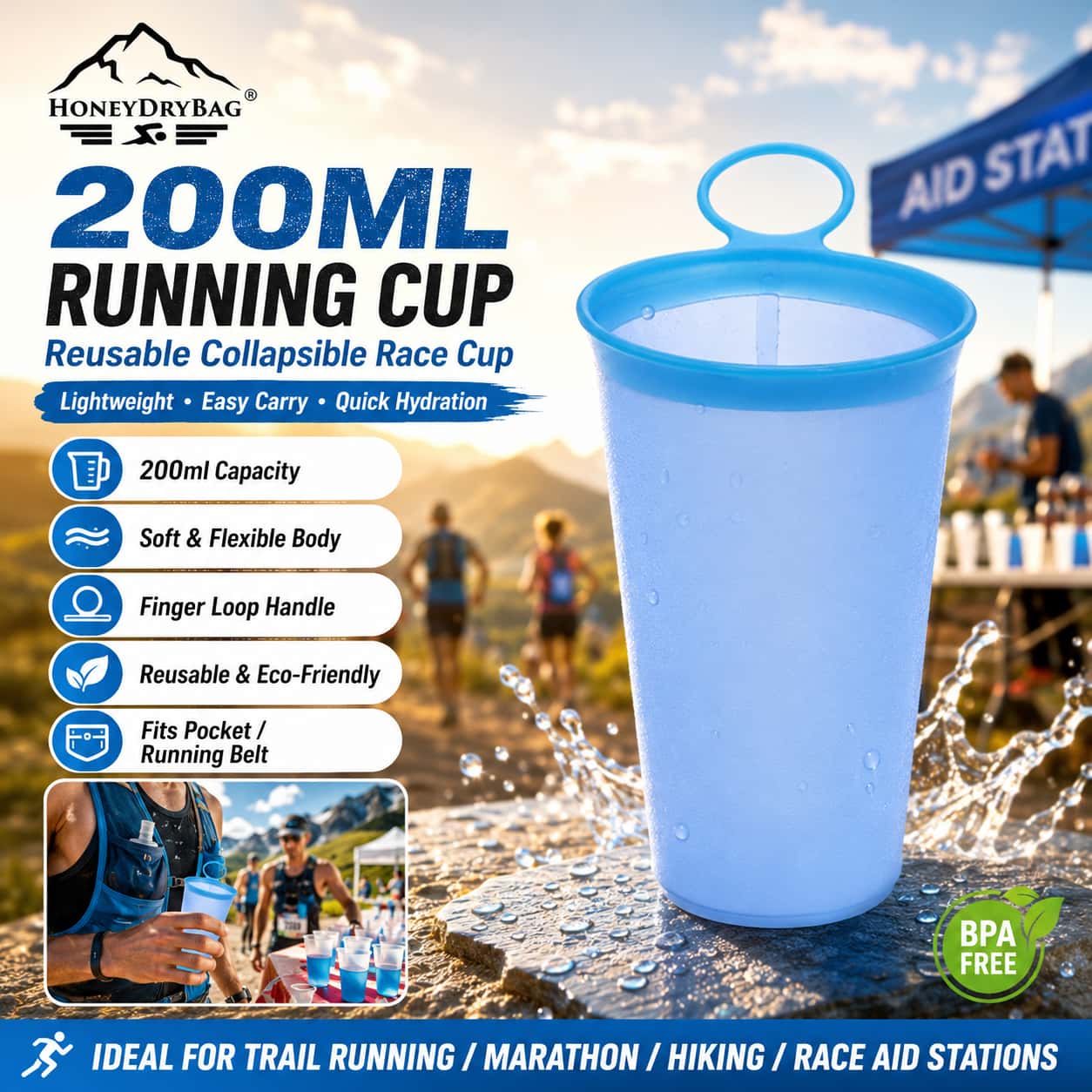
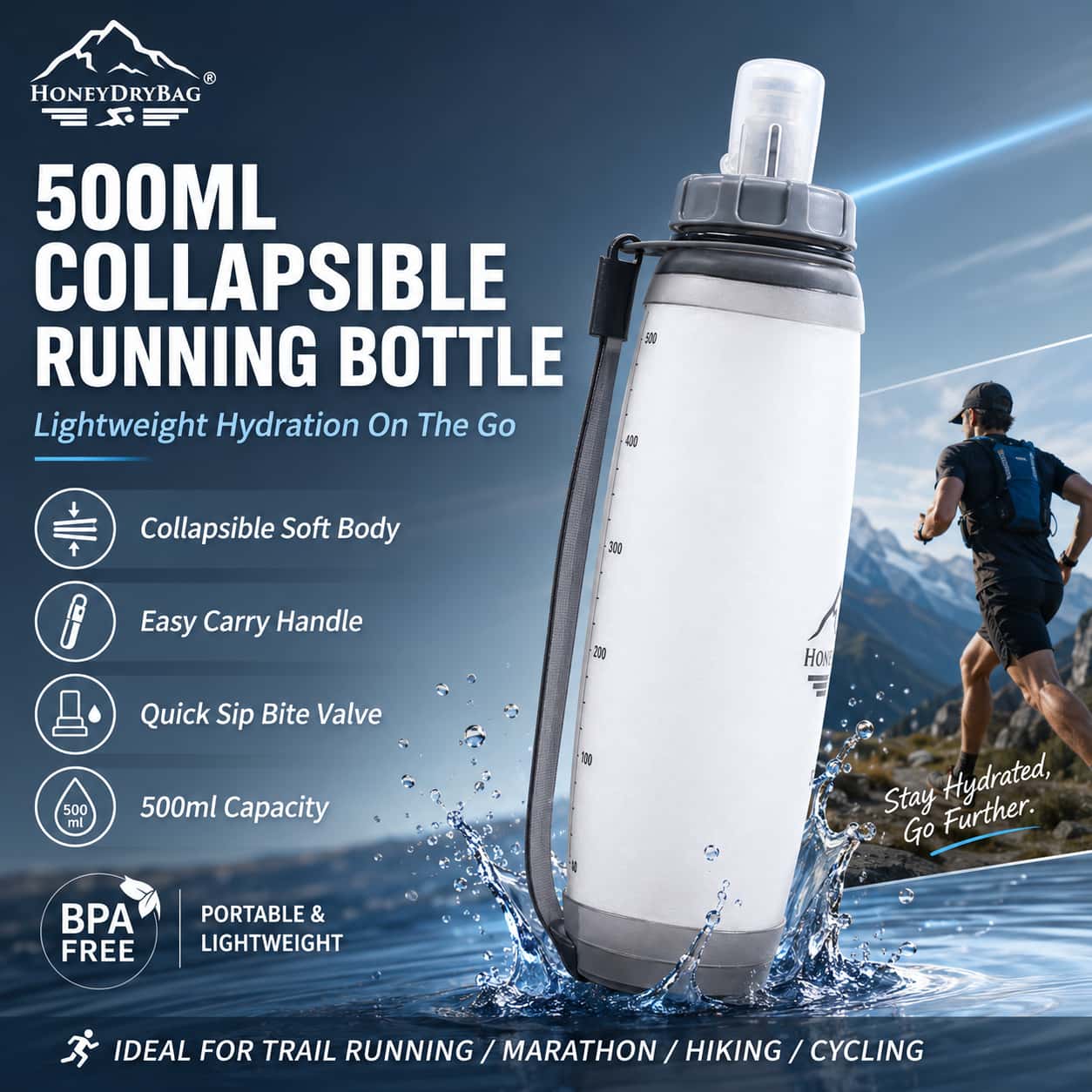
Soft flasks are available in different capacities, including 250 ml, 350 ml and 500 ml models.
The appropriate capacity depends on the route, the distance between water sources and the runner's overall carrying plan.
A single 500 ml flask should not automatically be considered sufficient for a long trail race.
Soft Flask vs Rigid Water Bottle for Trail Running
Both soft flasks and rigid water bottles can be suitable for trail running.
A soft flask offers flexible storage and can fit certain running vest pockets. A rigid bottle maintains its shape, which some runners may find easier to handle, refill or clean.
The choice should be based on actual use rather than the assumption that one type is suitable for every runner.
Before choosing a hydration container, check its compatibility with your vest, ease of drinking, cleaning requirements and performance during training.
How to Choose a Soft Flask for a Long Trail Run
If you are considering a soft flask for trail running, start with your route and existing equipment.
1. Check the distance between water sources.
Review the event's route and aid-station information. Decide how much total carrying capacity you need before selecting individual flask sizes.
2. Check running vest compatibility.
Compare the filled flask's dimensions with the depth and shape of your vest pockets. A flask should remain secure while you move.
3. Test the drinking valve.
Try the valve during training to confirm that you can drink comfortably and that it closes as intended.
4. Inspect the flask before use.
Check the body, cap and valve for damage or leakage. Follow the manufacturer's instructions for cleaning and storage.
5. Practise with your complete setup.
Test the combination of vest, flasks, food and other equipment on training runs. Race day is not the ideal time to discover that a flask is difficult to reach or does not fit securely.
What Can Everyday Runners Learn From TOR330?
Jiaju Zhao's TOR330 victory brings attention to a form of running that requires sustained effort across multiple days and nights.
For everyday runners, the practical lesson is not to copy an elite athlete's speed, sleep schedule or fluid intake.
Instead, approach longer trail runs through preparation: understand the route, train progressively, choose equipment that fits your needs and adjust your plans to the conditions.
Hydration equipment is one part of that preparation. Whether you prefer a soft flask, a rigid bottle or a hydration reservoir, the most useful setup is one you have tested and can use reliably.
Explore Soft Flask Options for Trail Running
At Honey Dry Bag, we focus on soft flask products for running and outdoor hydration.
Our range includes different capacities and configurations for brands and buyers evaluating hydration products for their own customers.
Explore our soft flask models to compare available designs, or contact us to discuss OEM and ODM soft flask development for your brand.
Frequently Asked Questions
Who won the 2026 TOR330 – Tor des Géants?
Jiaju Zhao won the 2026 TOR330 in 65 hours, 55 minutes and 22 seconds, setting a new race record.
How long was the 2026 TOR330 course?
The event category is called TOR330. The reported course distance for the 2026 edition was 336.1 km, with more than 24,000 metres of cumulative elevation gain.
Do ultra trail runners use soft flasks?
Soft flasks are one hydration option used in trail running. Other options include rigid bottles and hydration reservoirs. The appropriate setup depends on the runner, route and equipment compatibility.
Is one 500 ml soft flask enough for an ultra trail race?
Not necessarily. Required carrying capacity depends on the distance between water sources, conditions, individual needs and event rules. Runners should plan their total capacity for the specific route.
Did Jiaju Zhao use a Honey Dry Bag soft flask during TOR330?
We have not verified which hydration products Jiaju Zhao used during the event. This article does not claim that he used or endorsed Honey Dry Bag products.
Sources
- Xinhua News Agency, September 17, 2026: Reporting on Jiaju Zhao's TOR330 victory, finishing time and race record.
- Xinhua News Agency, September 17, 2026: Reporting on Zhao's previous TOR330 attempt and his return to the event.
- TORX official event information: TOR330 course and race format.
Editorial note: This independently written article discusses a publicly reported sporting result and general trail running hydration considerations. Honey Dry Bag does not claim any sponsorship, partnership, equipment-supply relationship or endorsement involving Jiaju Zhao or the TOR330 event.